The Himalayas
Kuzu Zangpo-LAH!
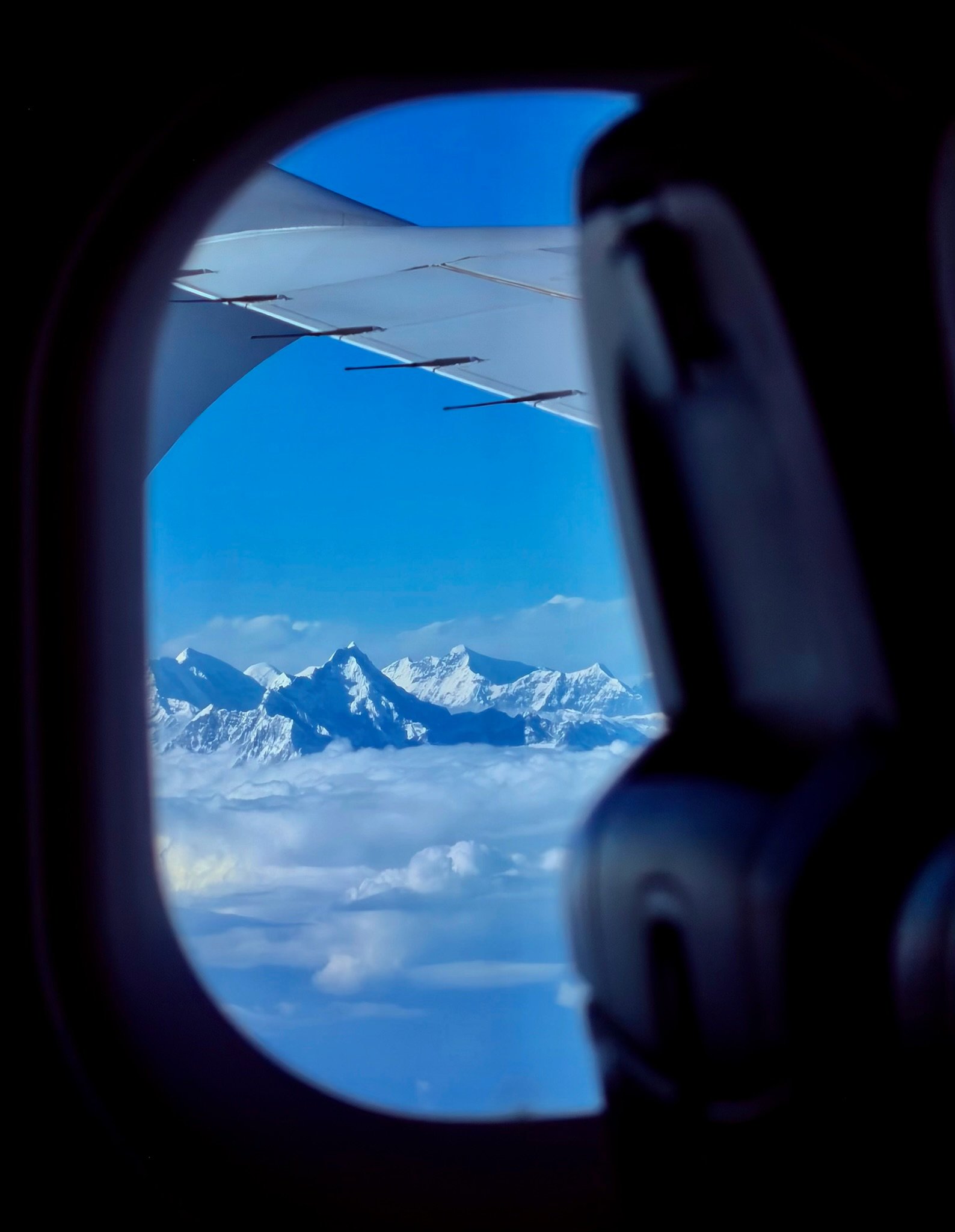
Currently, DrukAir flight 002 is serving up an incredible view off the left wing of Mount Everest. Unbelievable. Sitting well above the cloud line, the Himalayan range is massive, thrusting violently upwards, enduring and yet remarkably ethereal in this light.
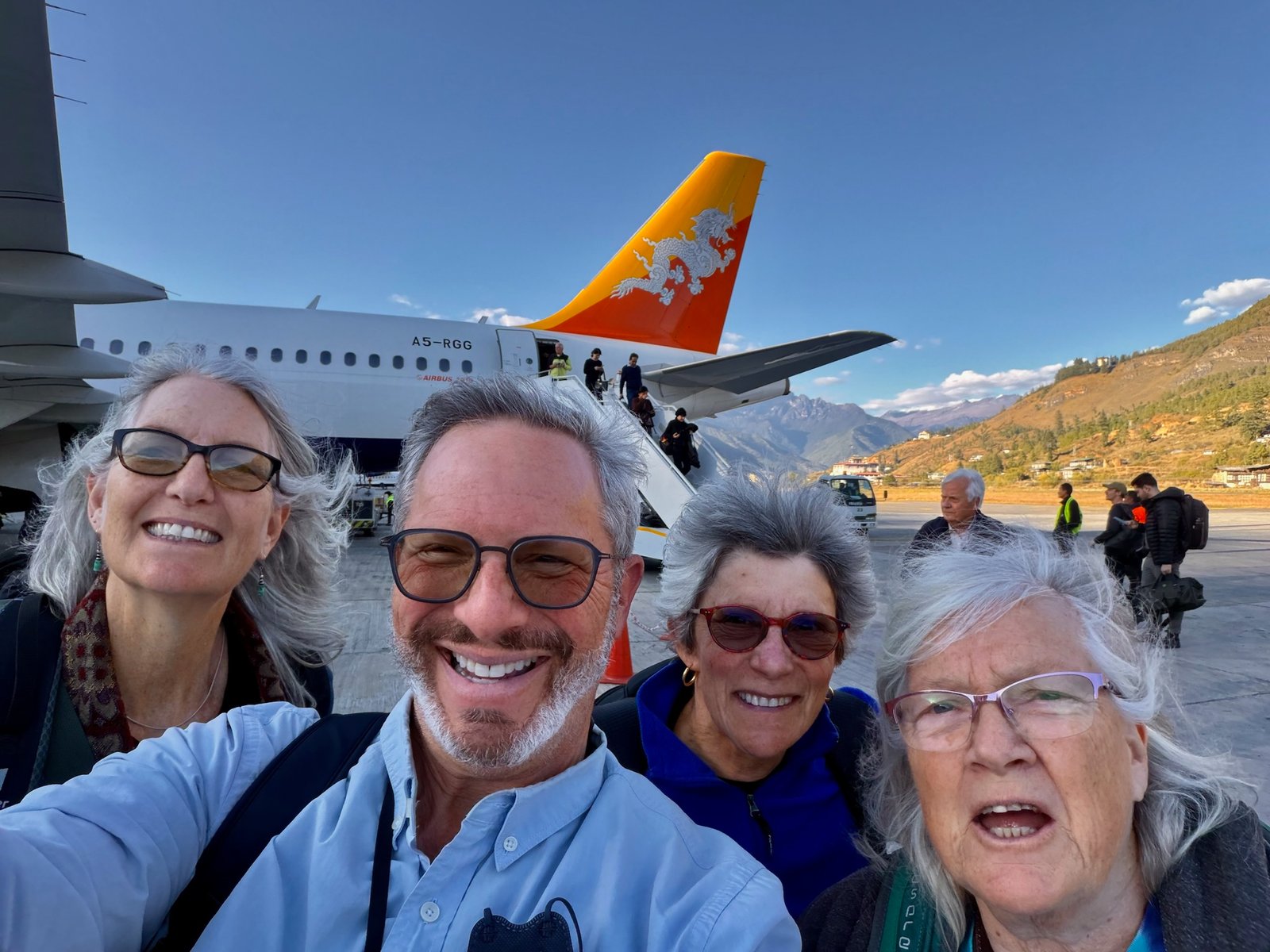
It’s been the longest travel day of our lives starting 27 hours ago. And it is about to conclude with a loud, audible gasp. The landing strip into Bhutan Airport is so short that only specially trained pilots and planes are certified to land here. To calm passenger nerves during the landing approach classical music flows liberally from the overhead speakers as we bank, twist and dive towards the tiny airfield nestled up high in the Paro mountains.
The welcome screech of rubber on tarmac signals us to collectively exhale - phew! Stepping down onto the airstrip, we are all bathed in a unfamiliar high-elevation afternoon sunlight with passengers now beginning to share high fives with relieved smiles and laughter. Some bend down to kiss the ground while others spin around taking in the beautiful mountains lining this tiny airport.
They say arduous travel is the most direct path to deeper cultural experiences.
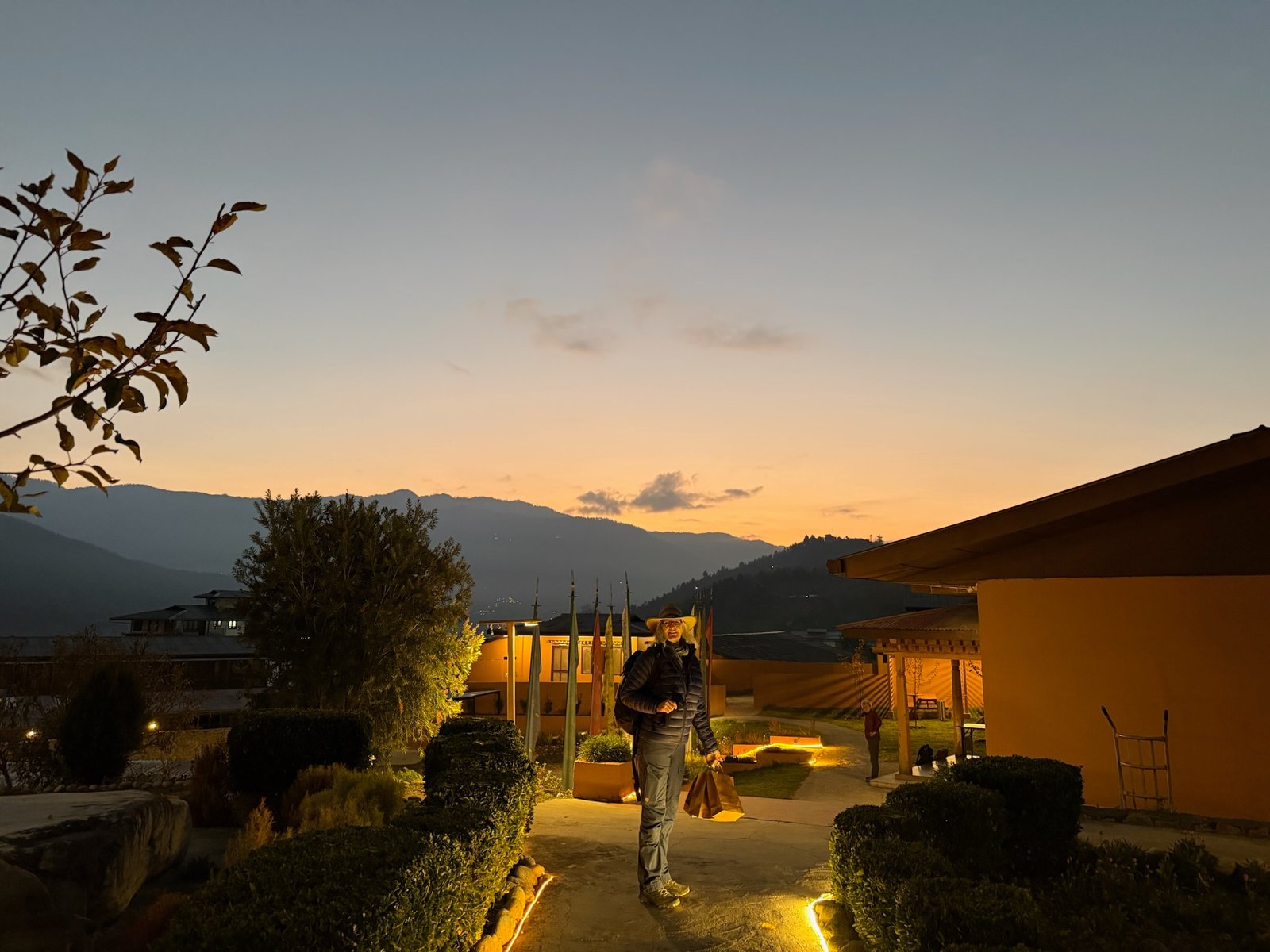
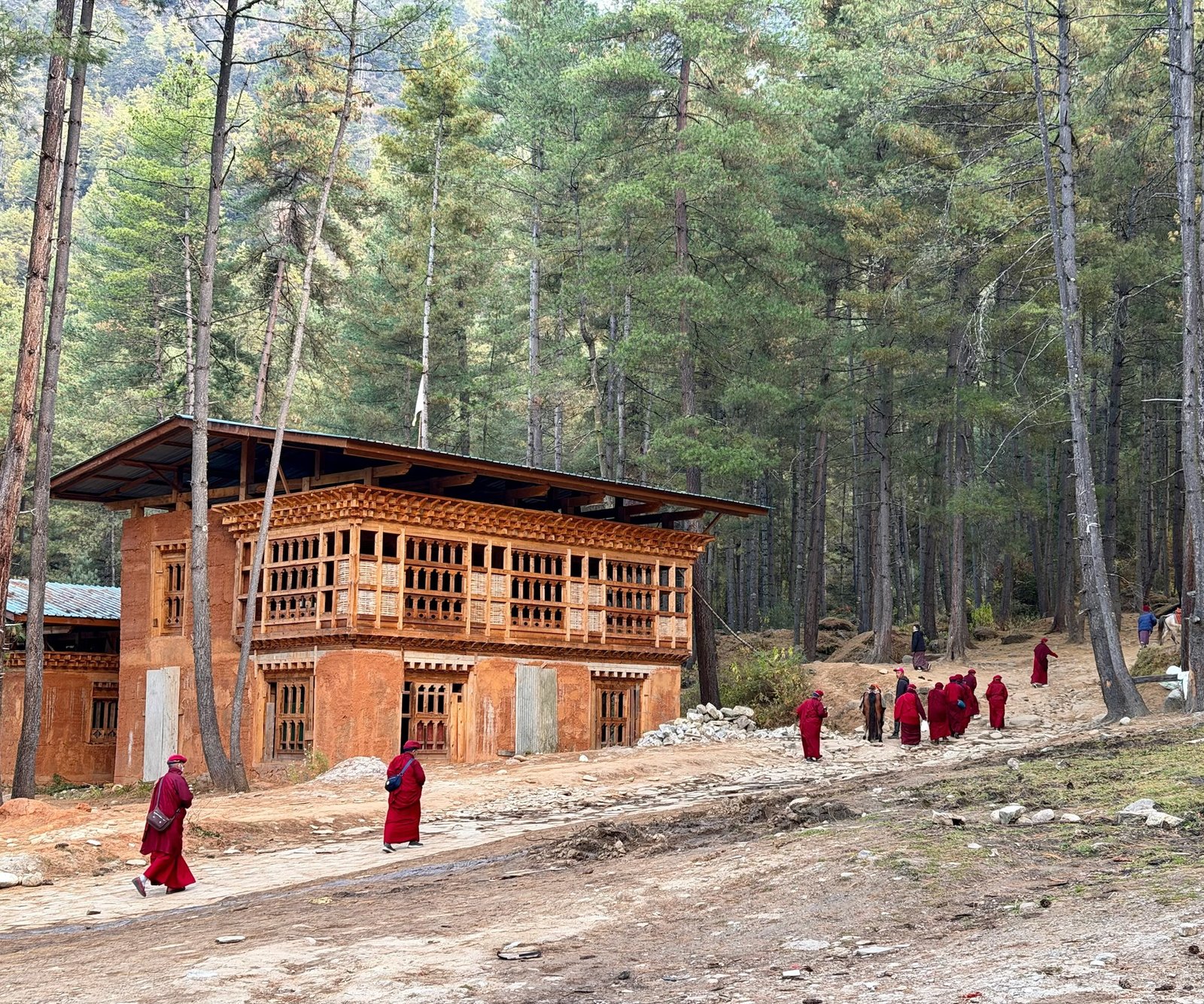
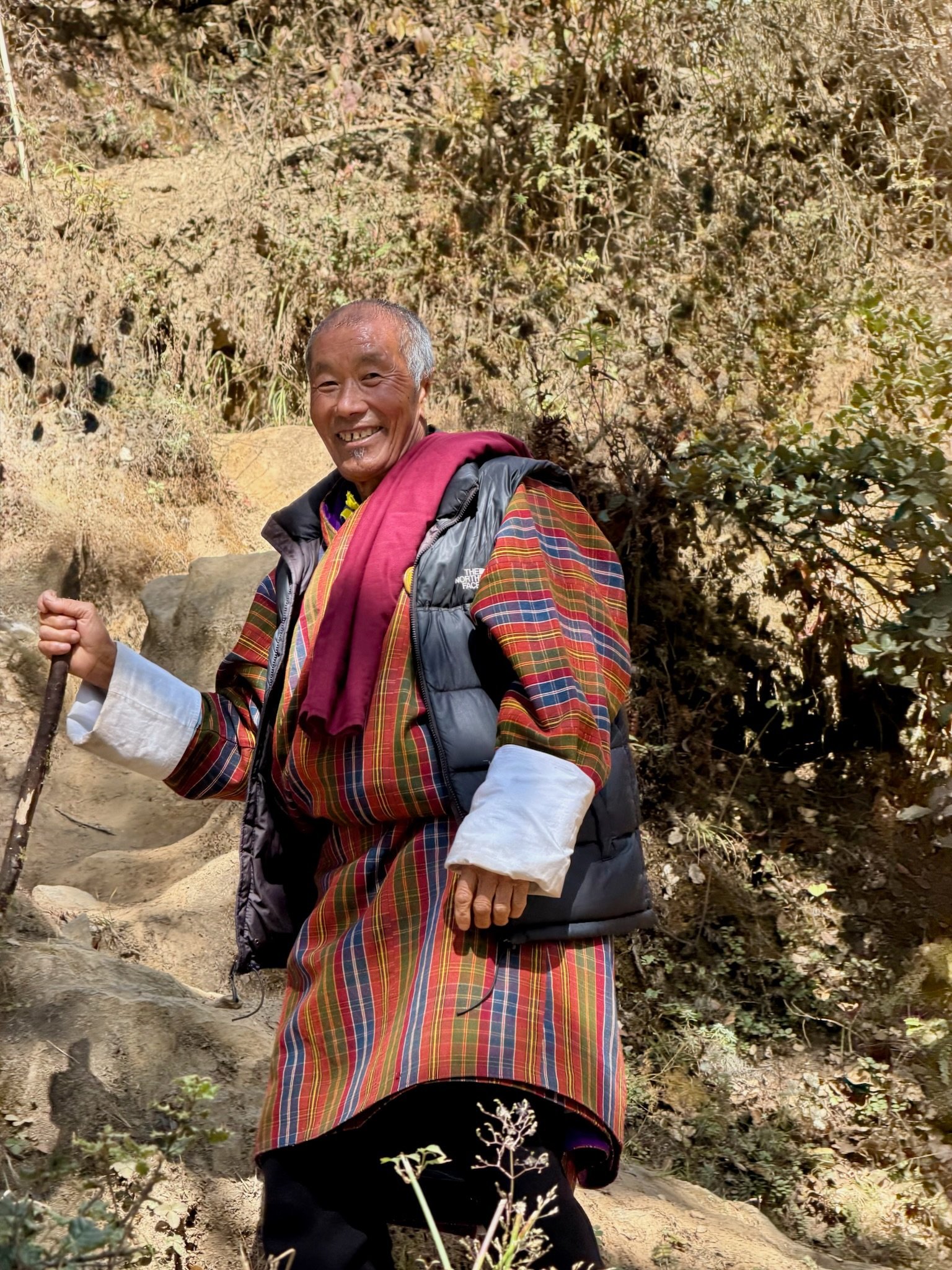
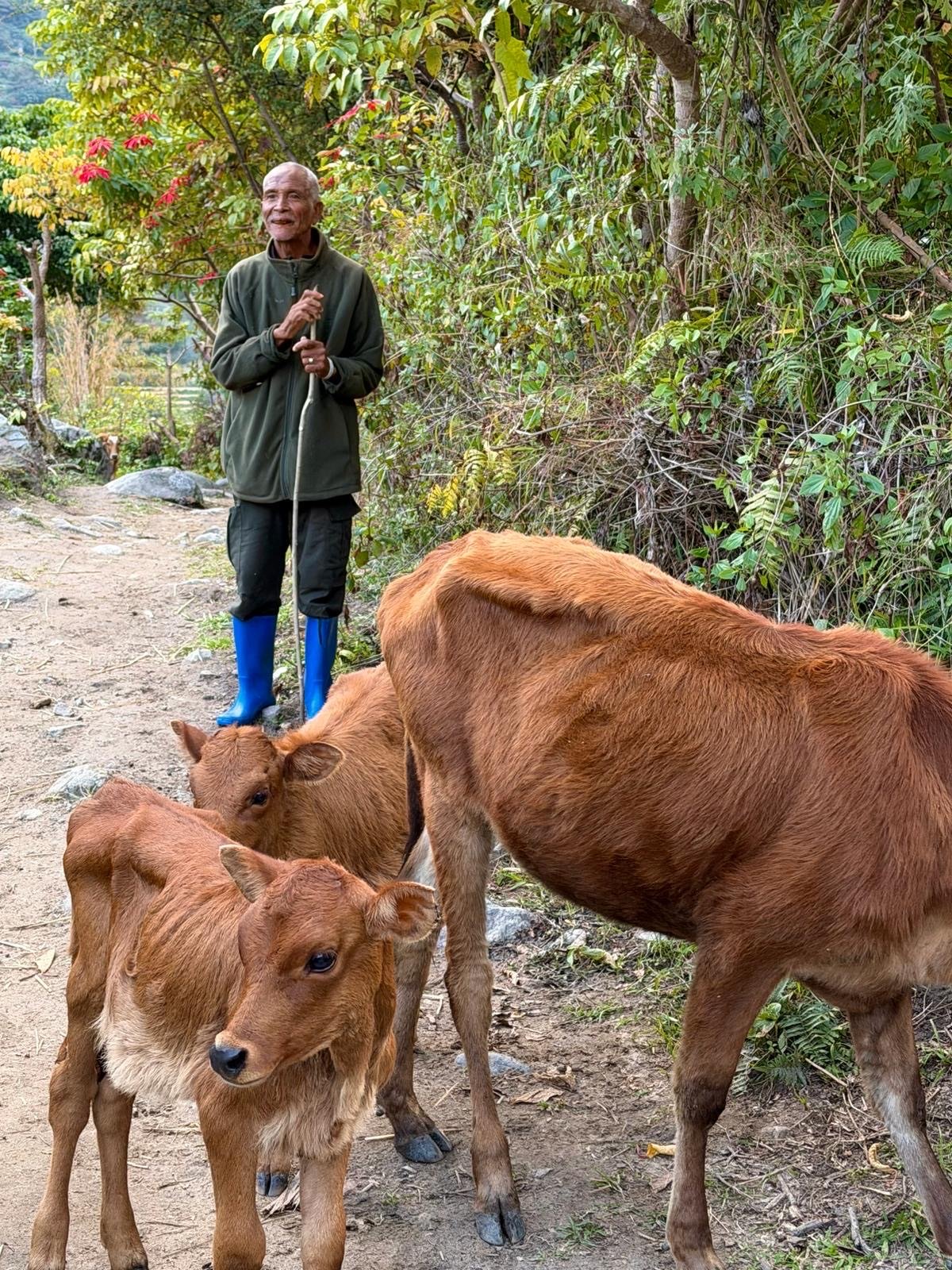
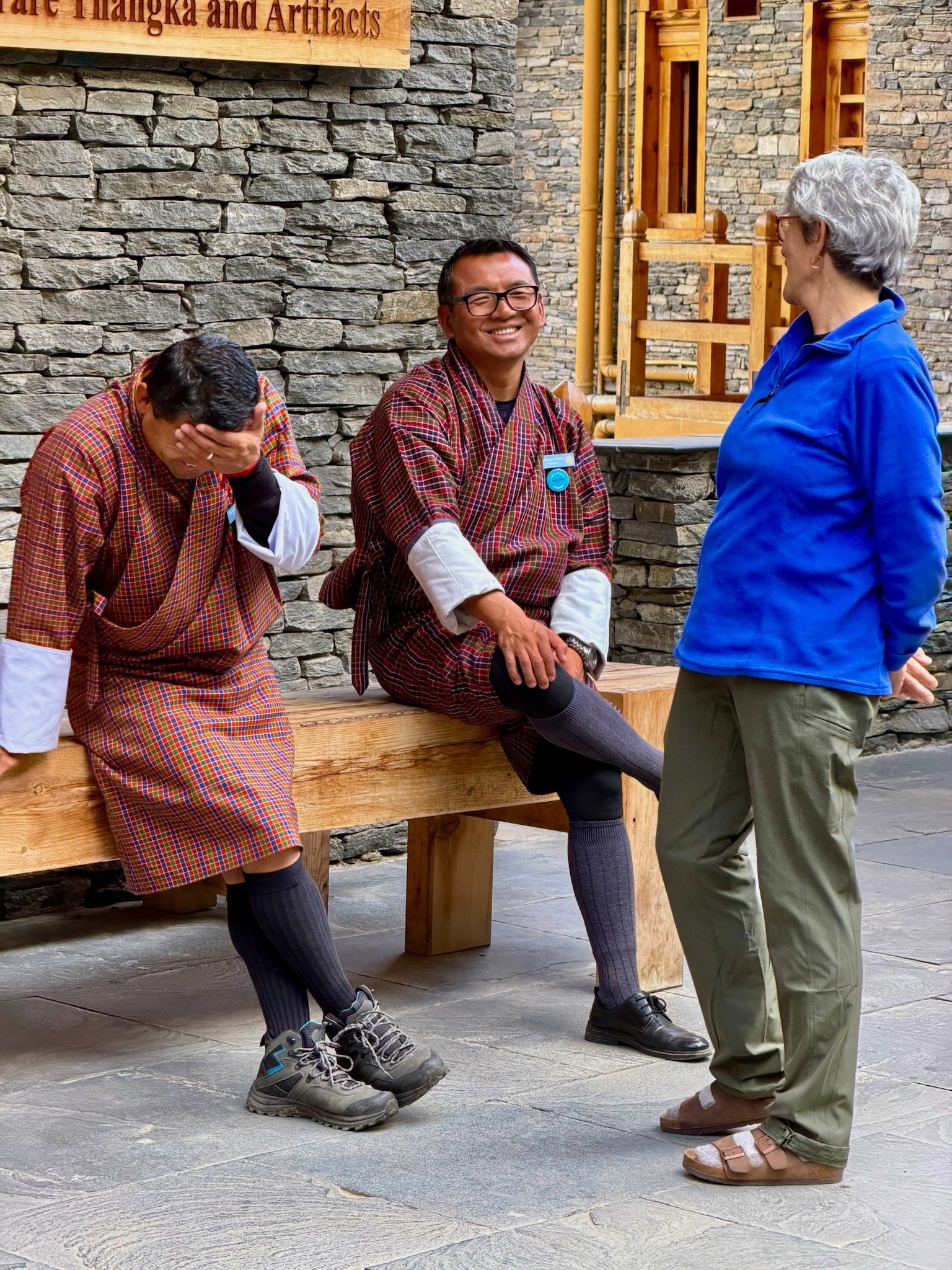
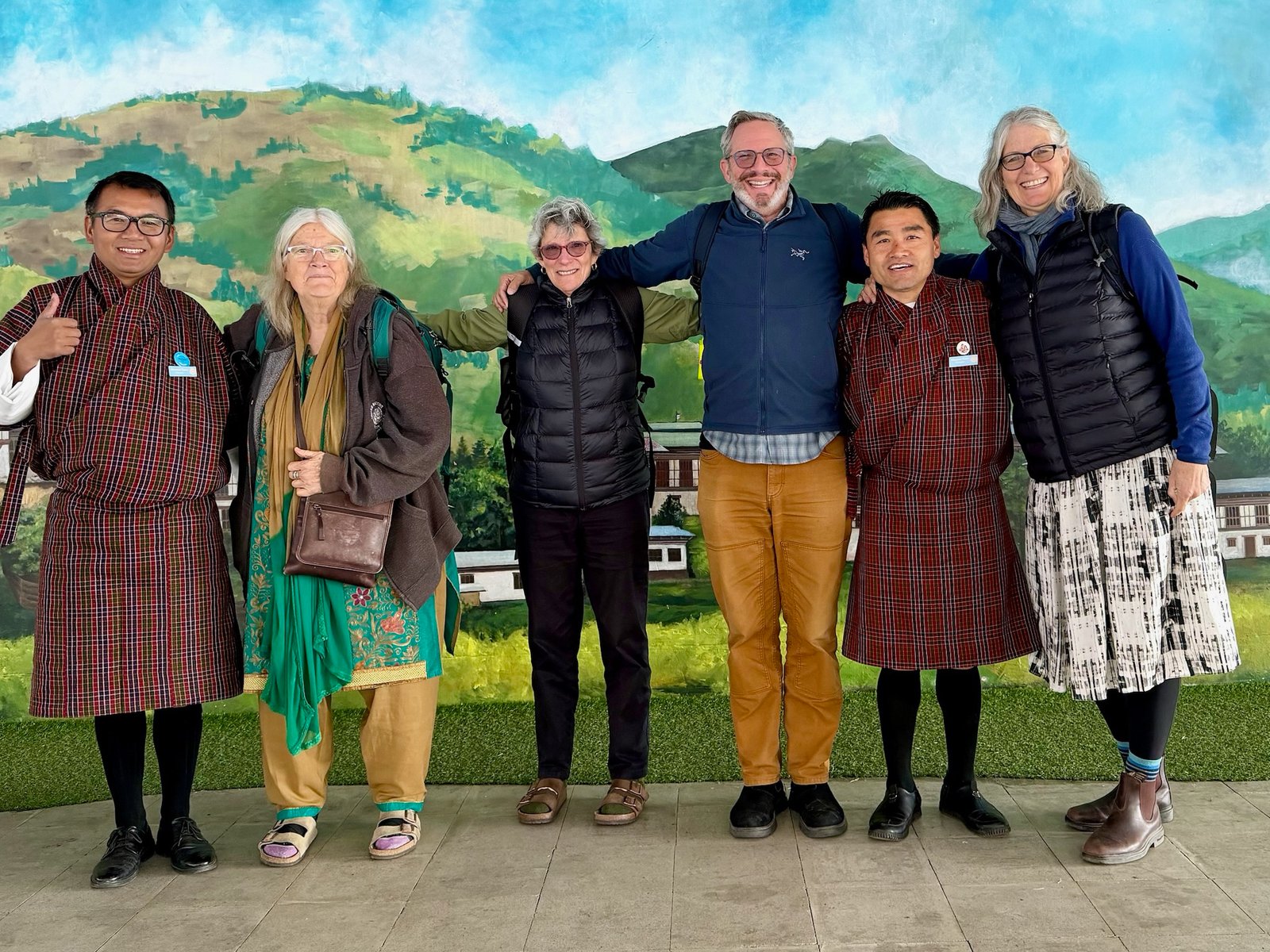
I am beginning to get it. Bhutan’s remoteness, cultural richness and Buddhist way of life are giving us a chance to experience a serene, self-sufficient country which has changed preciously little in the past 400 years. Many men and women still wear traditional dress with our two wonderful male guides sporting functional knee length robes. In frigid November. A country of less than a million citizens, where the monks out-number the military, where there are more women than men, Bhutan is a hidden Shangri-la on nestled on the other side of Earth.
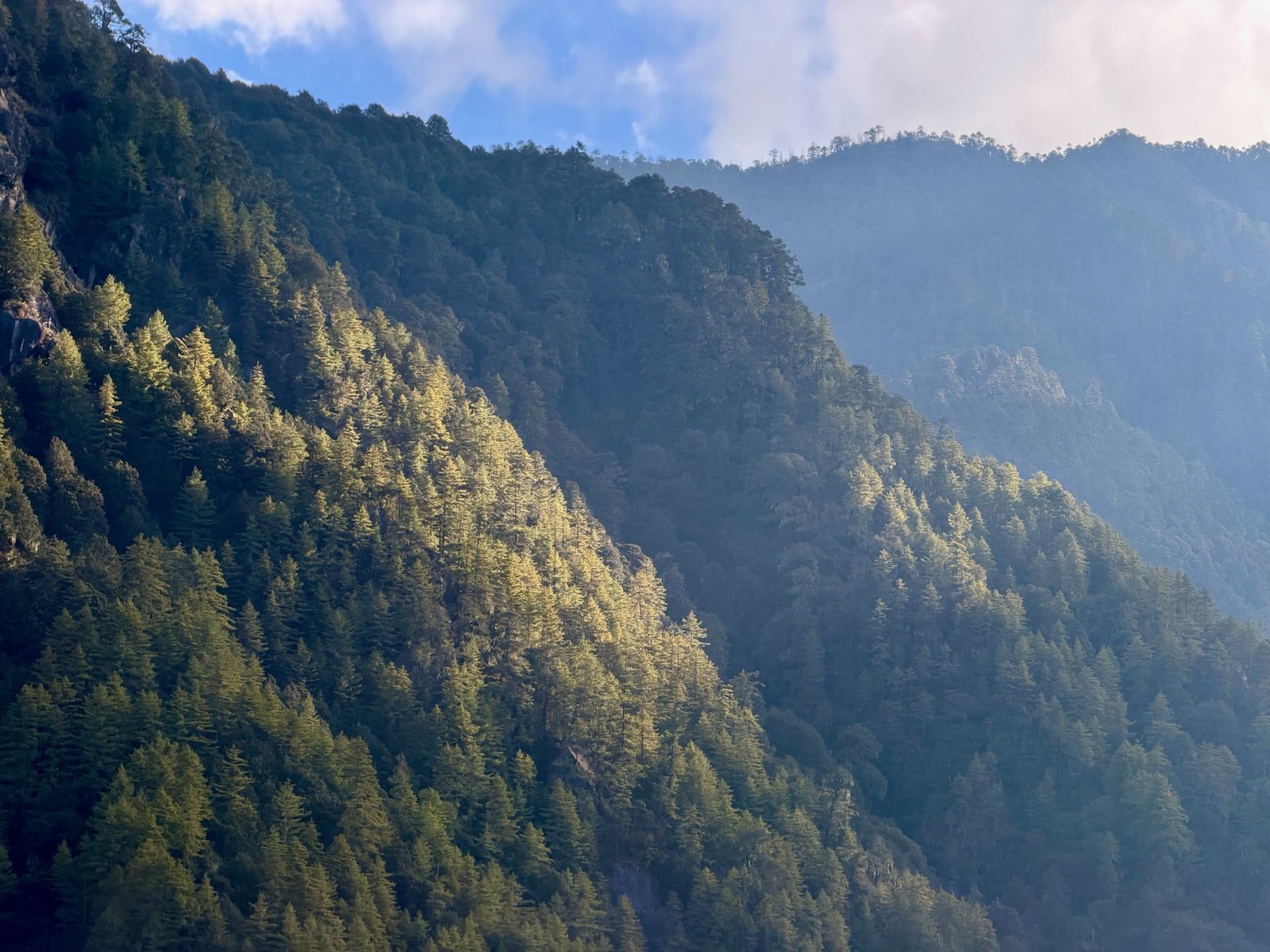
Until the 1970’s, it was entirely cut off from the rest of world, with the first television not arriving until March 1999. This explains why life still moves at a different pace where managed tourism preserves a sense of calm. More to the point, nature and a rich Buddhist heritage combine to create some unforgettable walking hikes leading to deeply spiritual Dzong monasteries that can only be reached on foot.
Note: There are two sets of photos below. Click on any photo to enlarge it as you go. Enjoy.
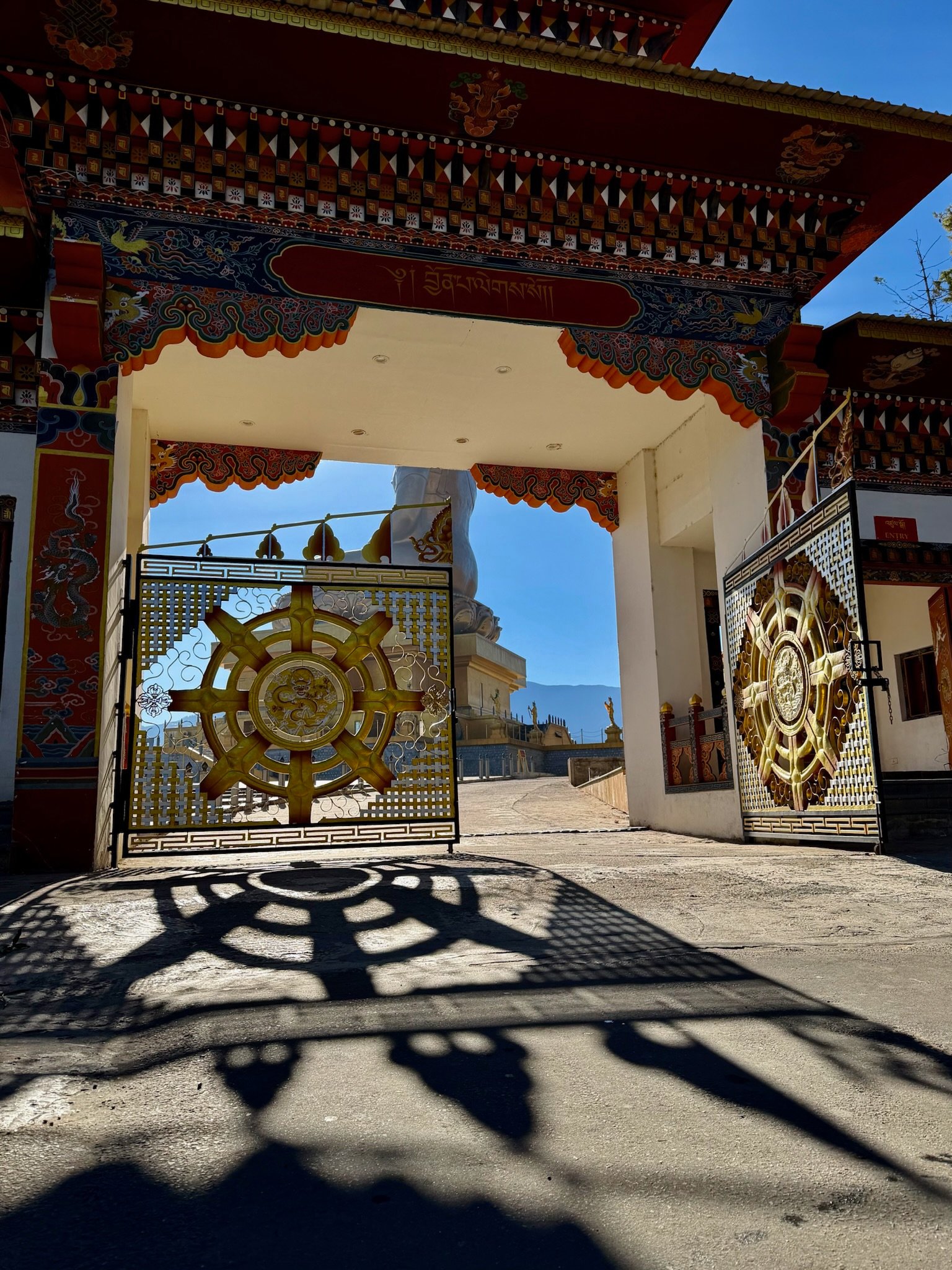
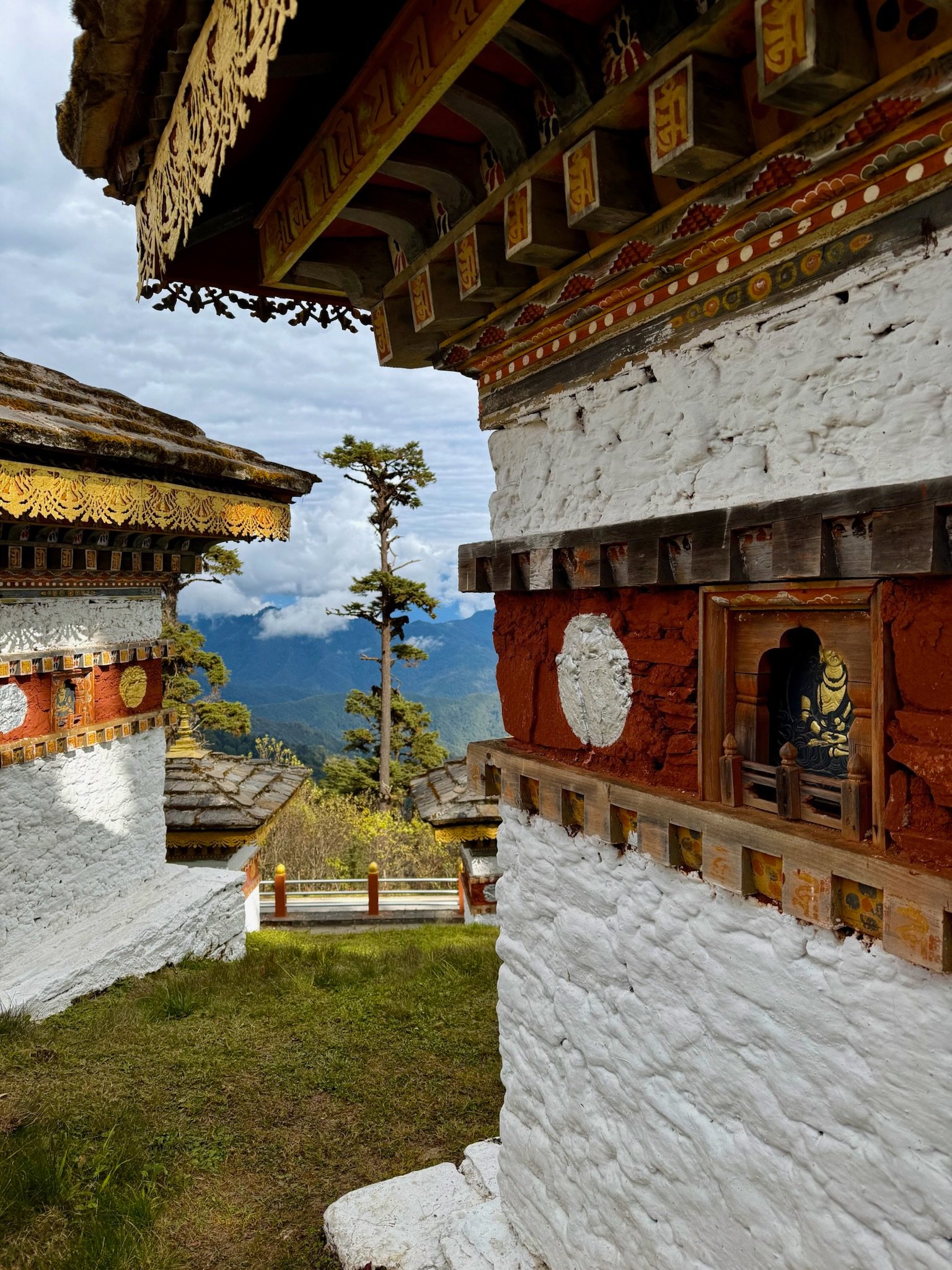
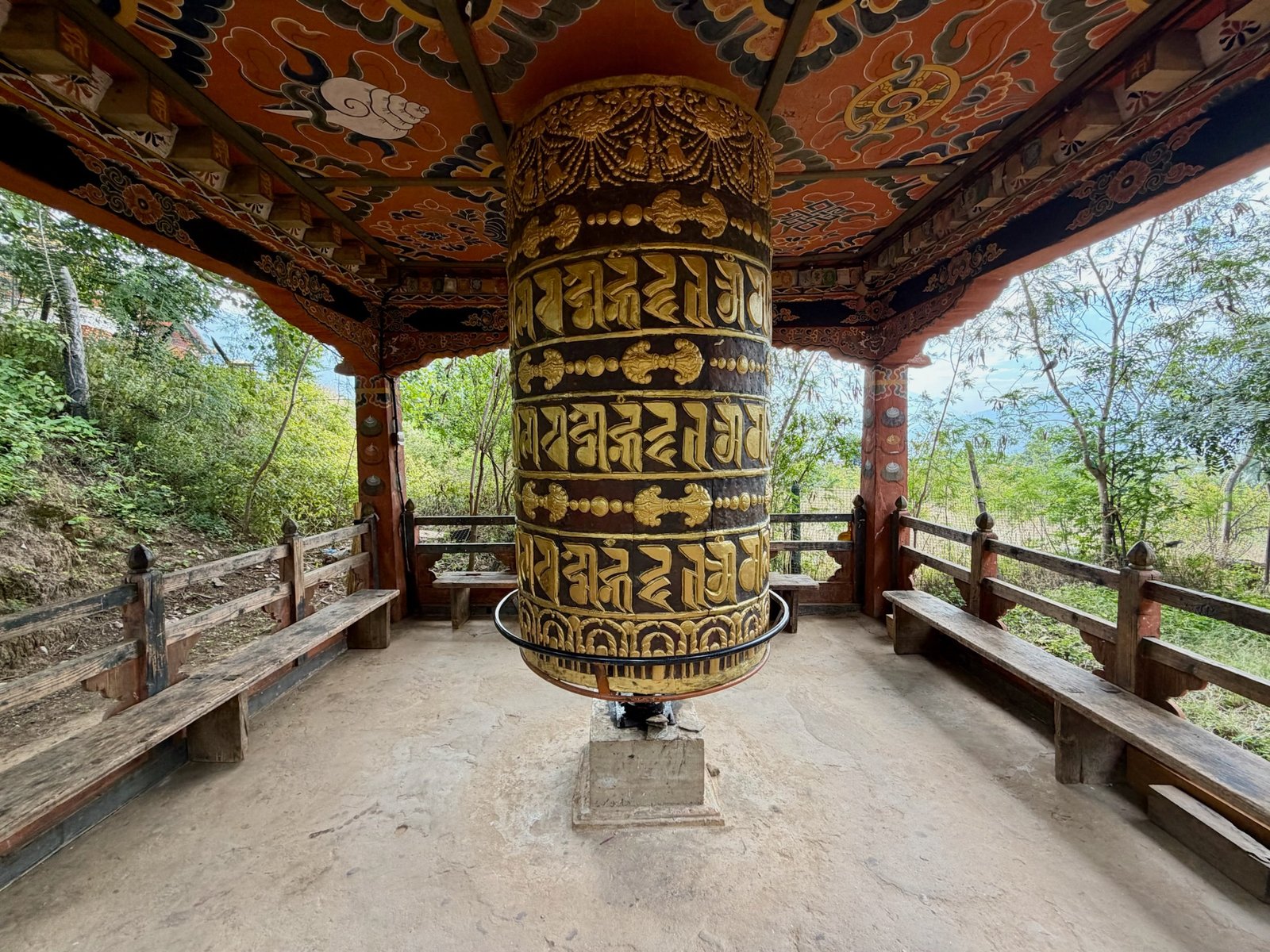
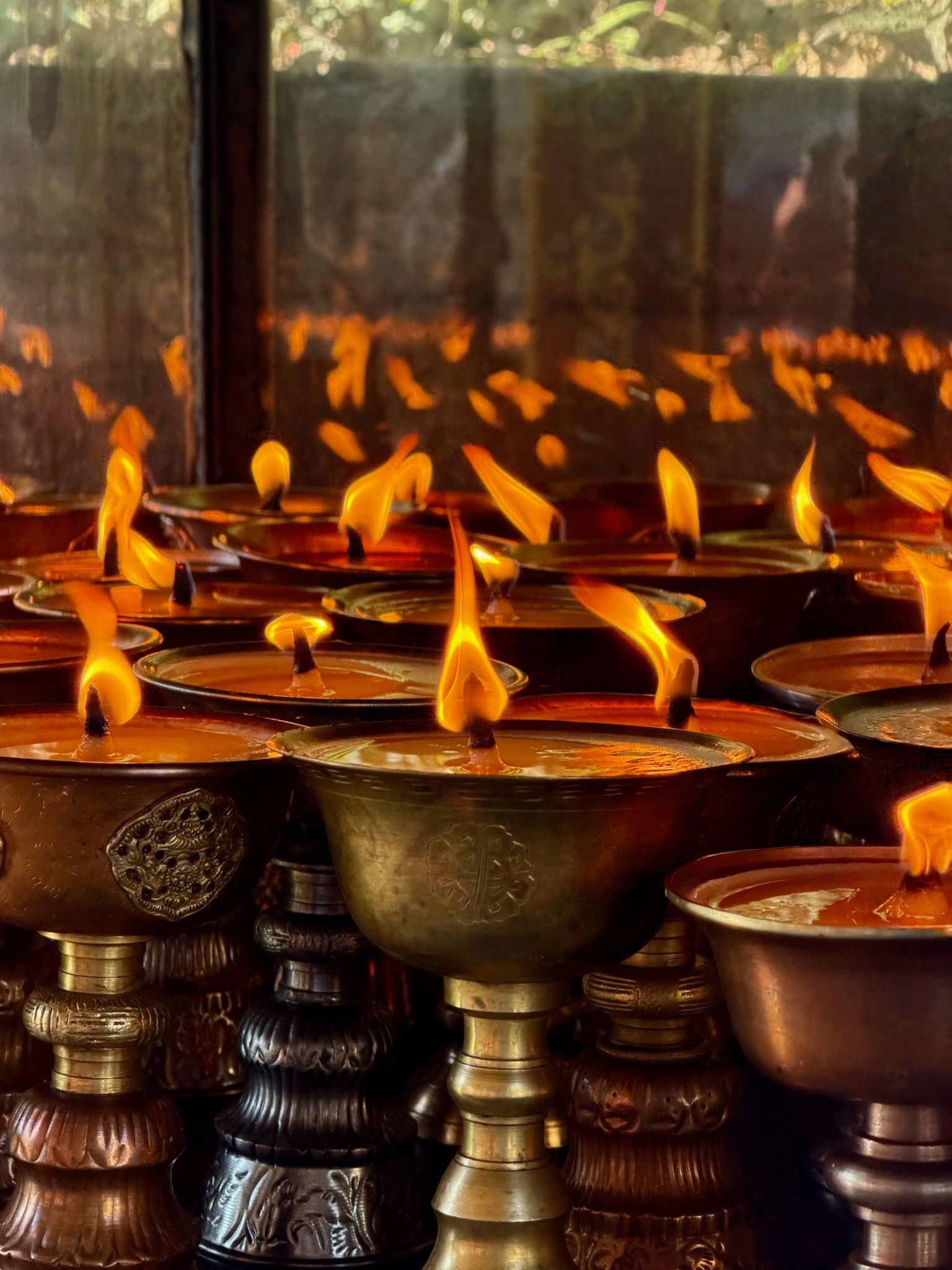
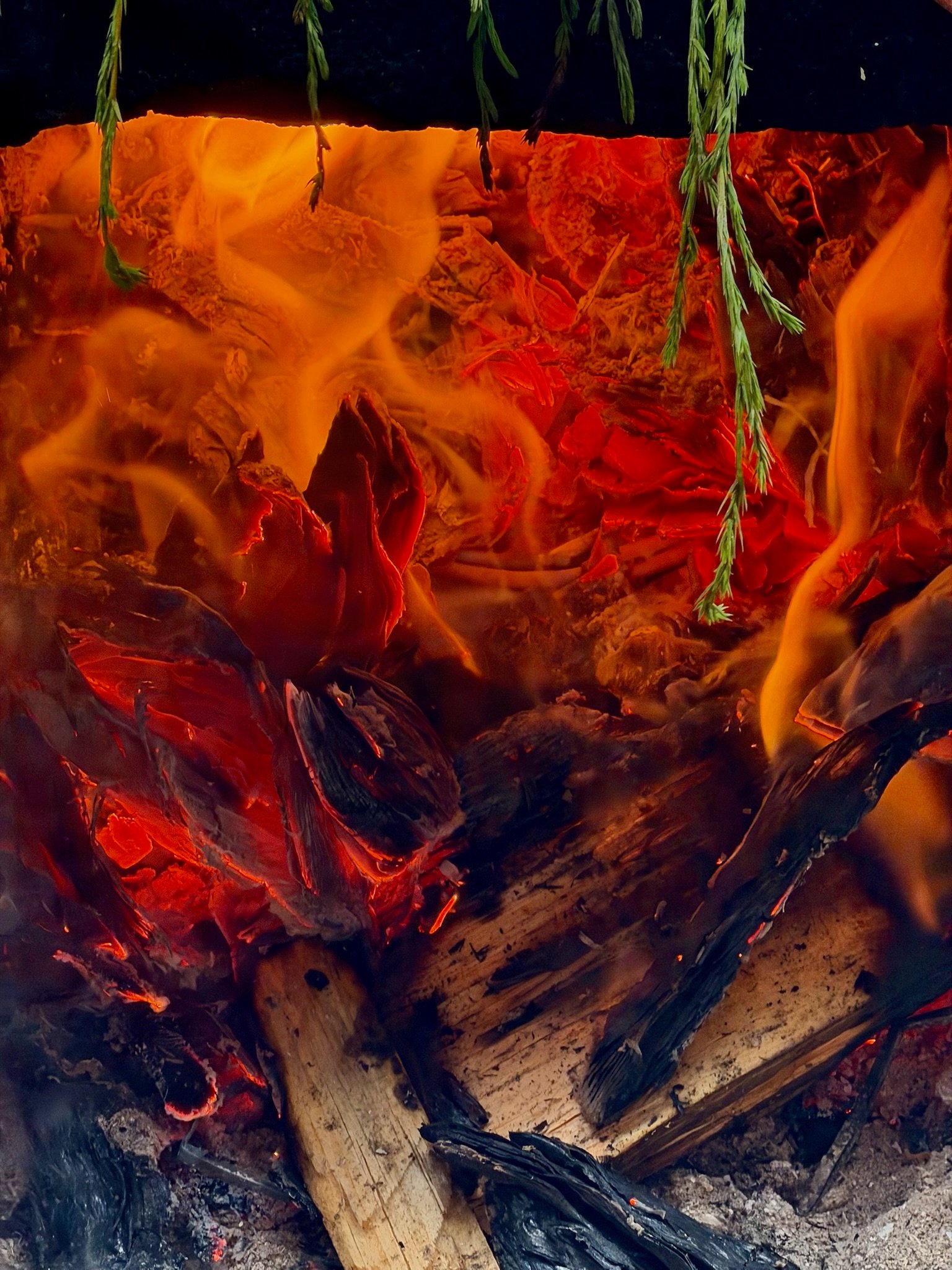
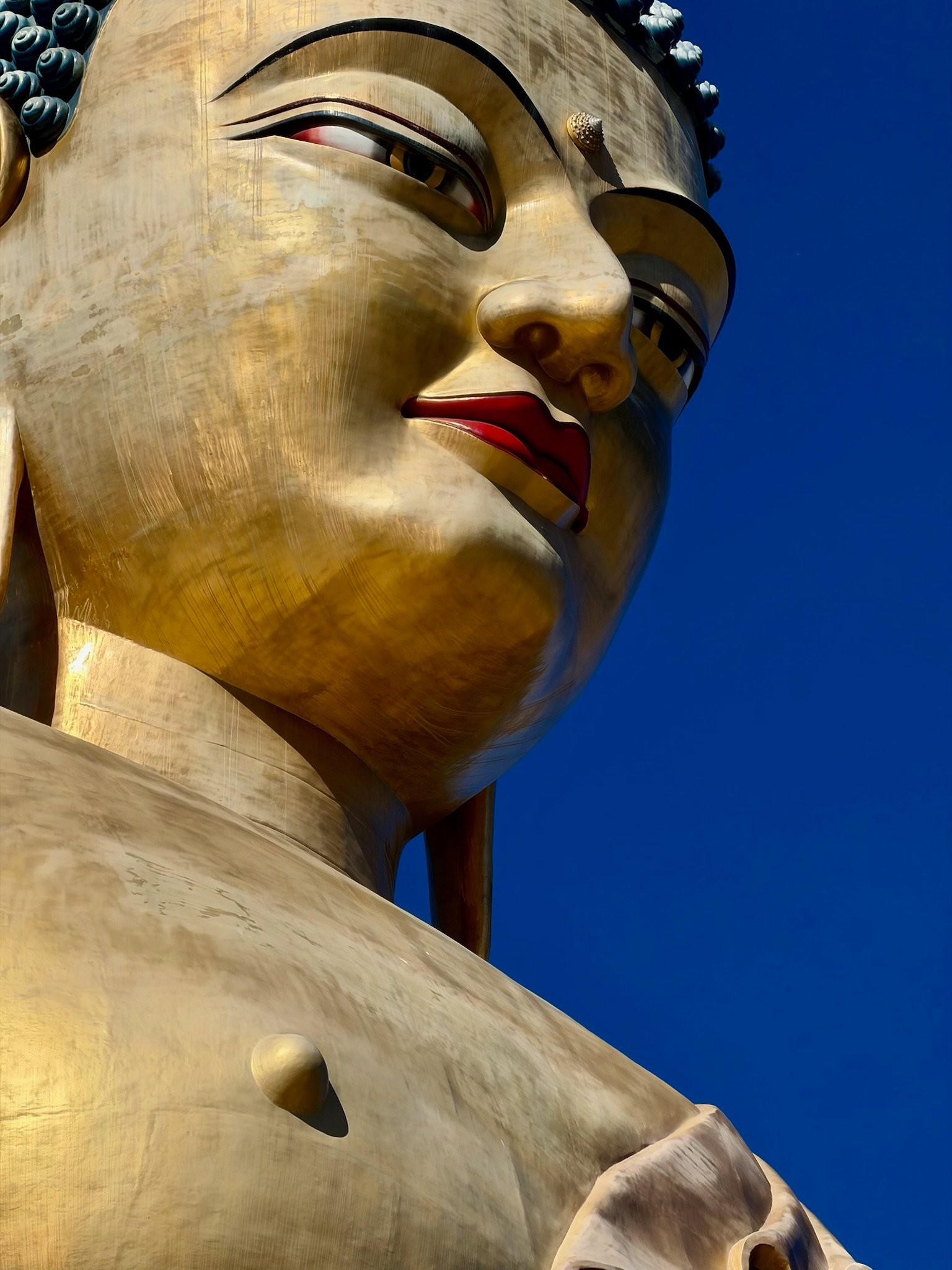
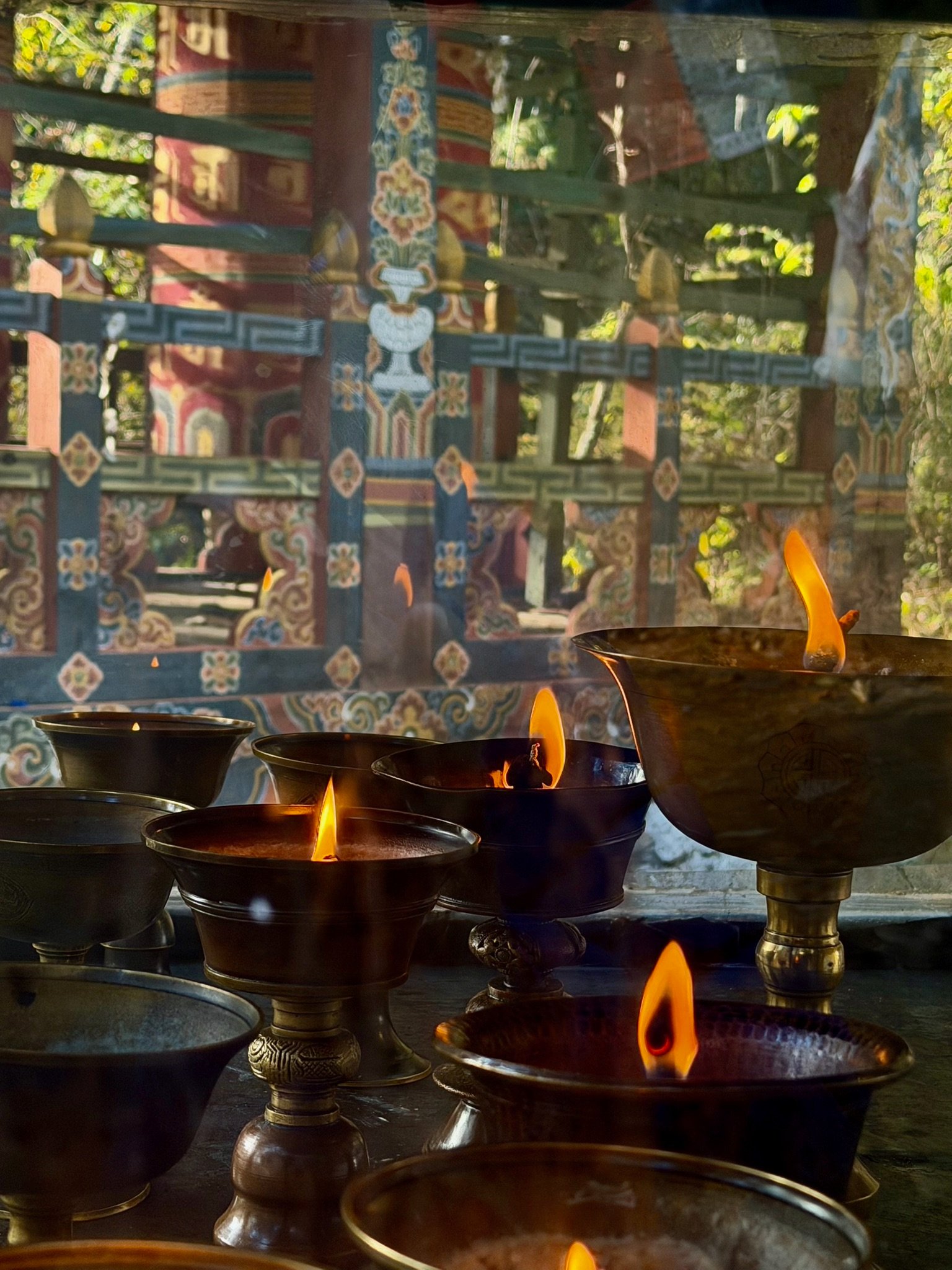
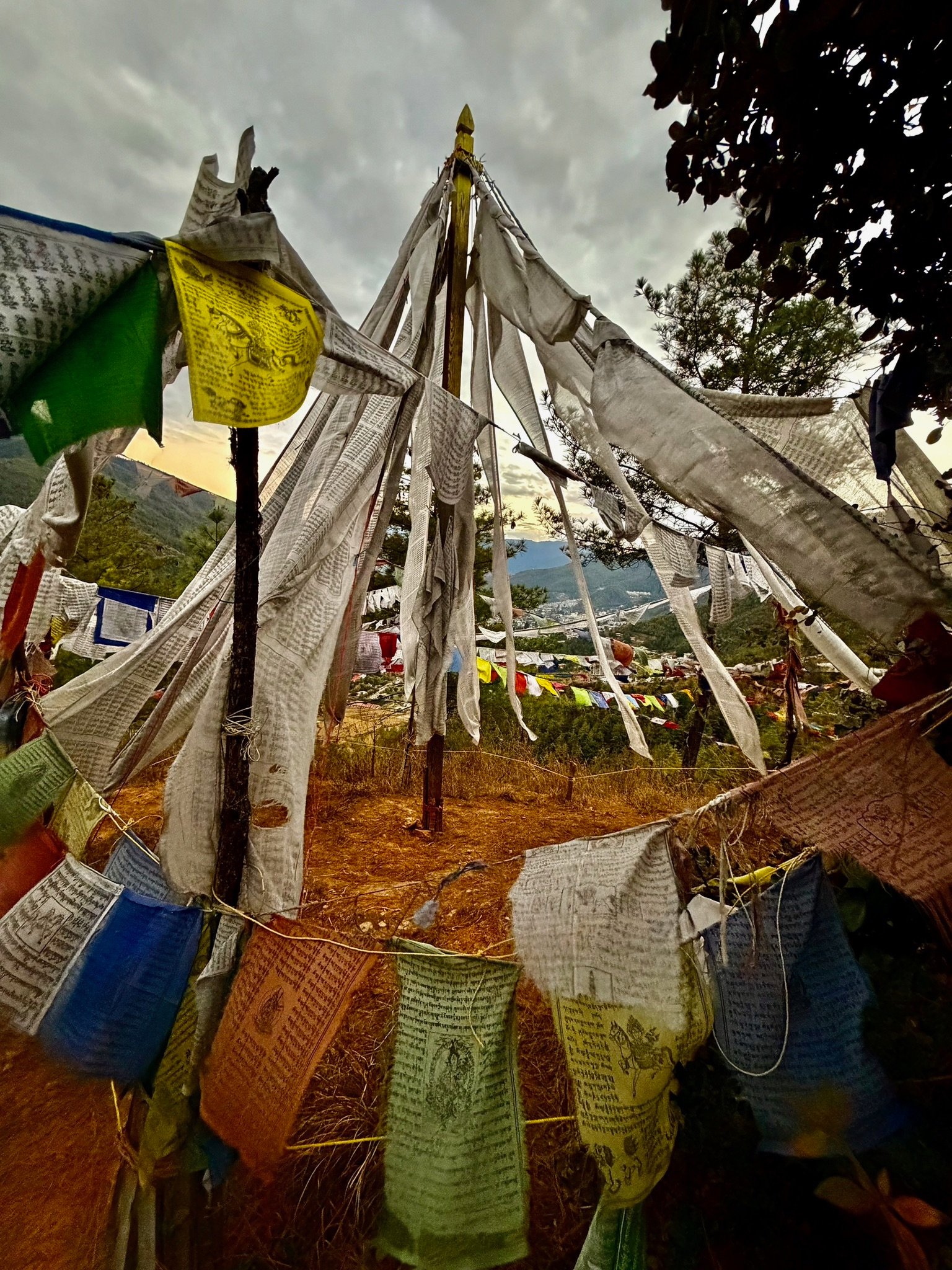
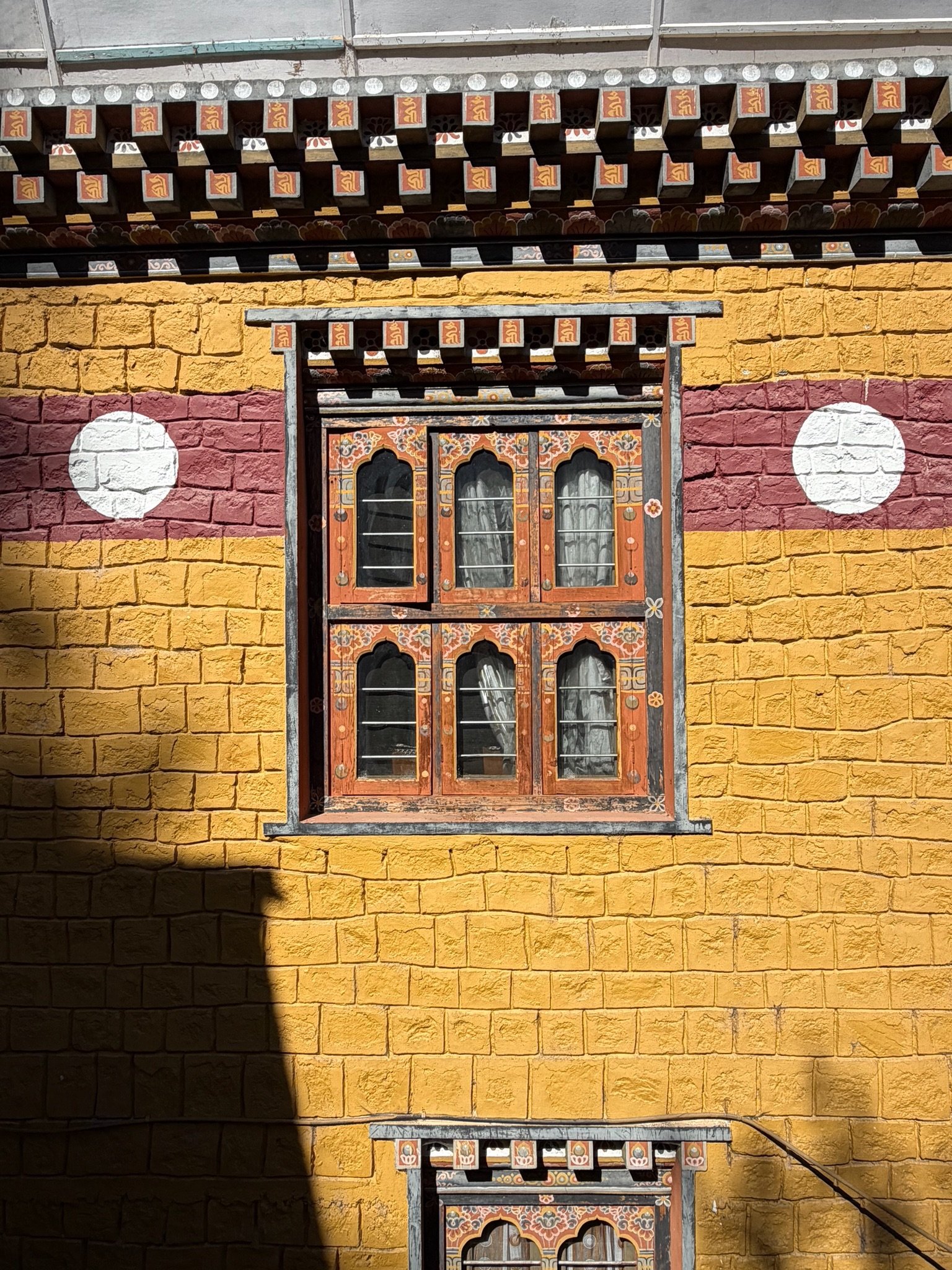
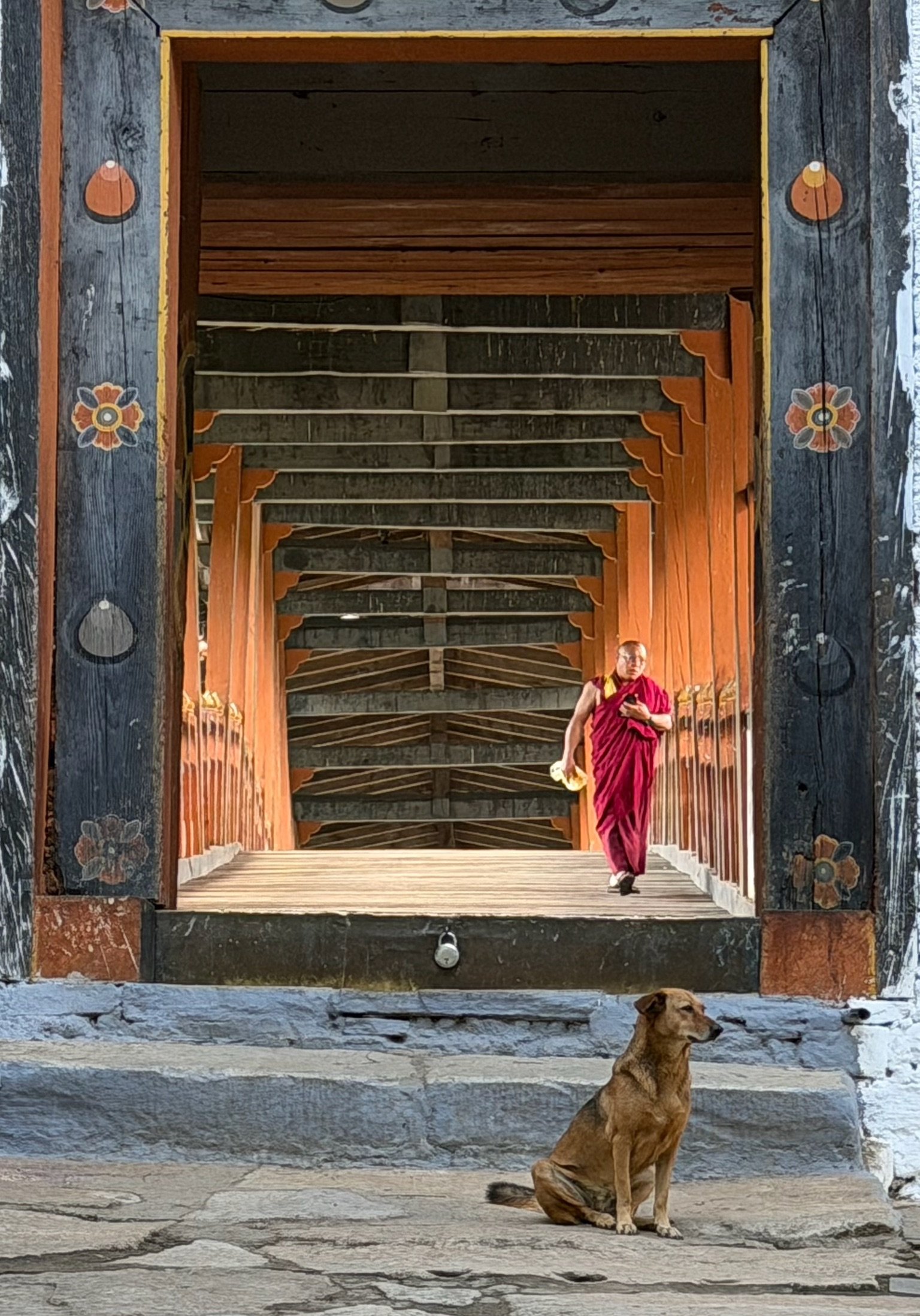
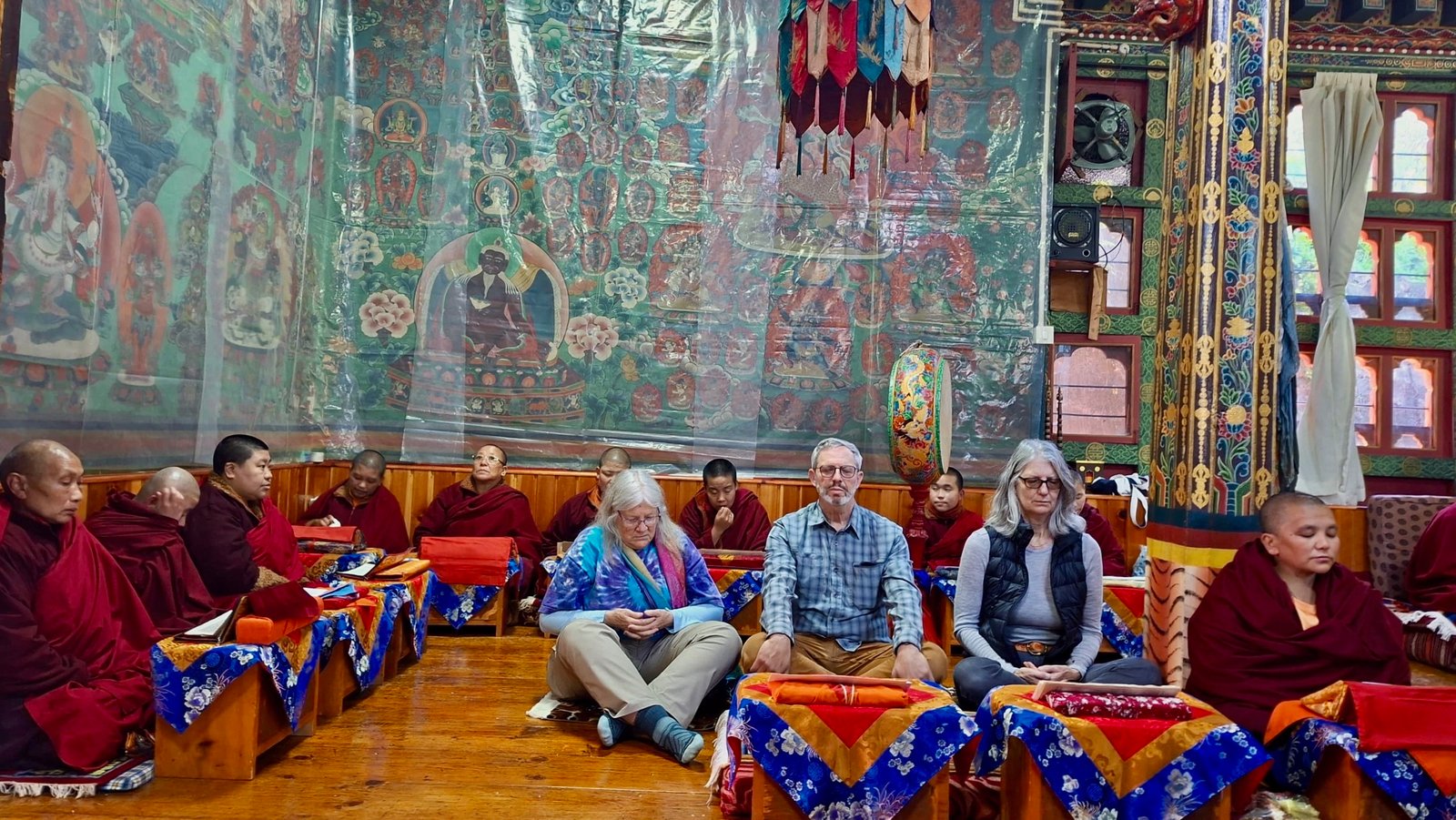
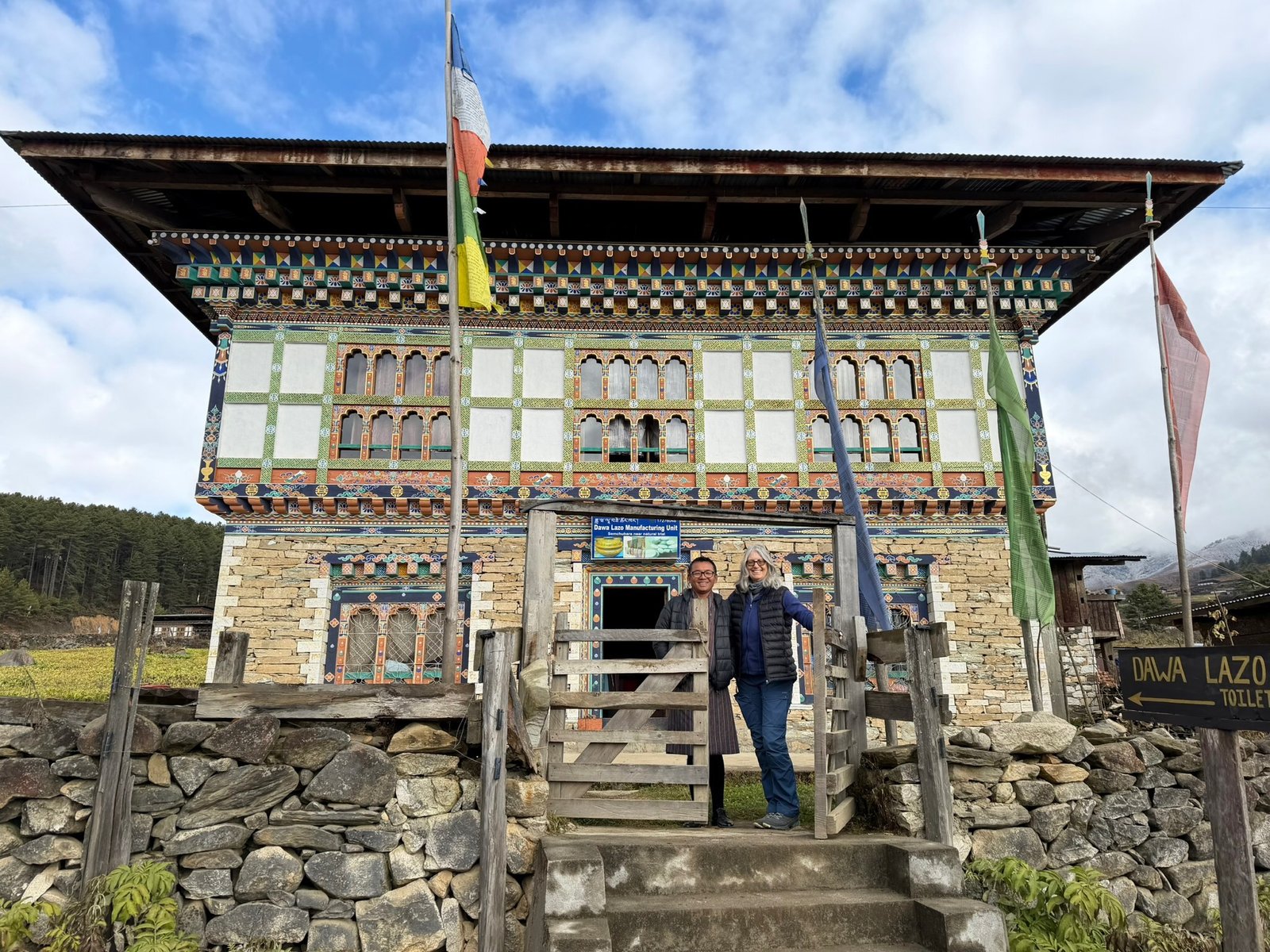
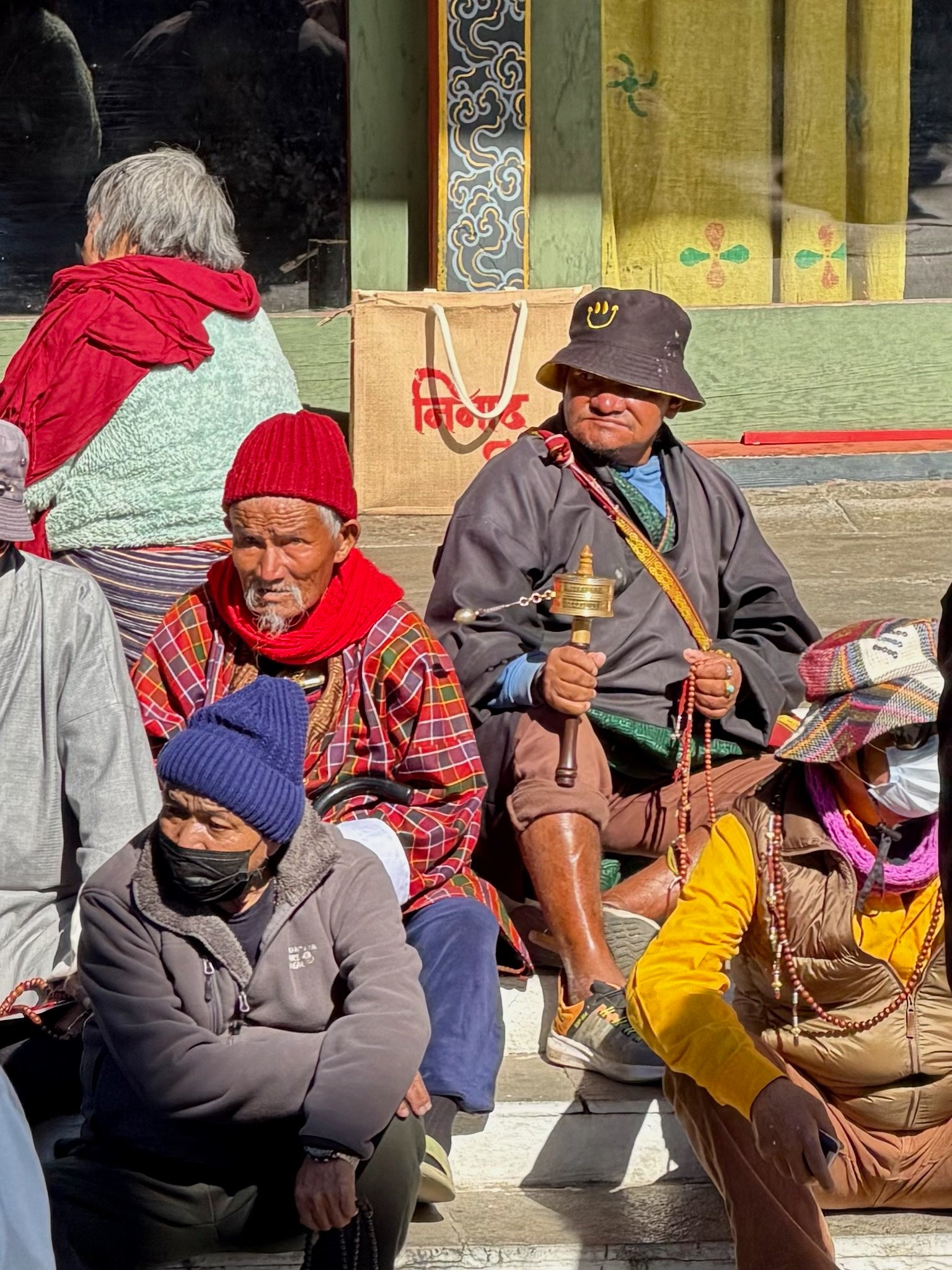
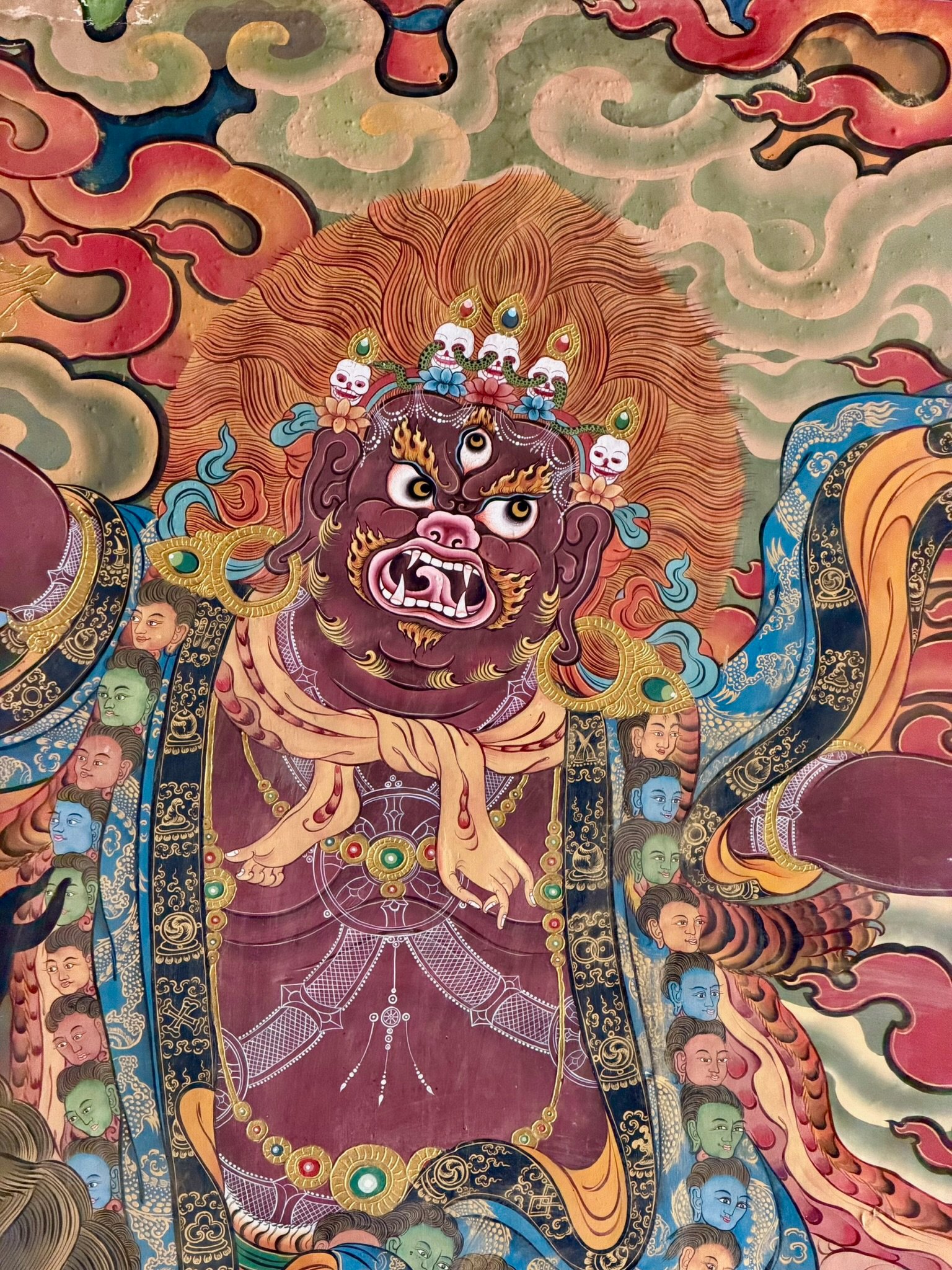
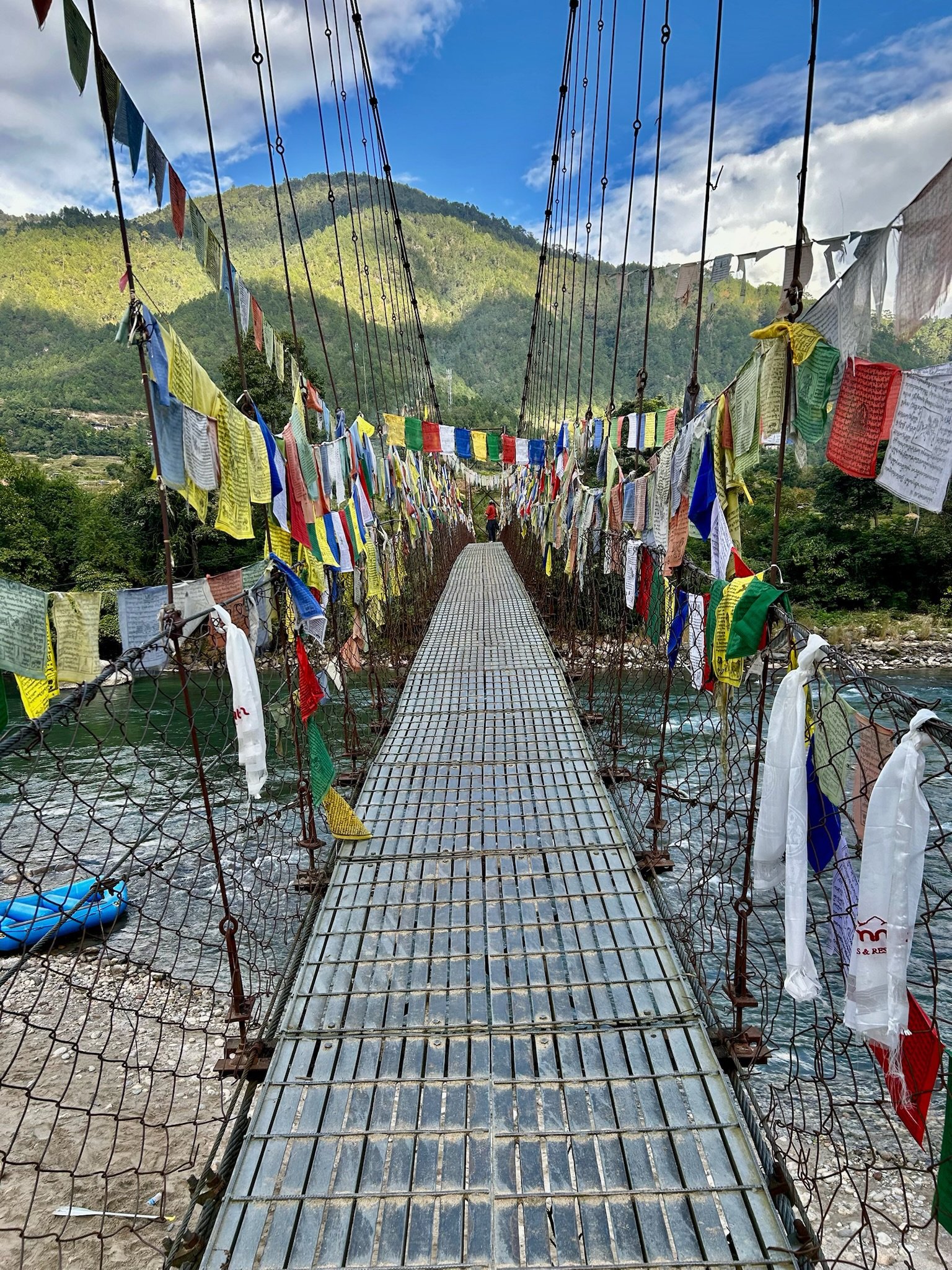
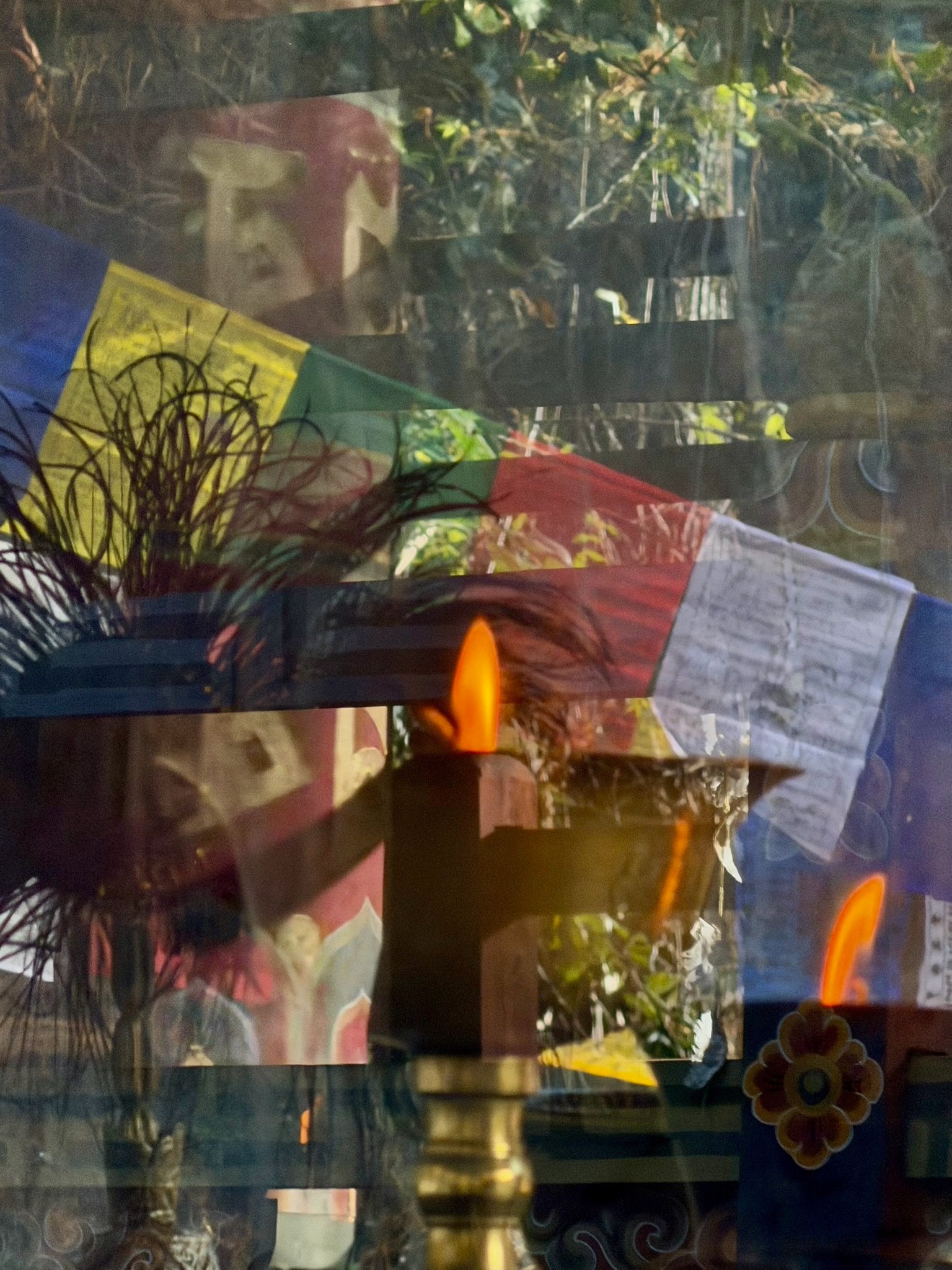
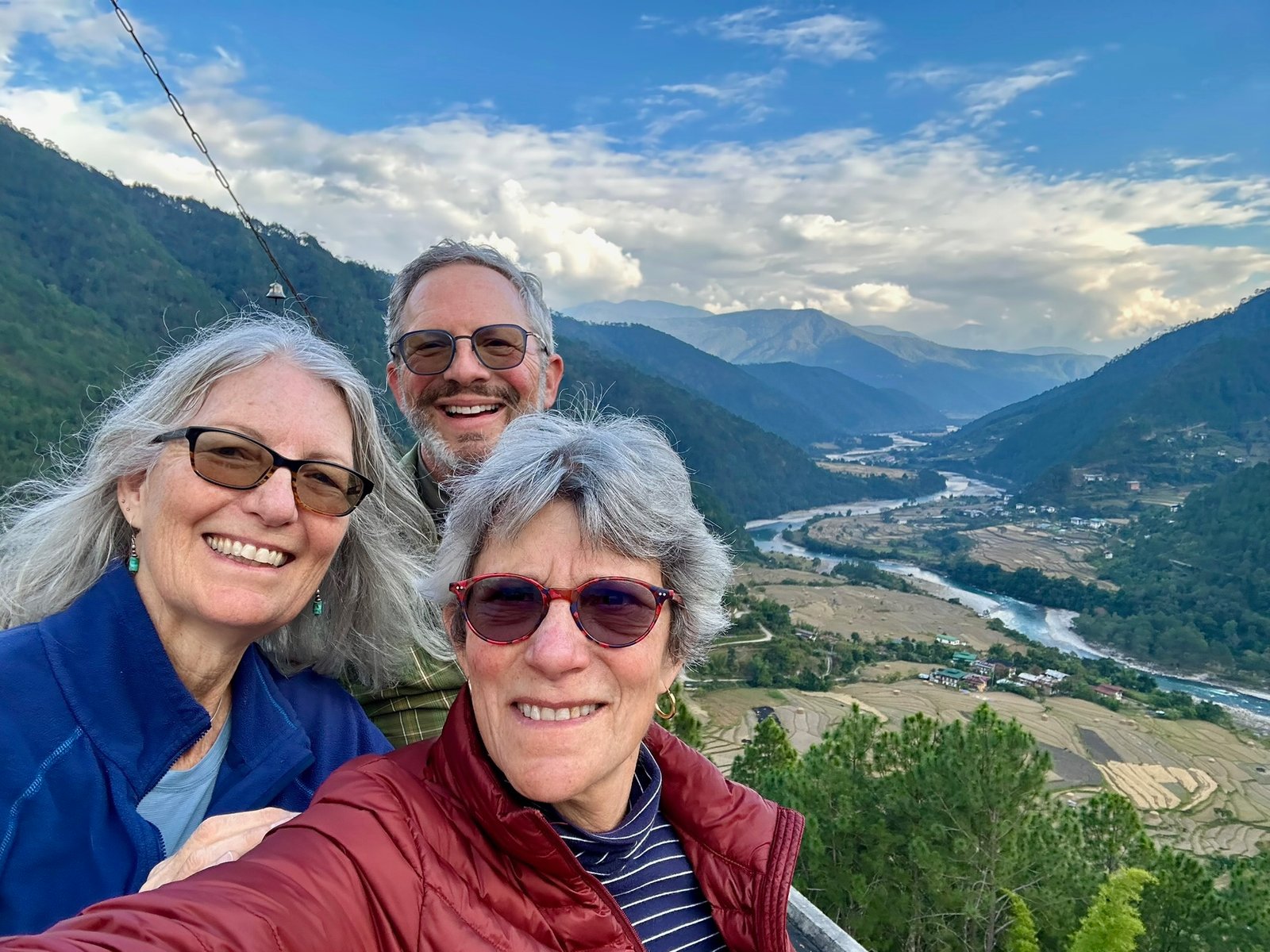
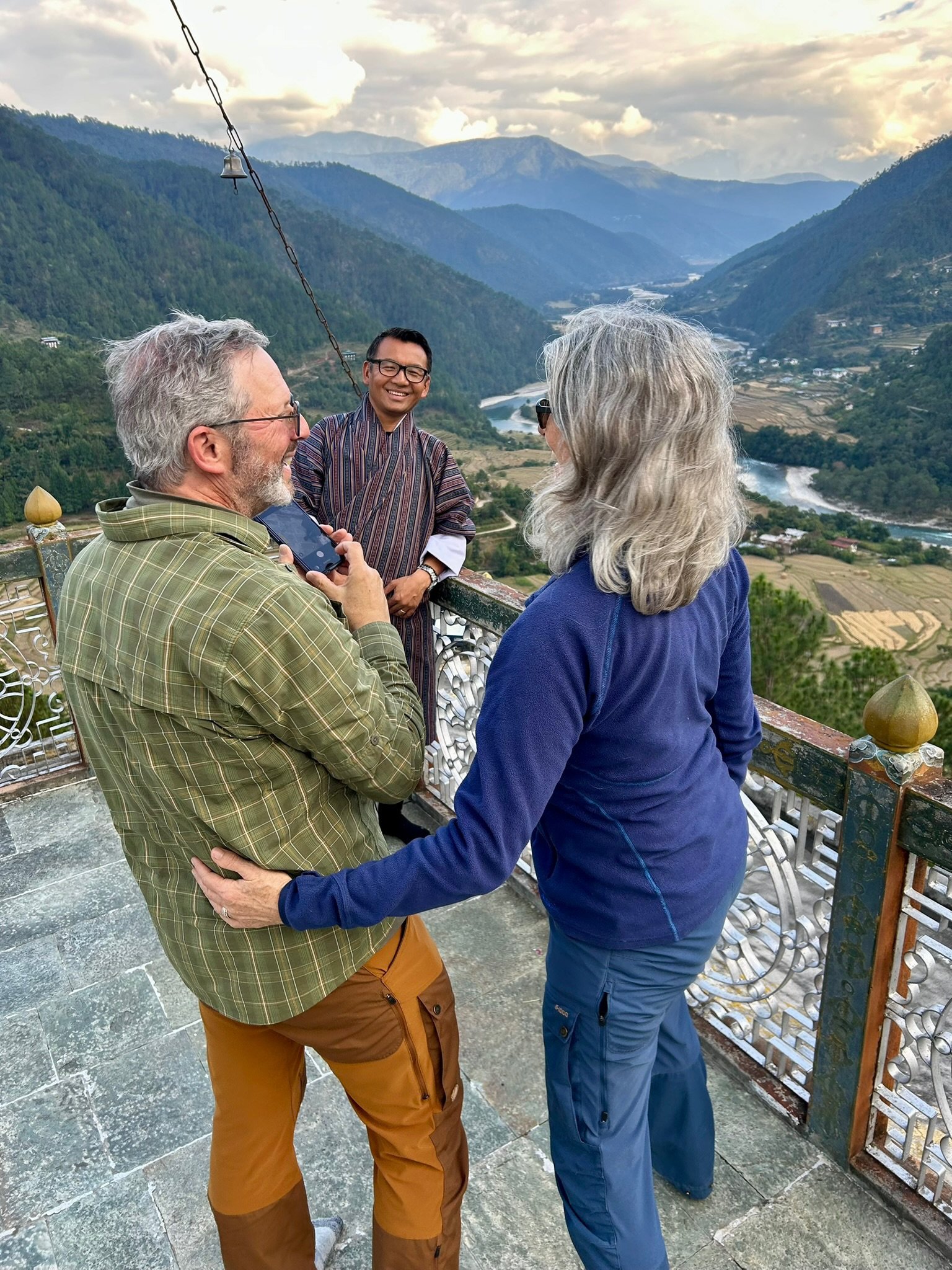
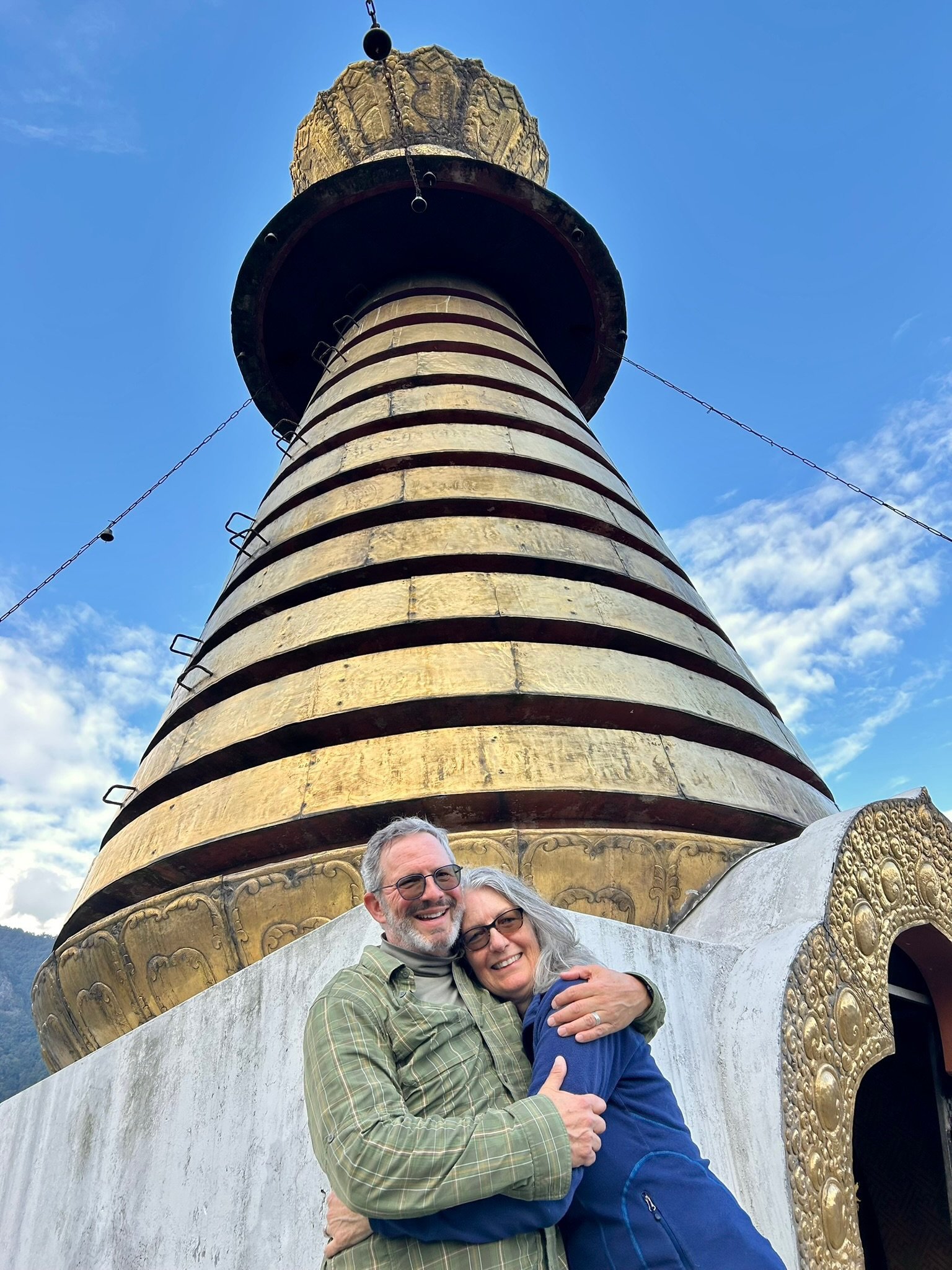
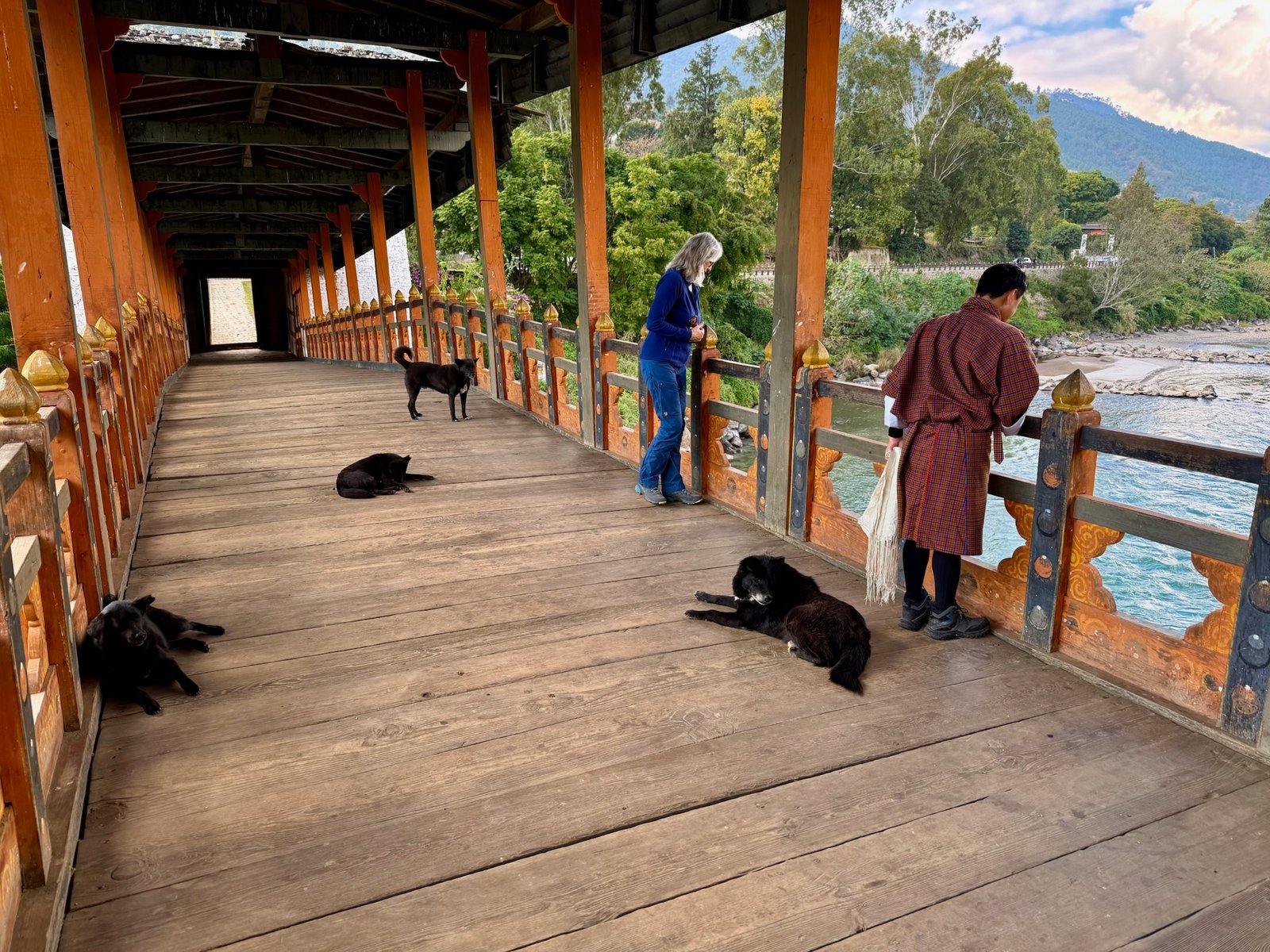
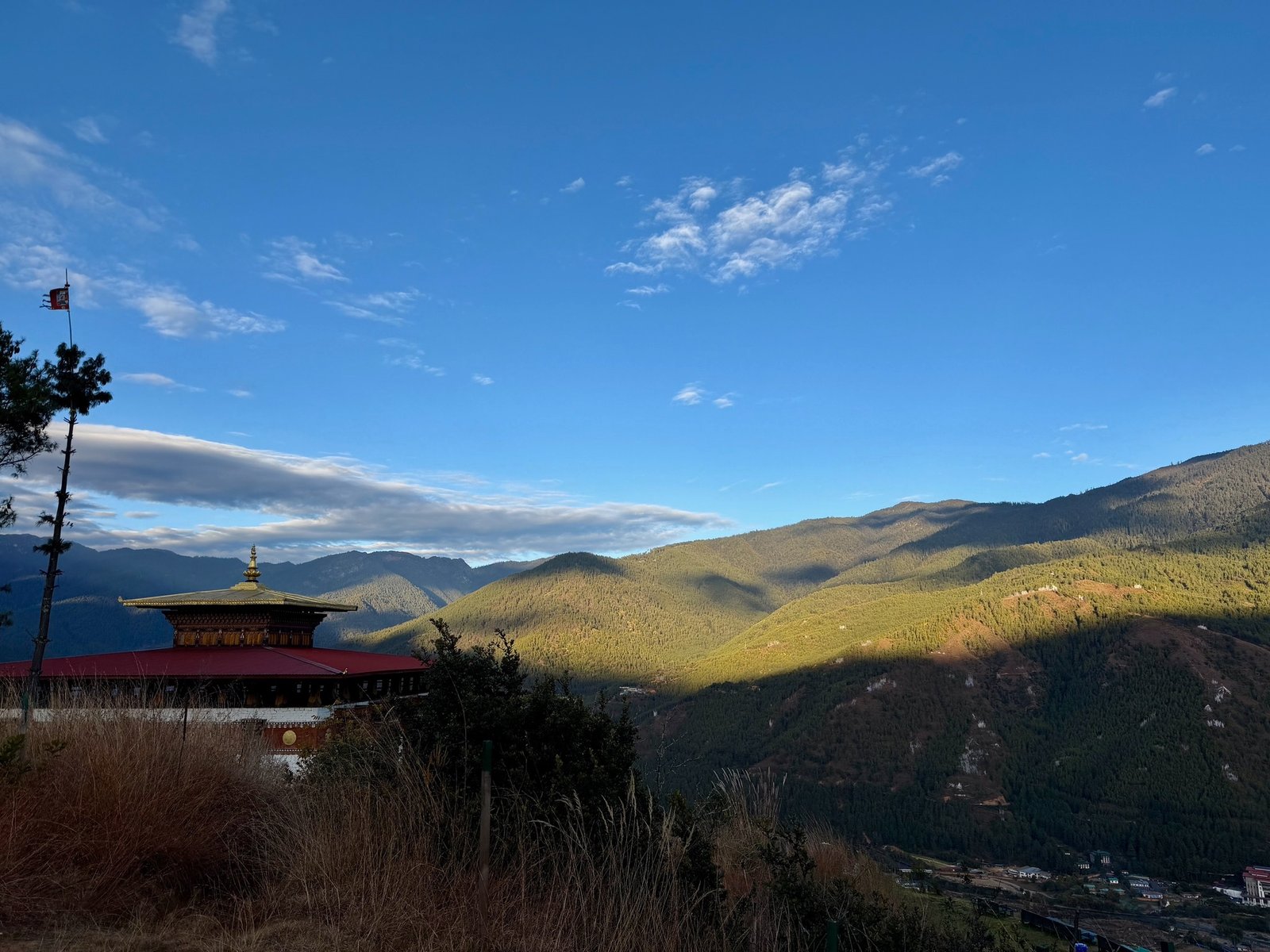
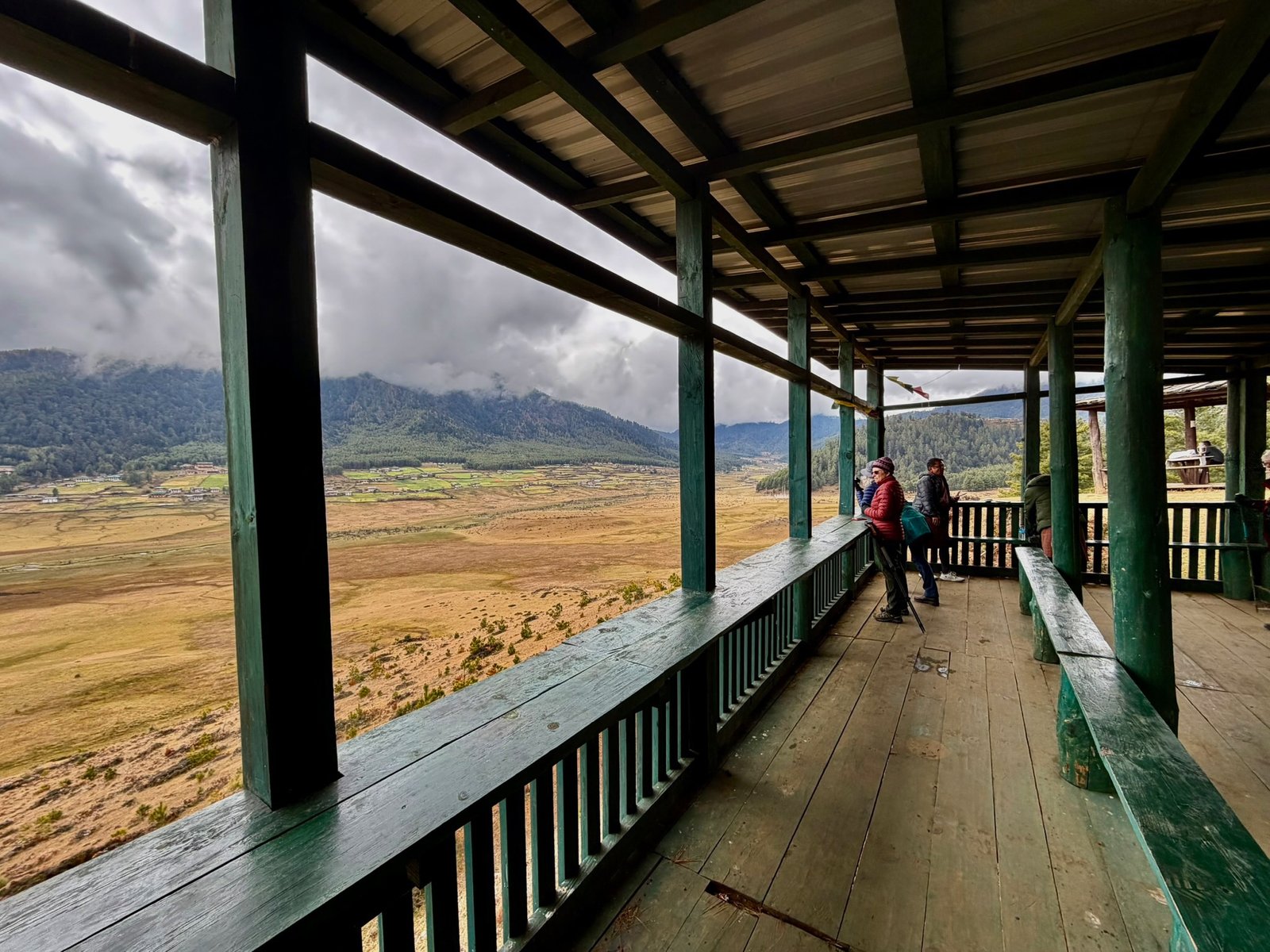
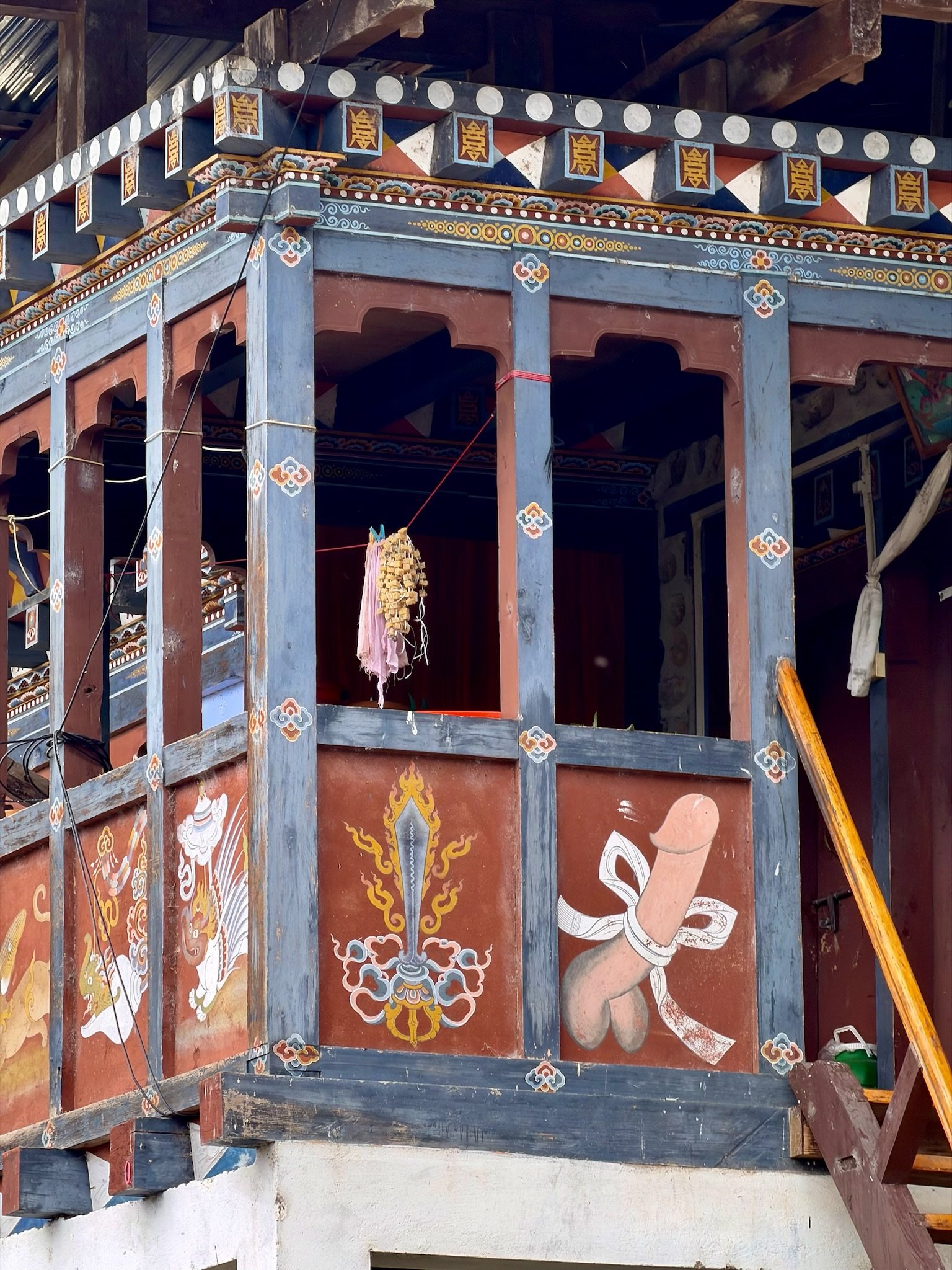
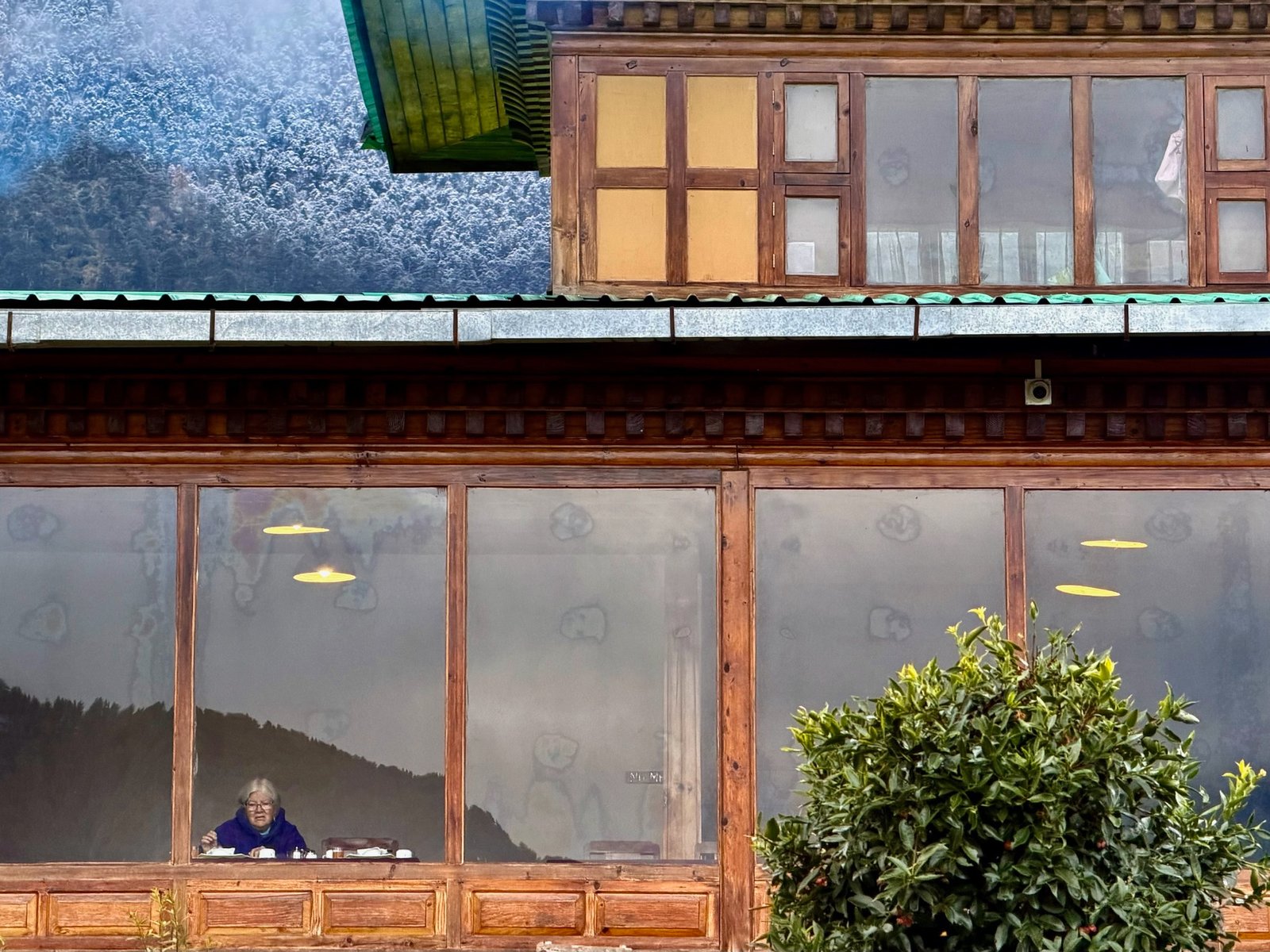
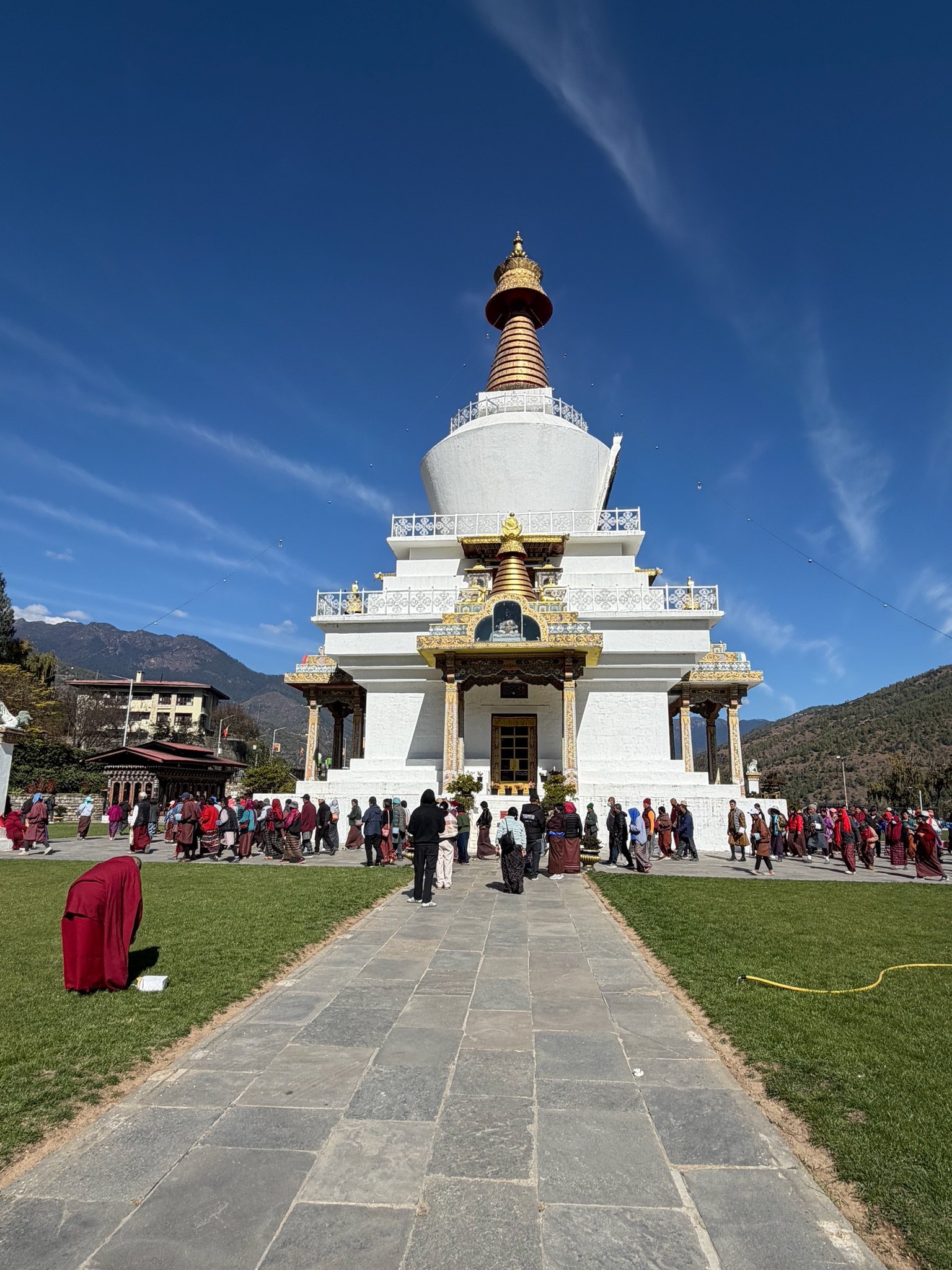
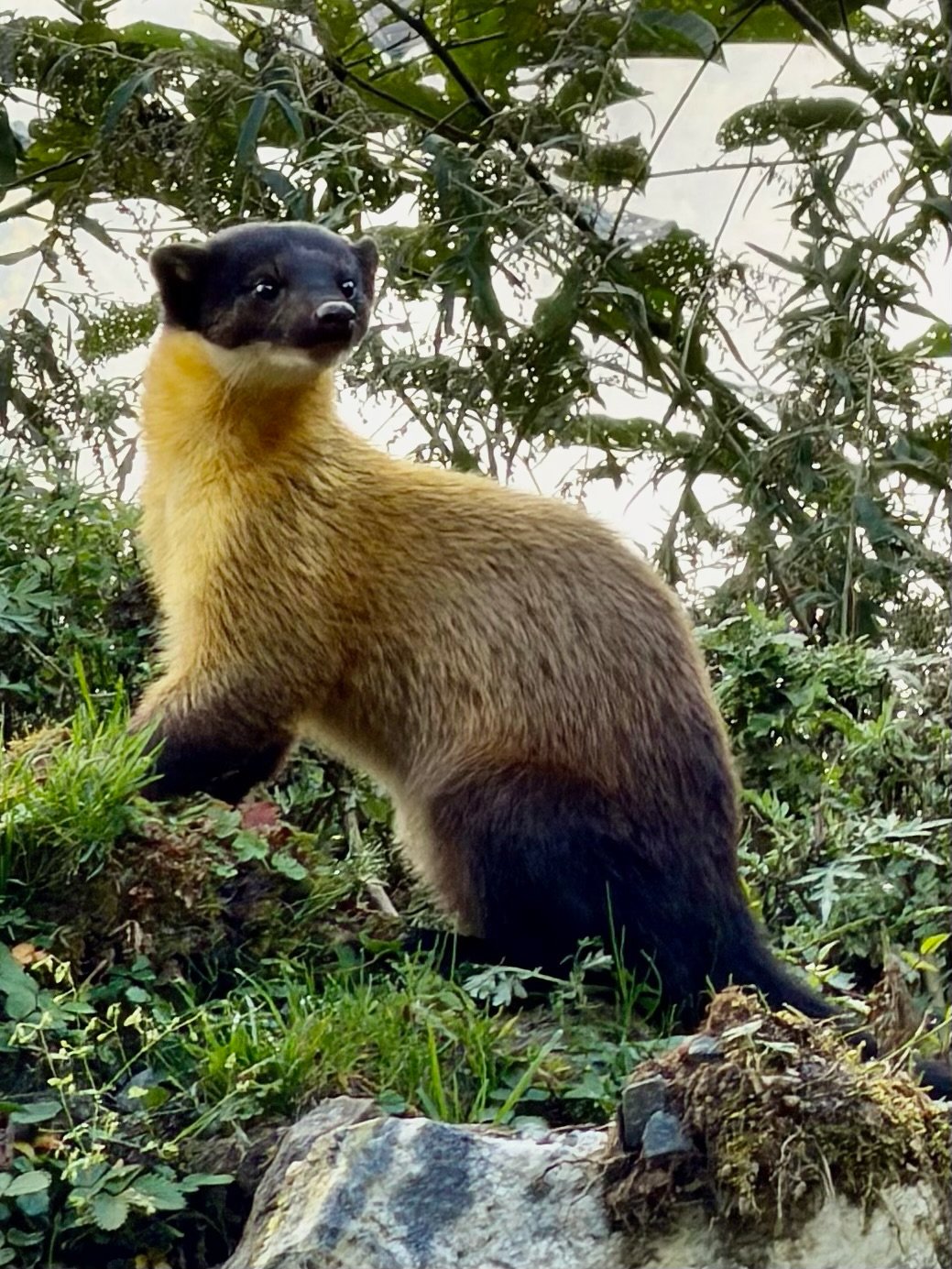
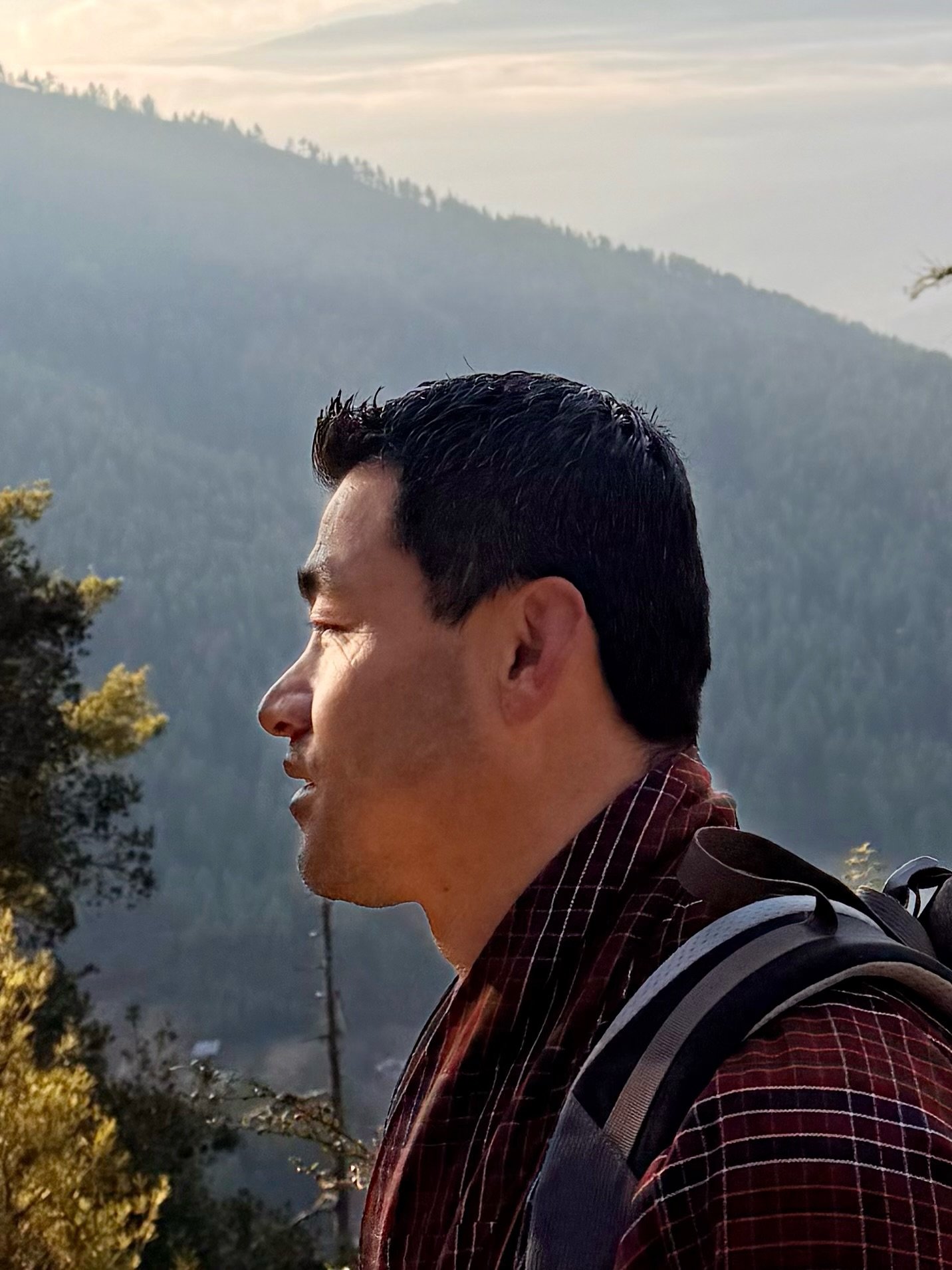
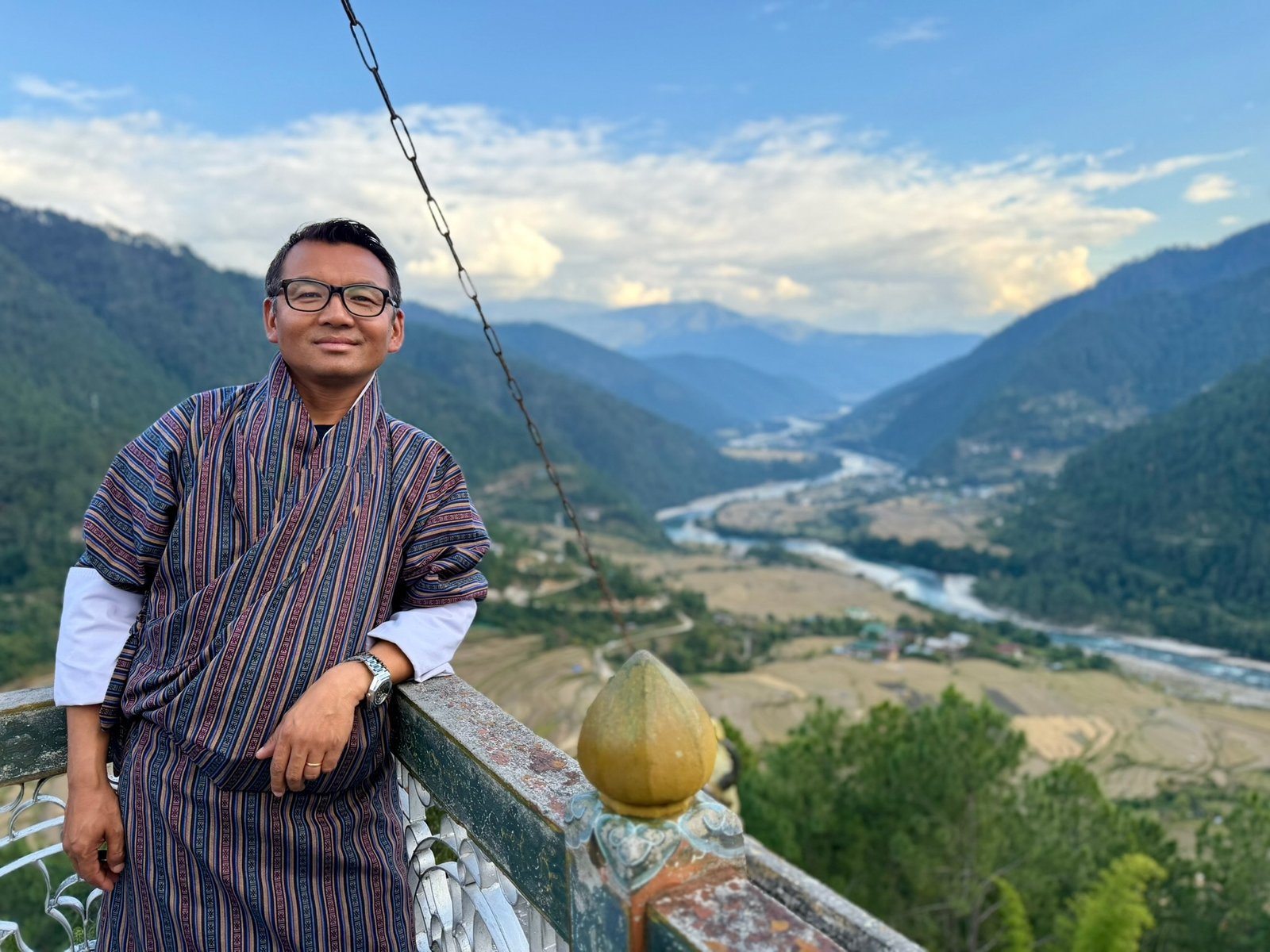
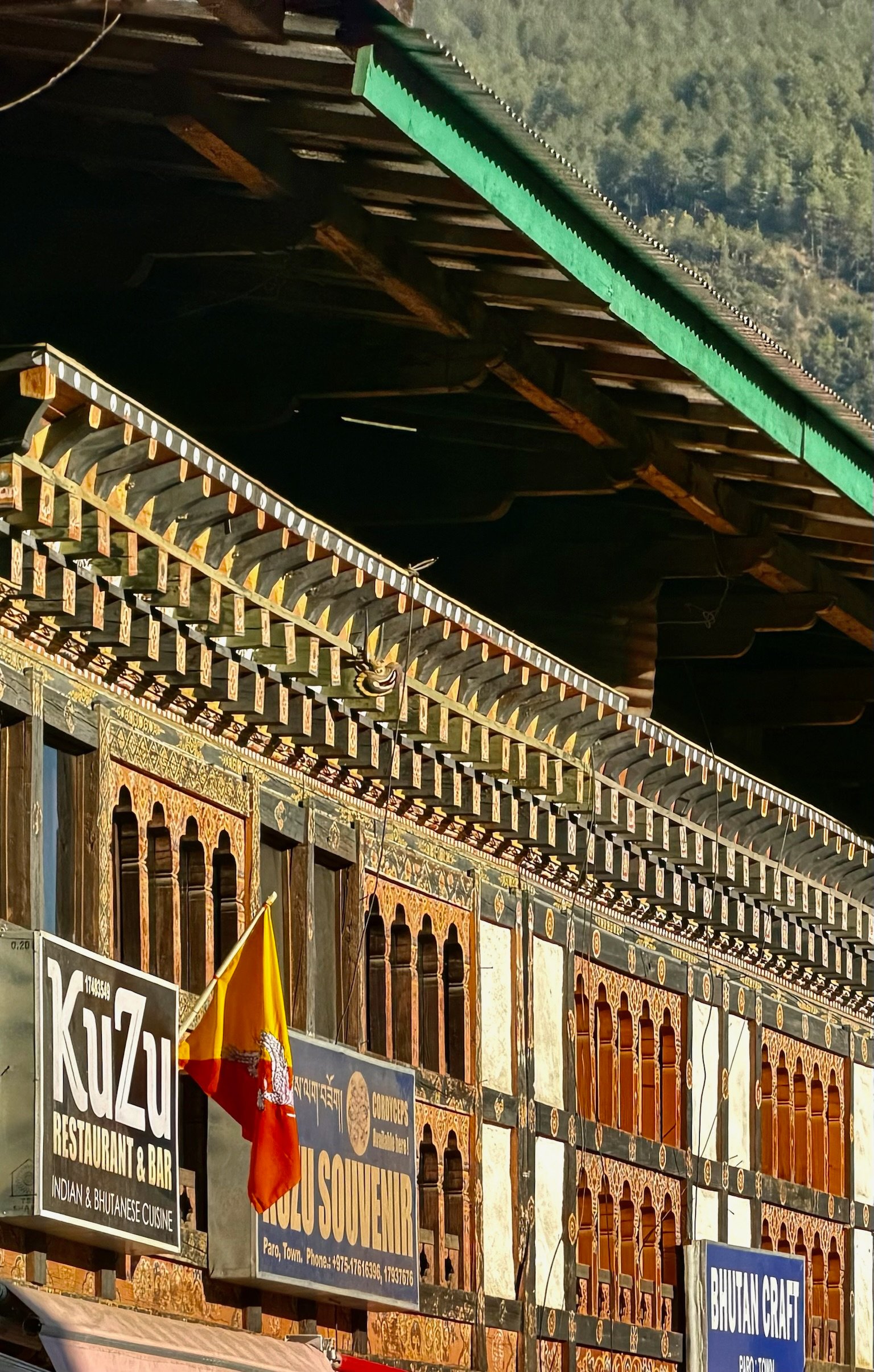
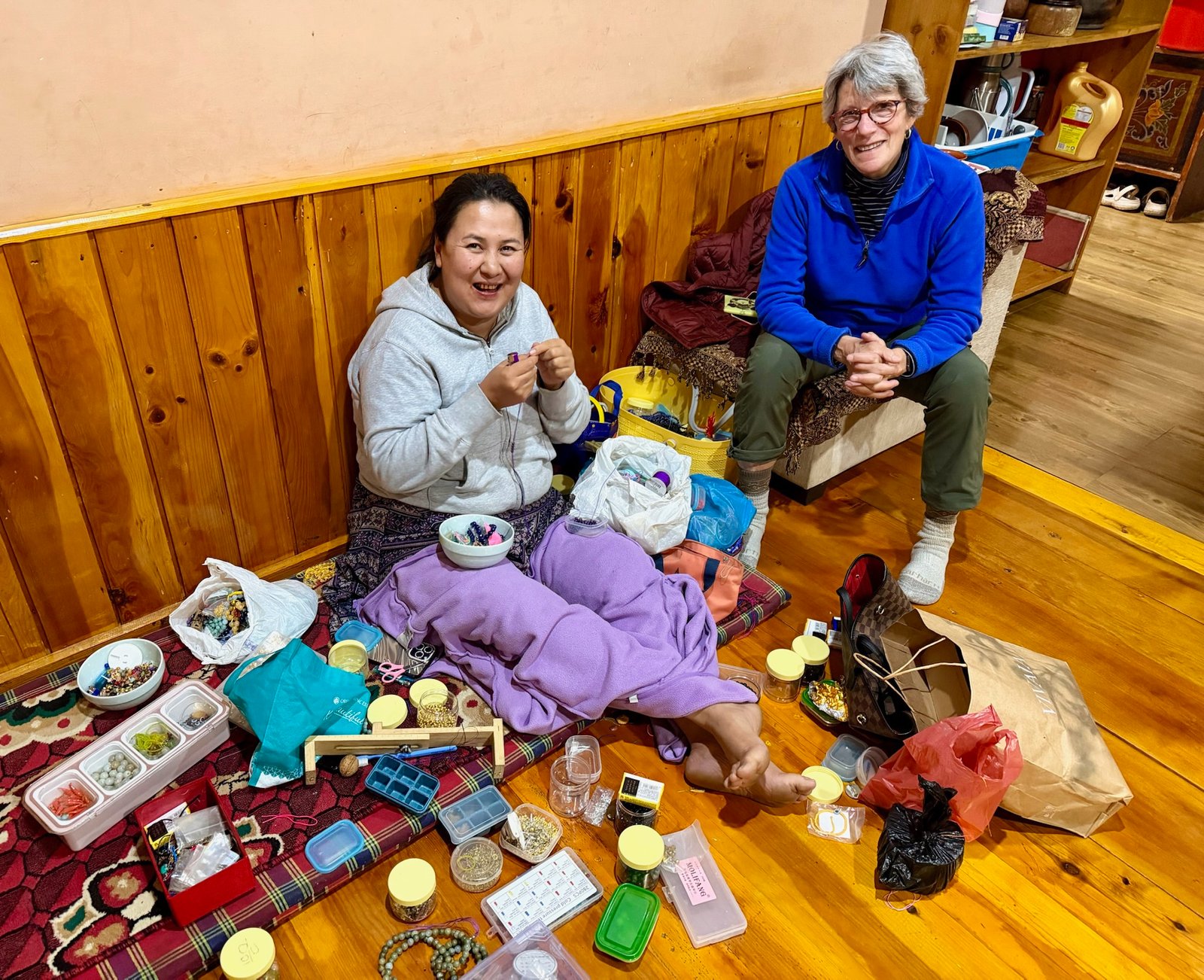
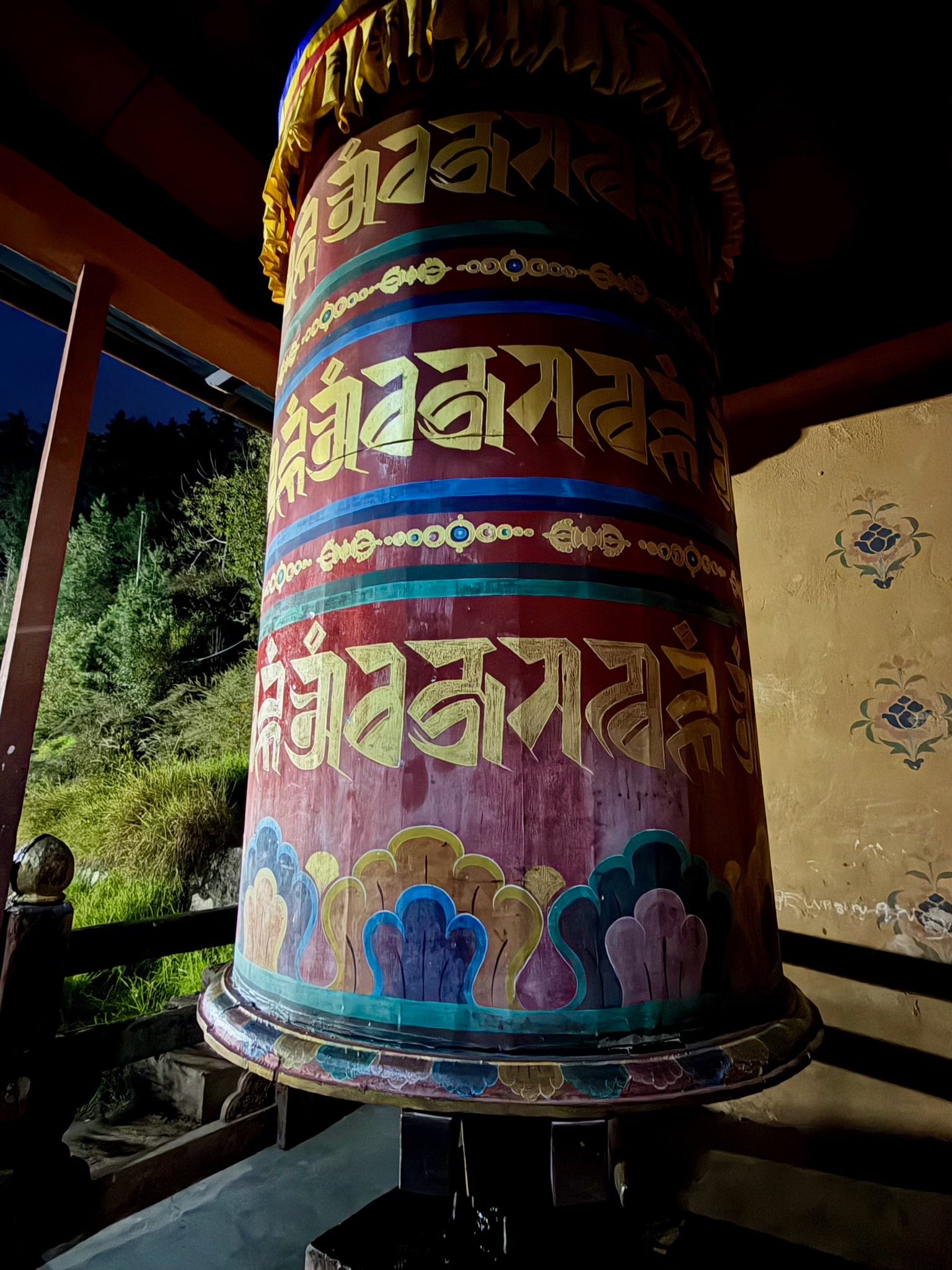
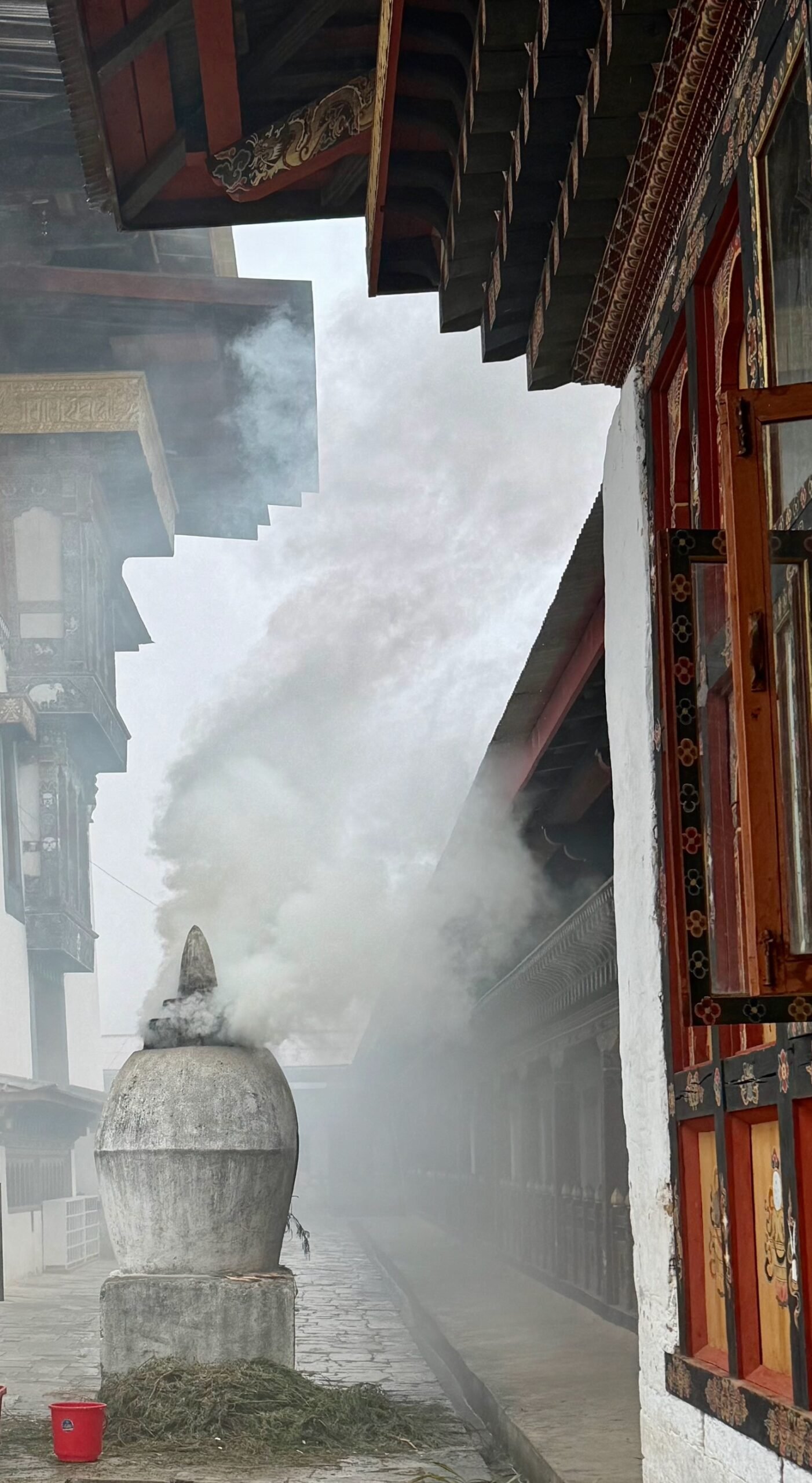
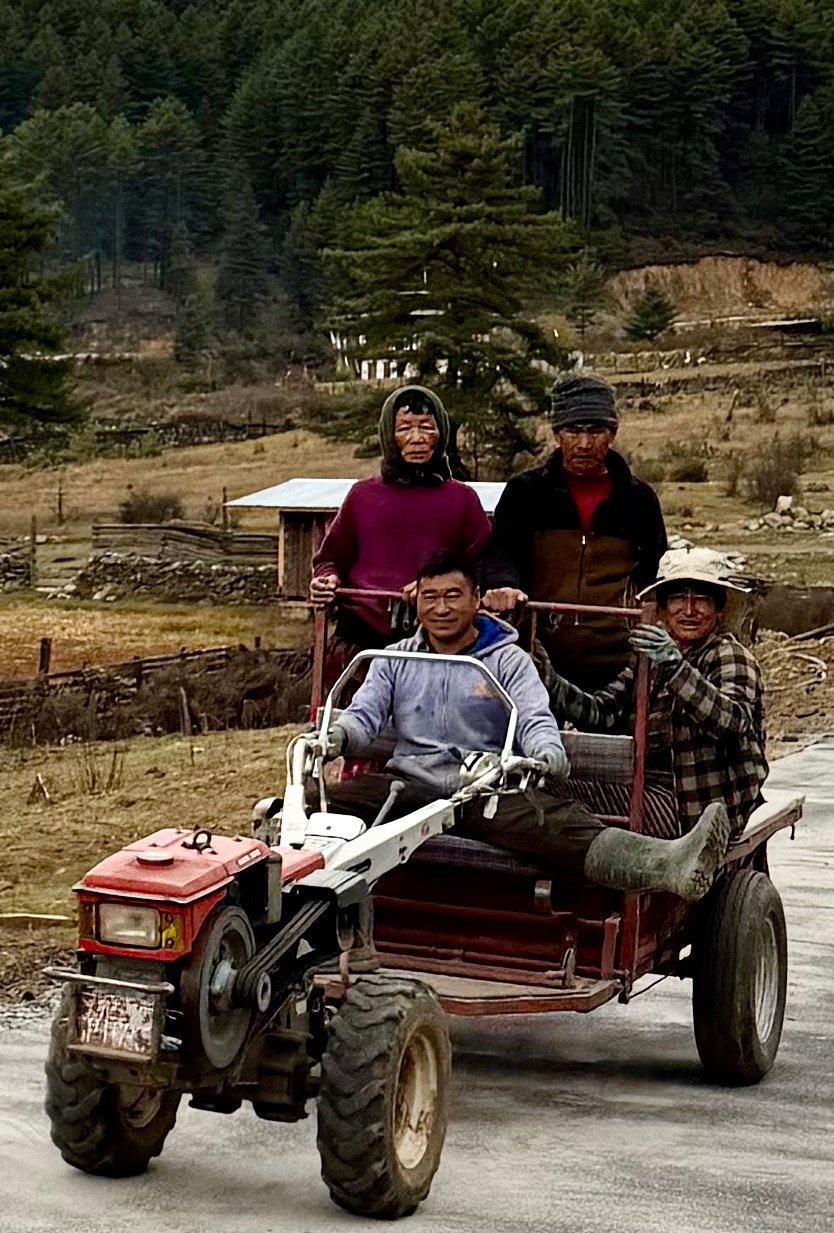
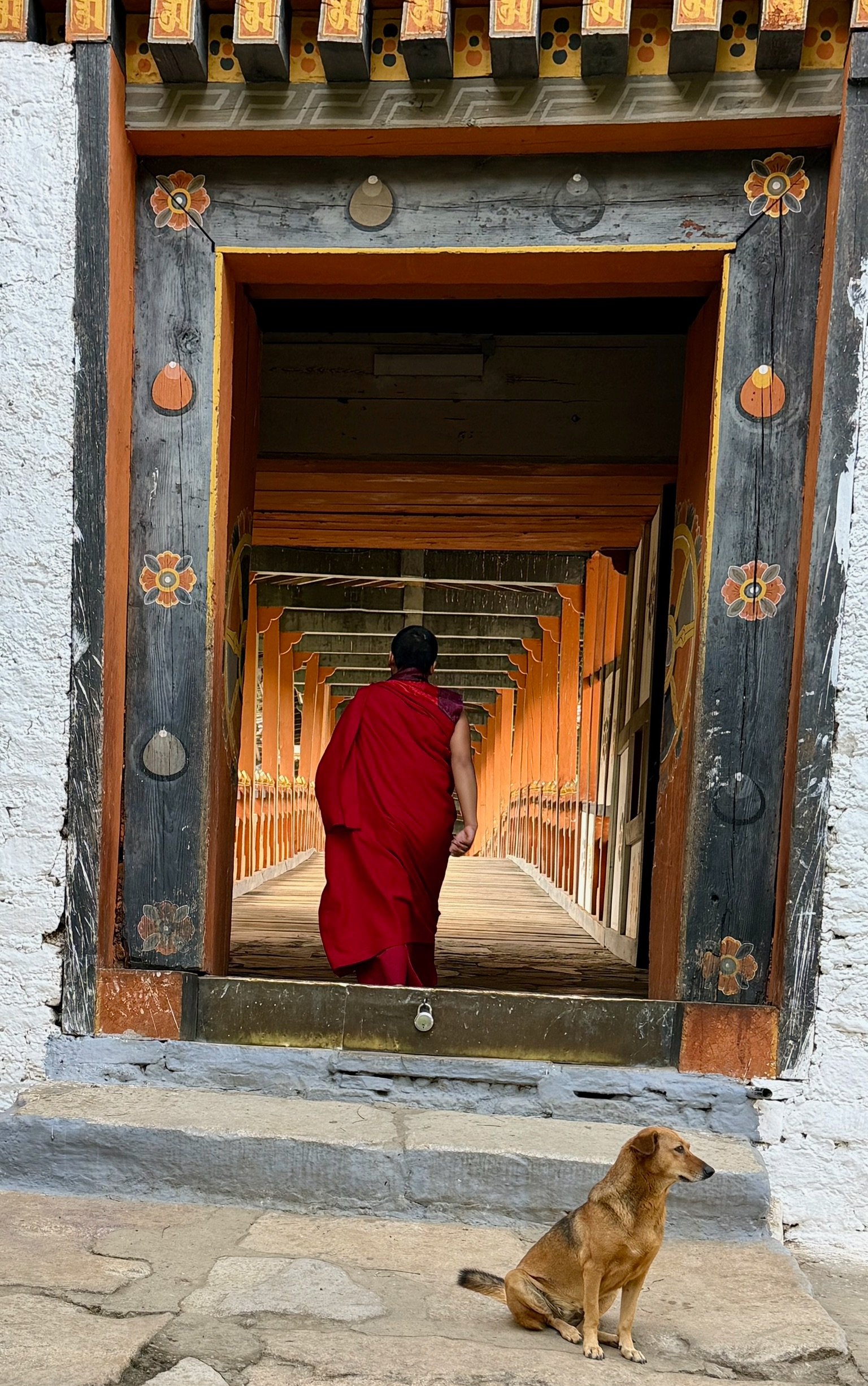
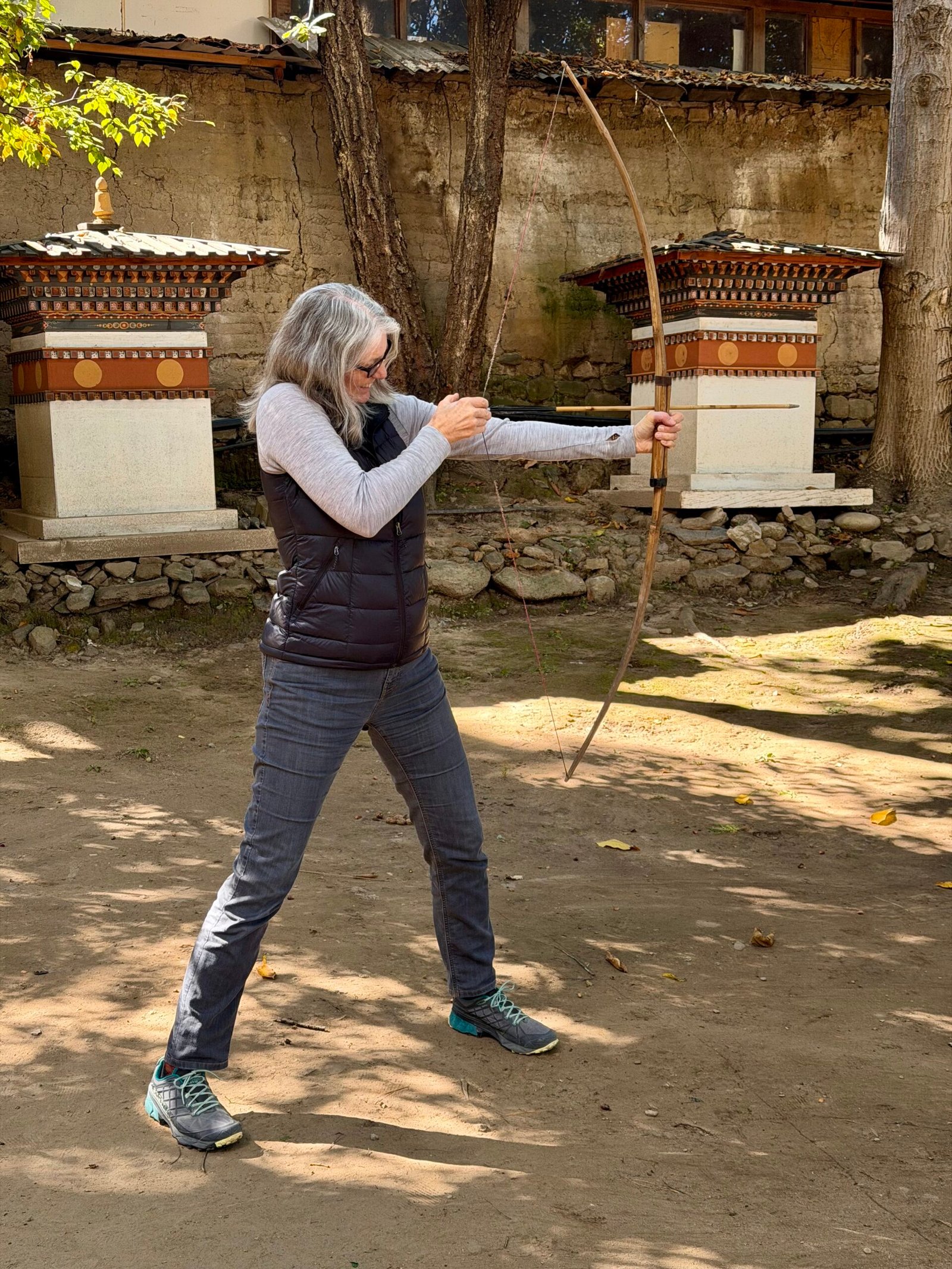
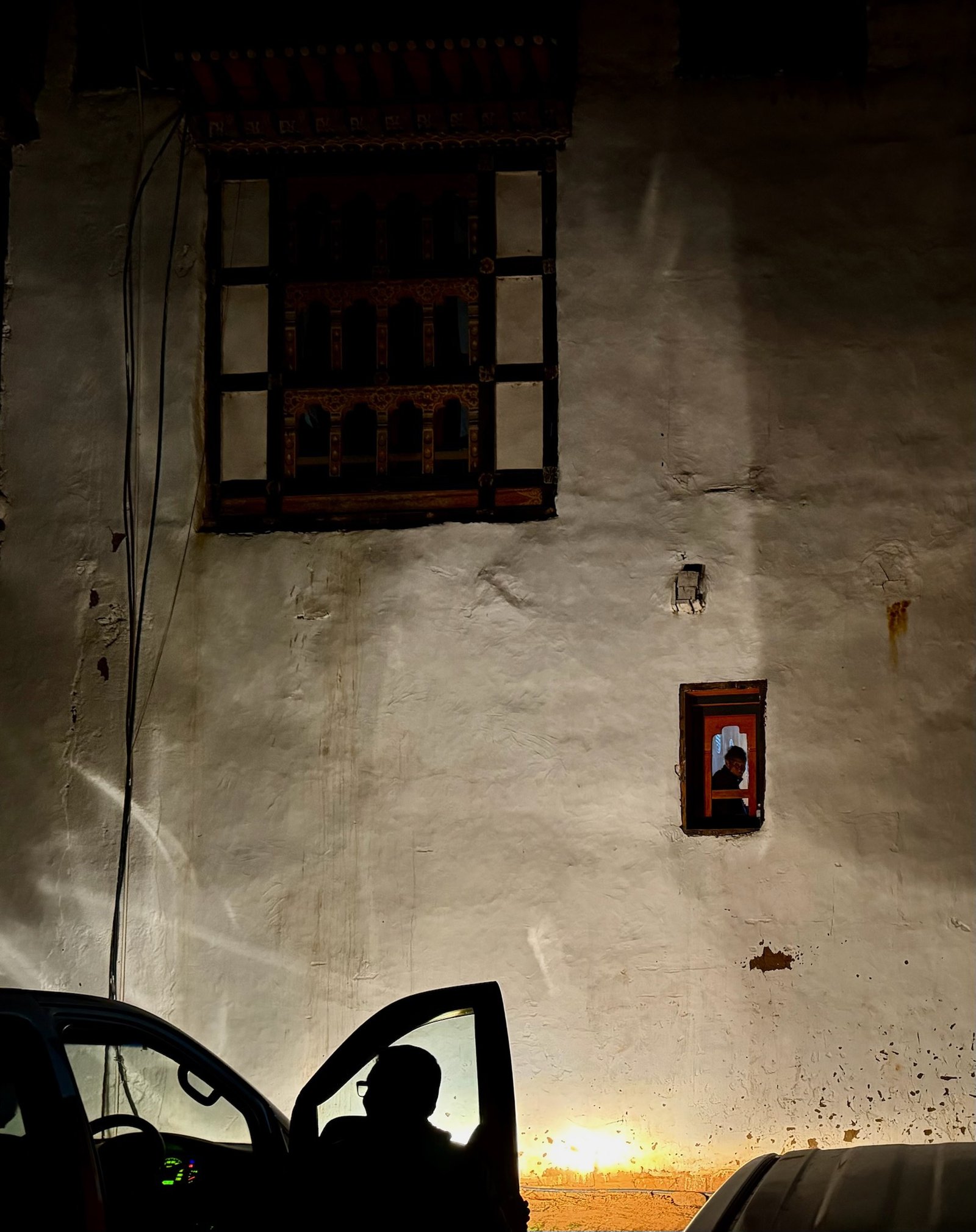
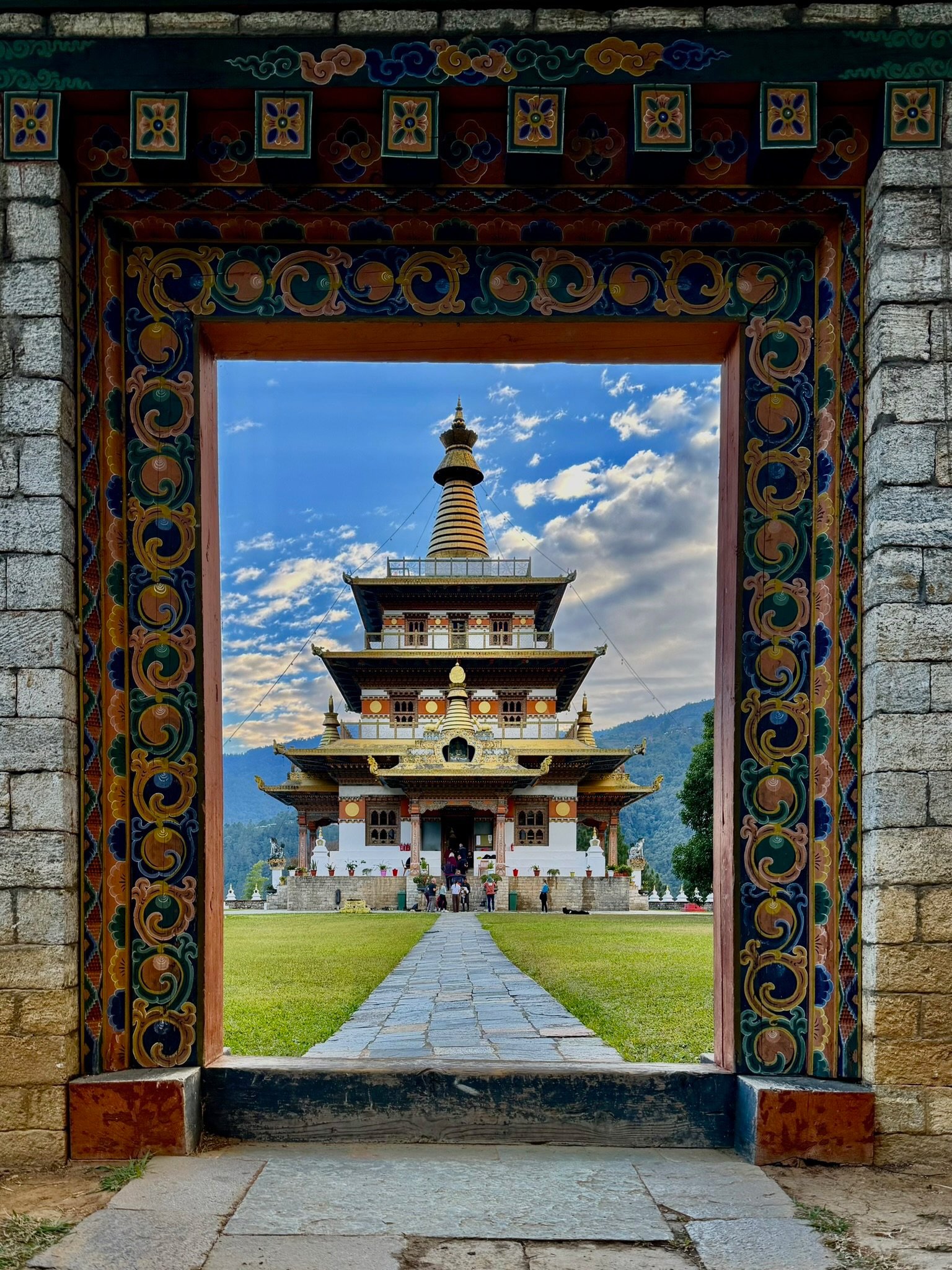
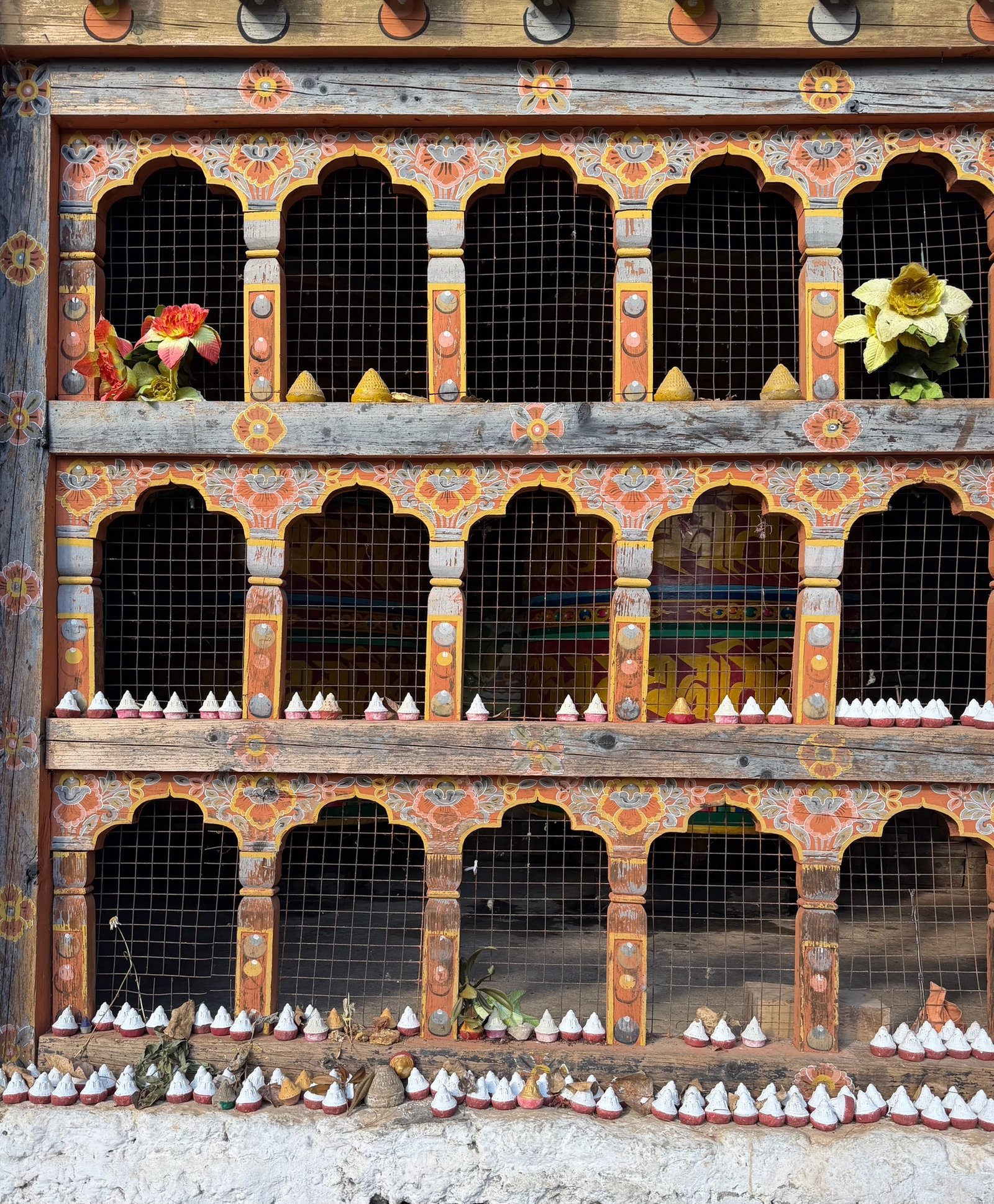
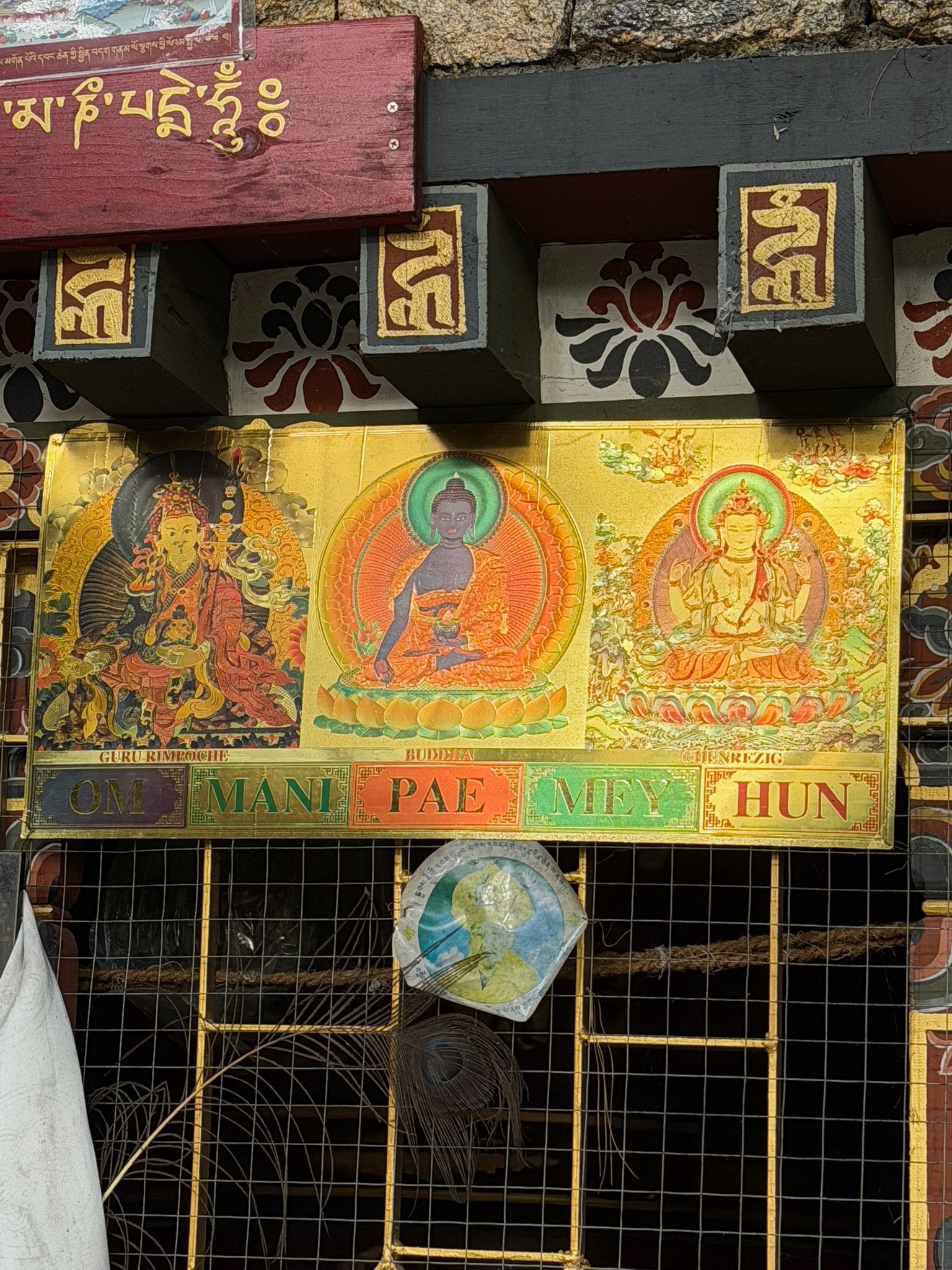
Temples filled with colorful carvings, texts, mandalas and statues transport you to another dimension like being on some sort of spiritual acid trip. Inside there are typically two visual themes that endlessly intertwine: serene, staid golden interiors with richly colored and highly detailed line art mixed a visual riot of twisted multi-headed morphing bodies that run the gamut from viscerally demonic to deliciously lewd. Temples often contain 3 levels of rich, vertical storytelling before you are ejected out onto the temple roof for that expansive horizontal Cinescope vista. Below us, we can hear monks, nuns and folks walking in ceremonial clockwise circles, chanting to a constant Buddhist vocal drumbeat.
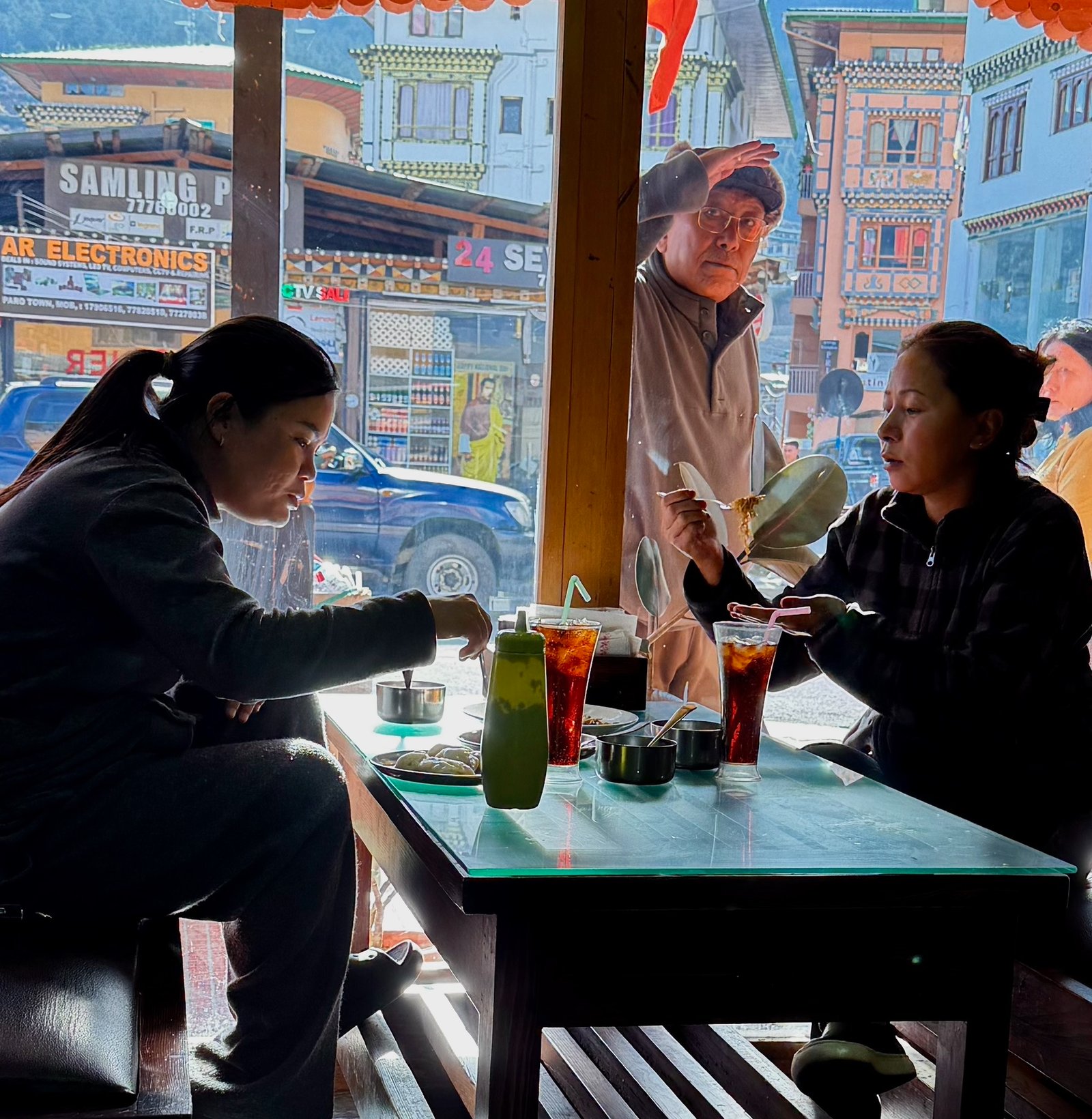
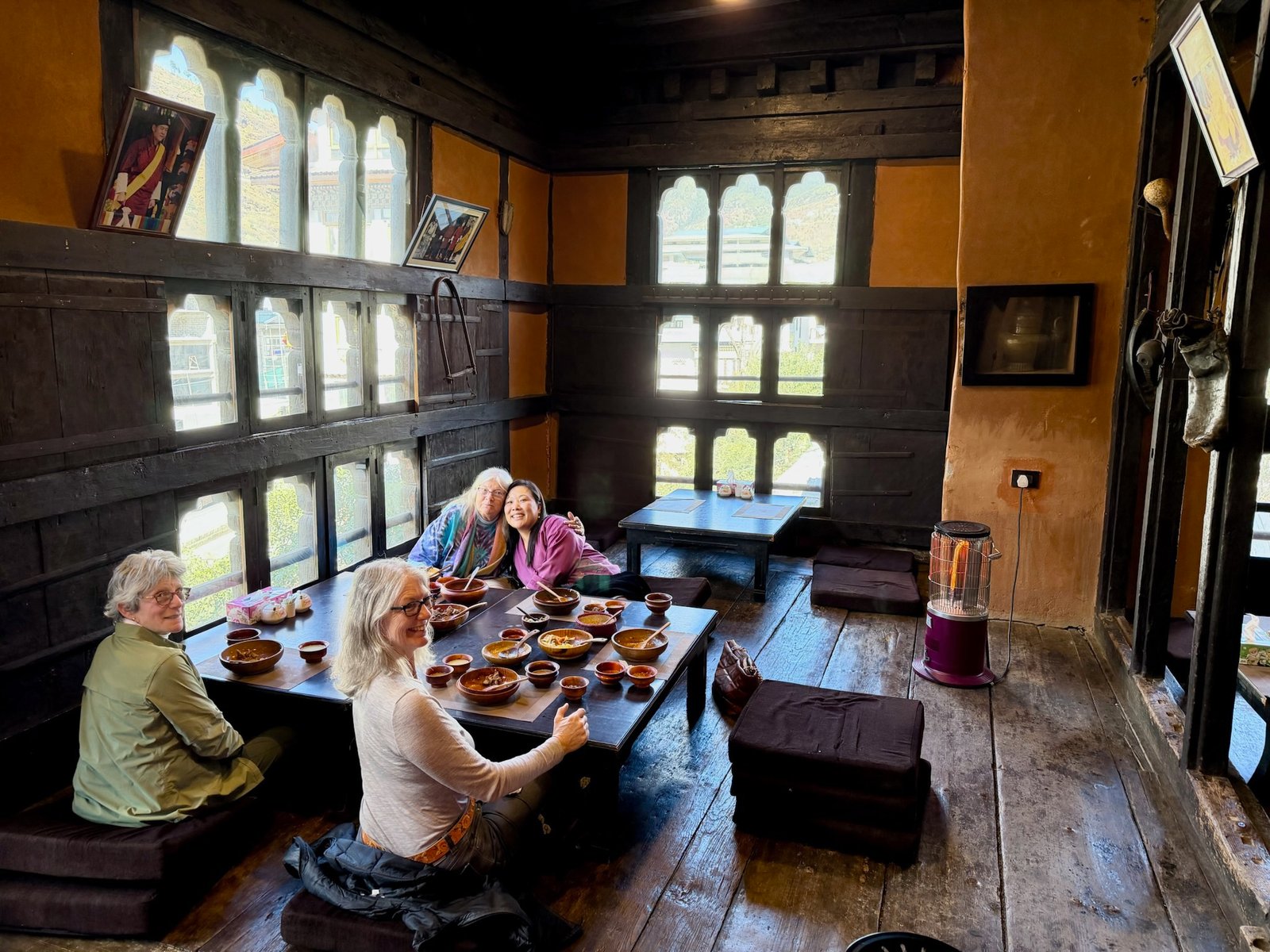
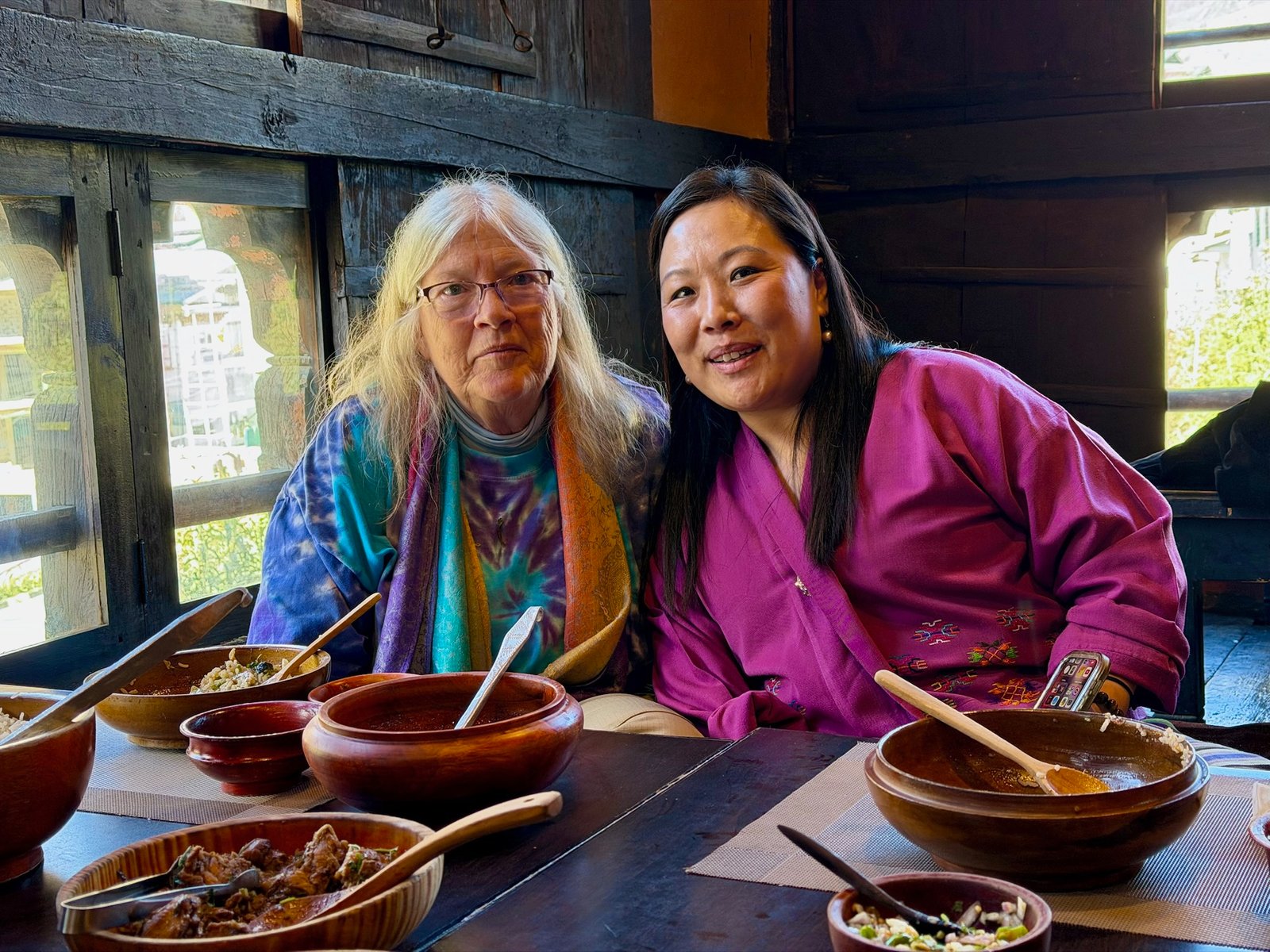
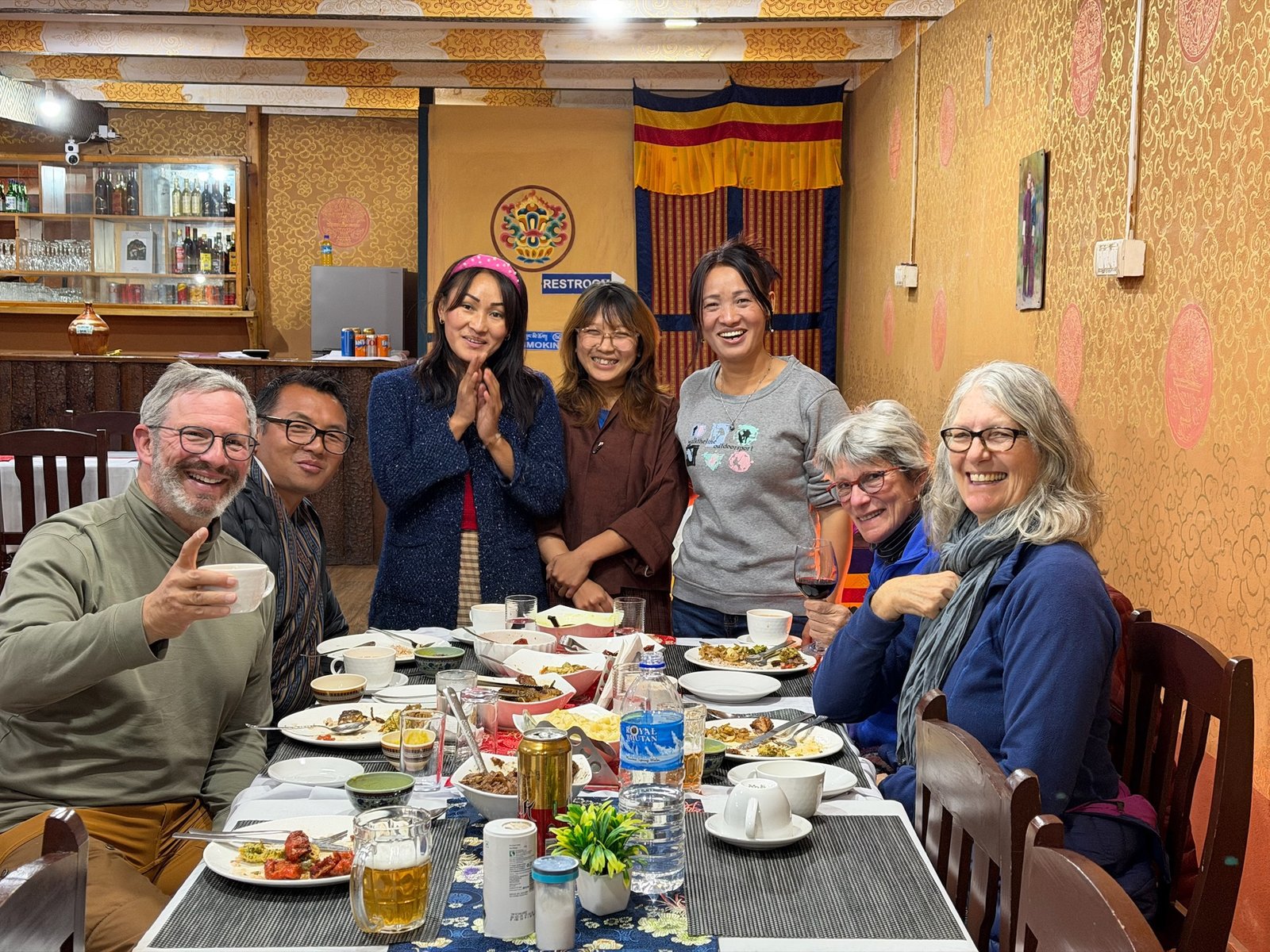
Thanks to being halfway round the world, our days often begin at 4:38am with a twist of a freeze dried instant coffee packet and powdered milk. No elite coffee here but tons of yak butter tea and chai are available. Nearby the national dish of melted yak cheese and spicy chili are prepared in rural homes and hotels. It’s called ema datshi and everyone makes it. At local roadside markets, we also find bbq’d corn, dried yak cheese, more yak butter tea, red rice and buckwheat dumplings.
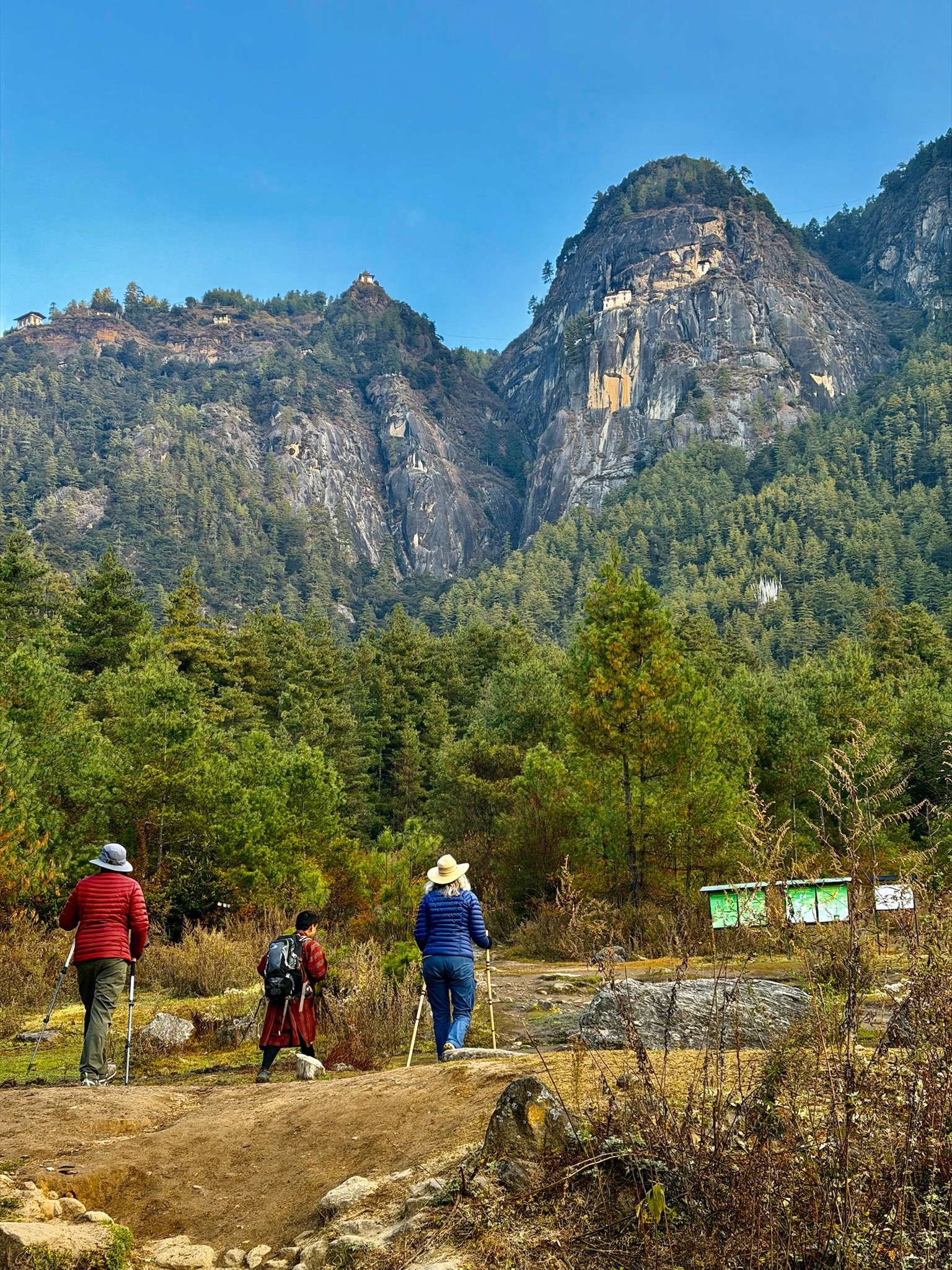
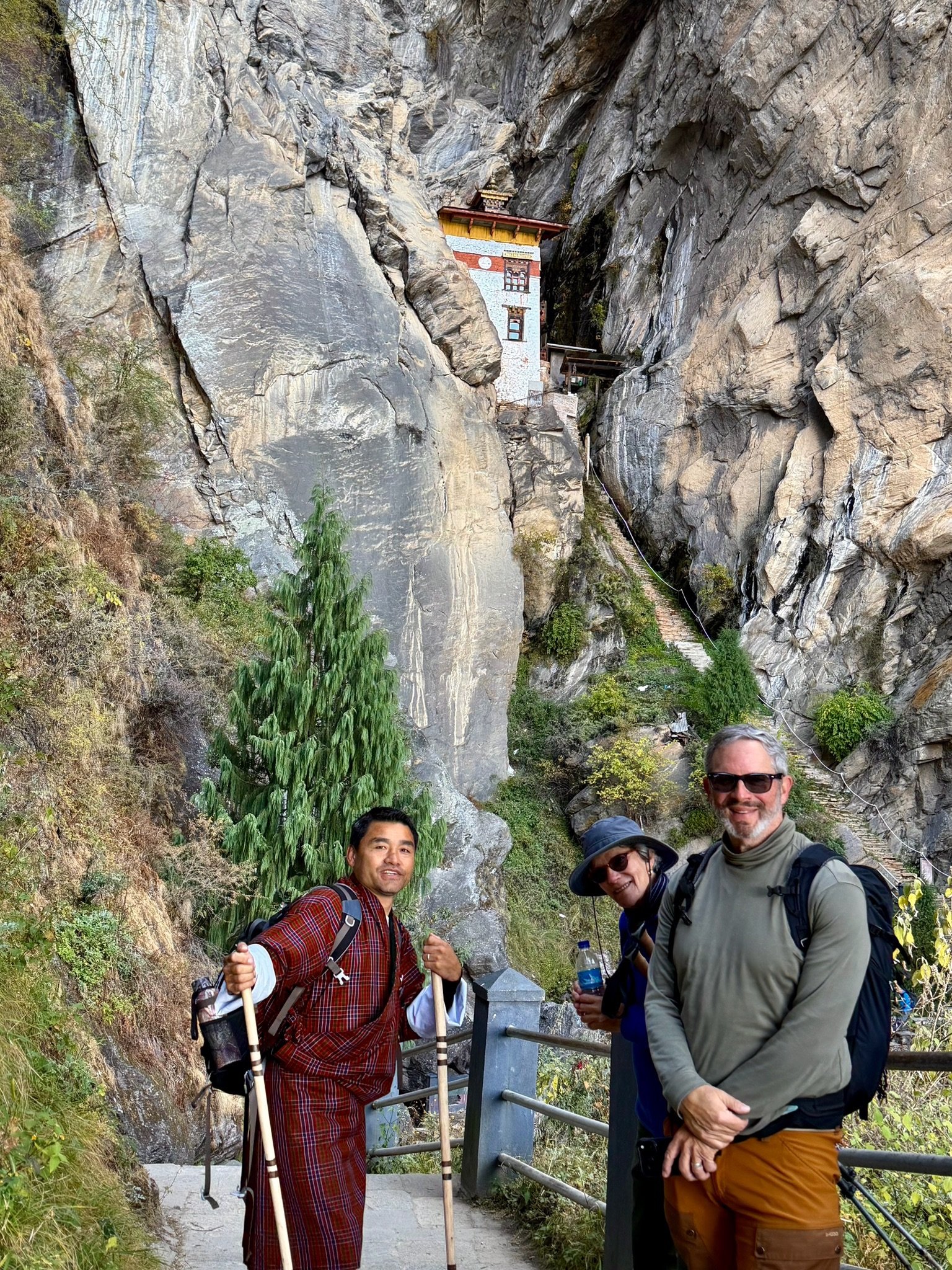
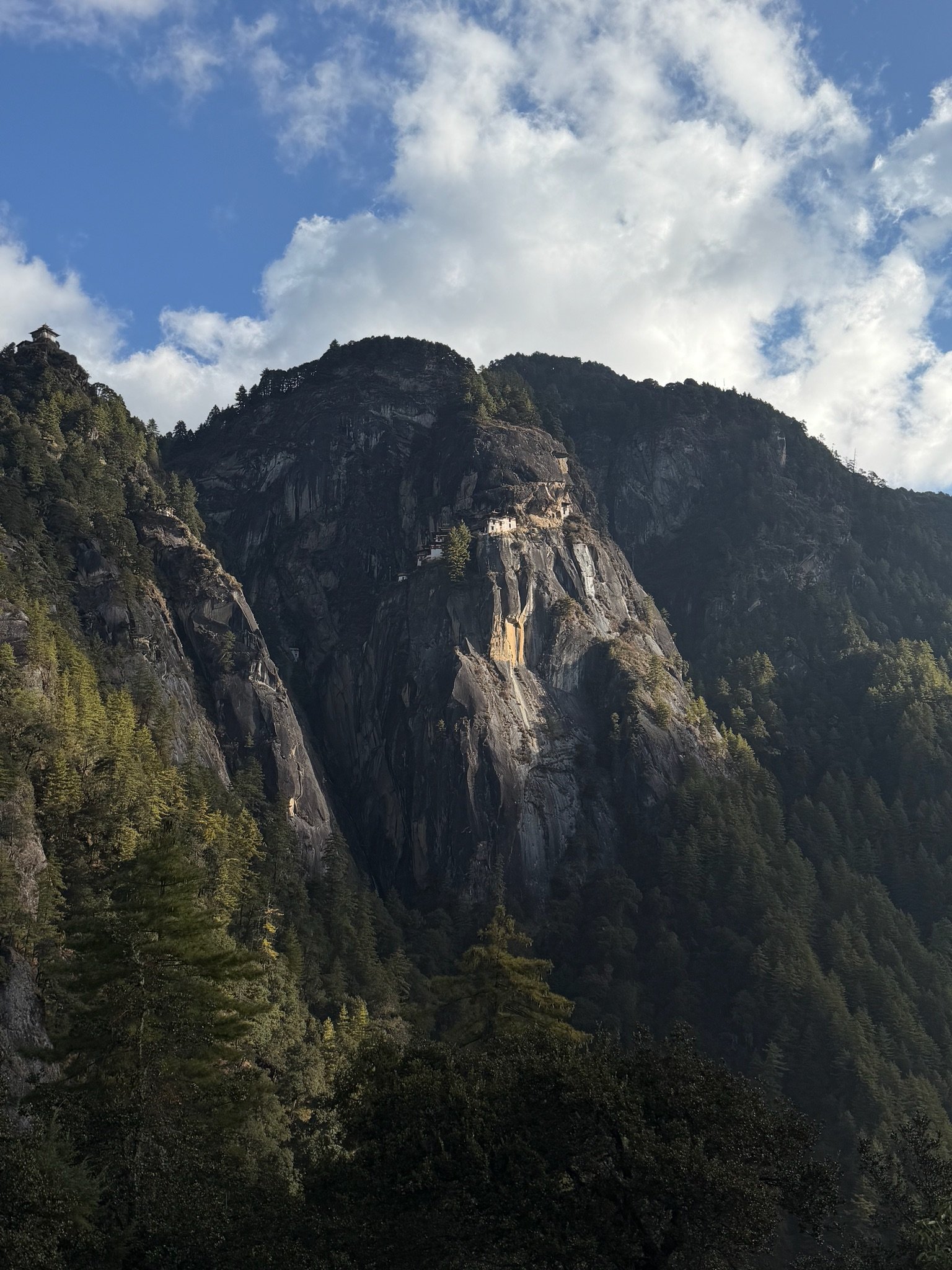
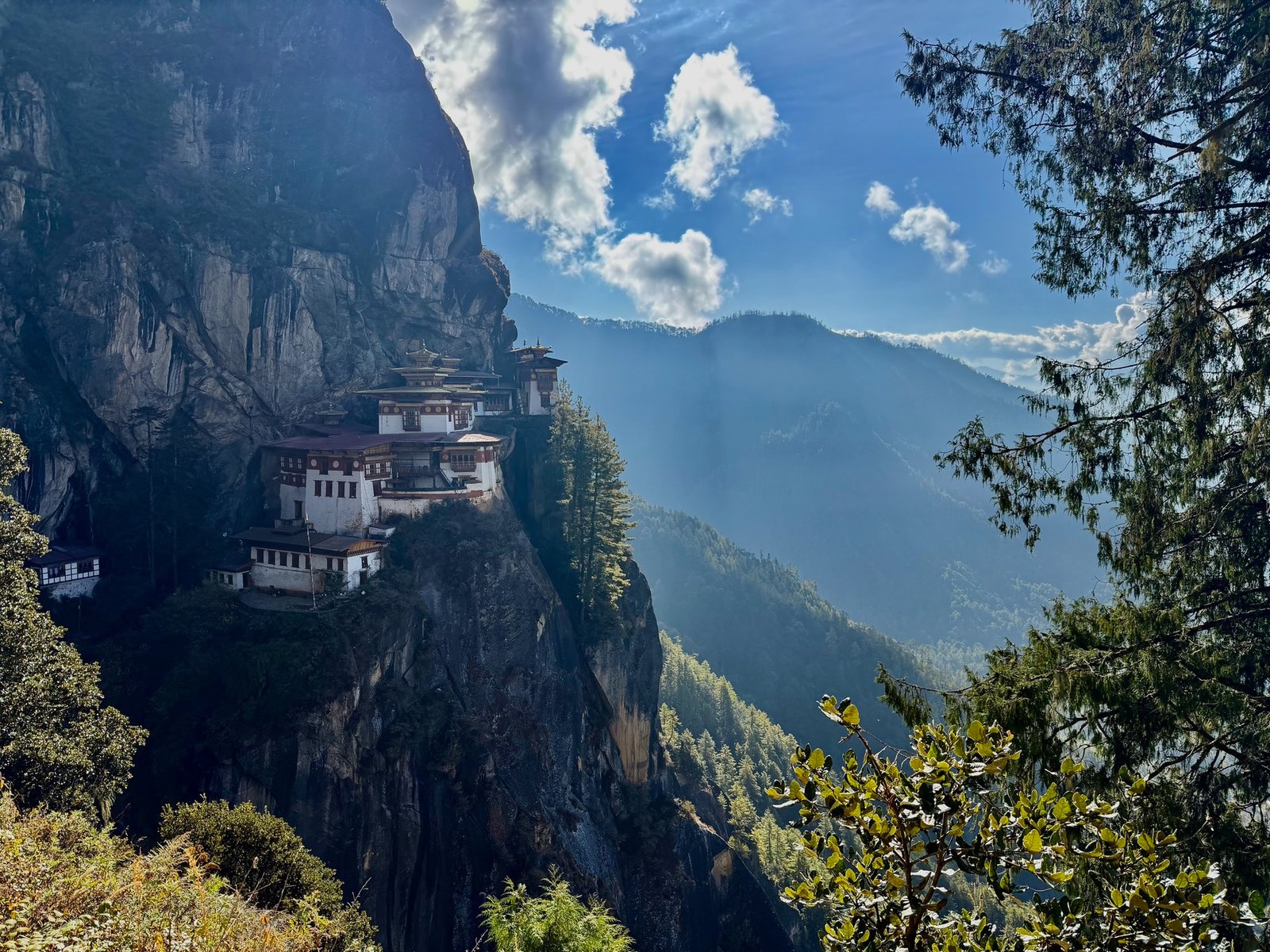
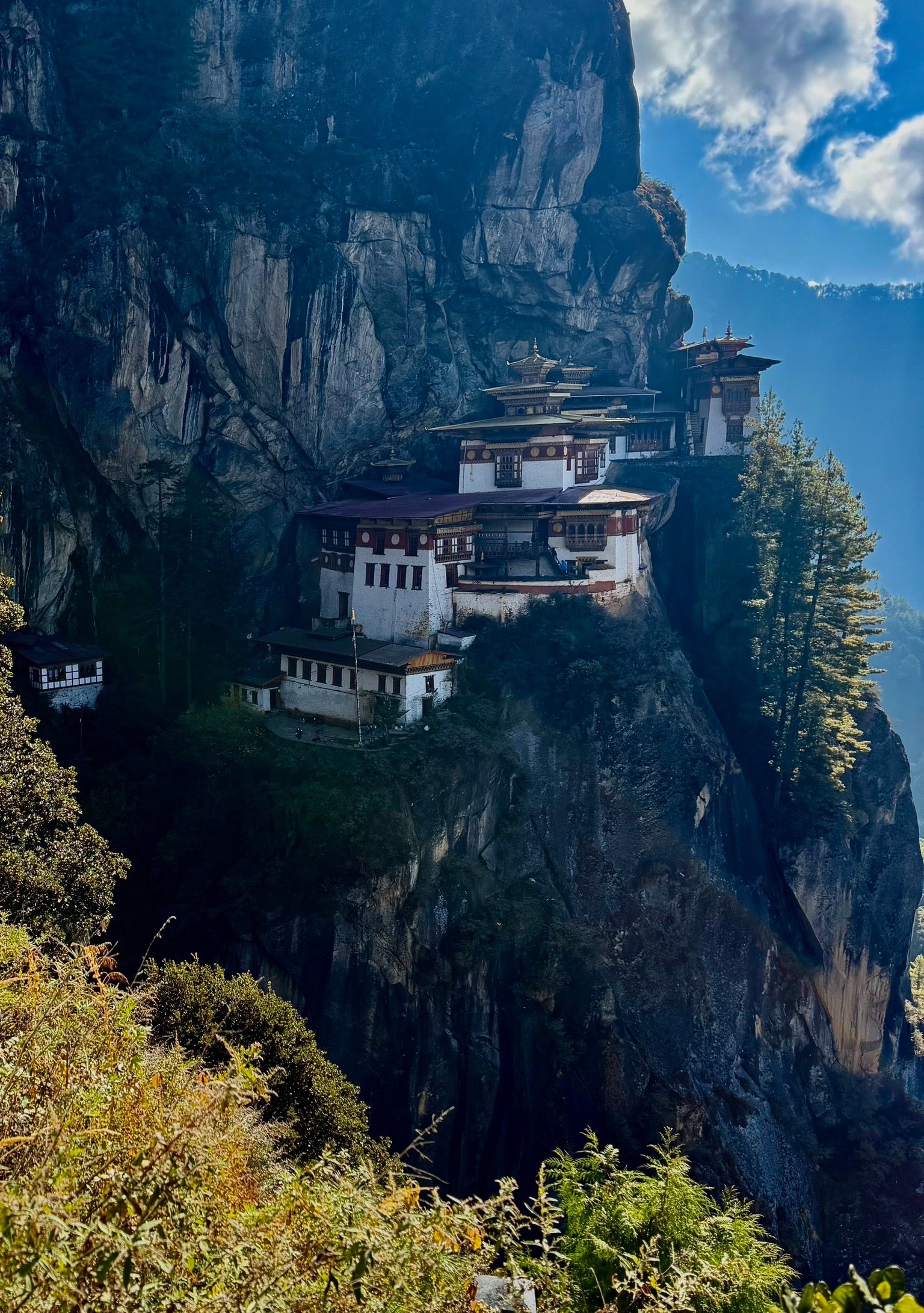
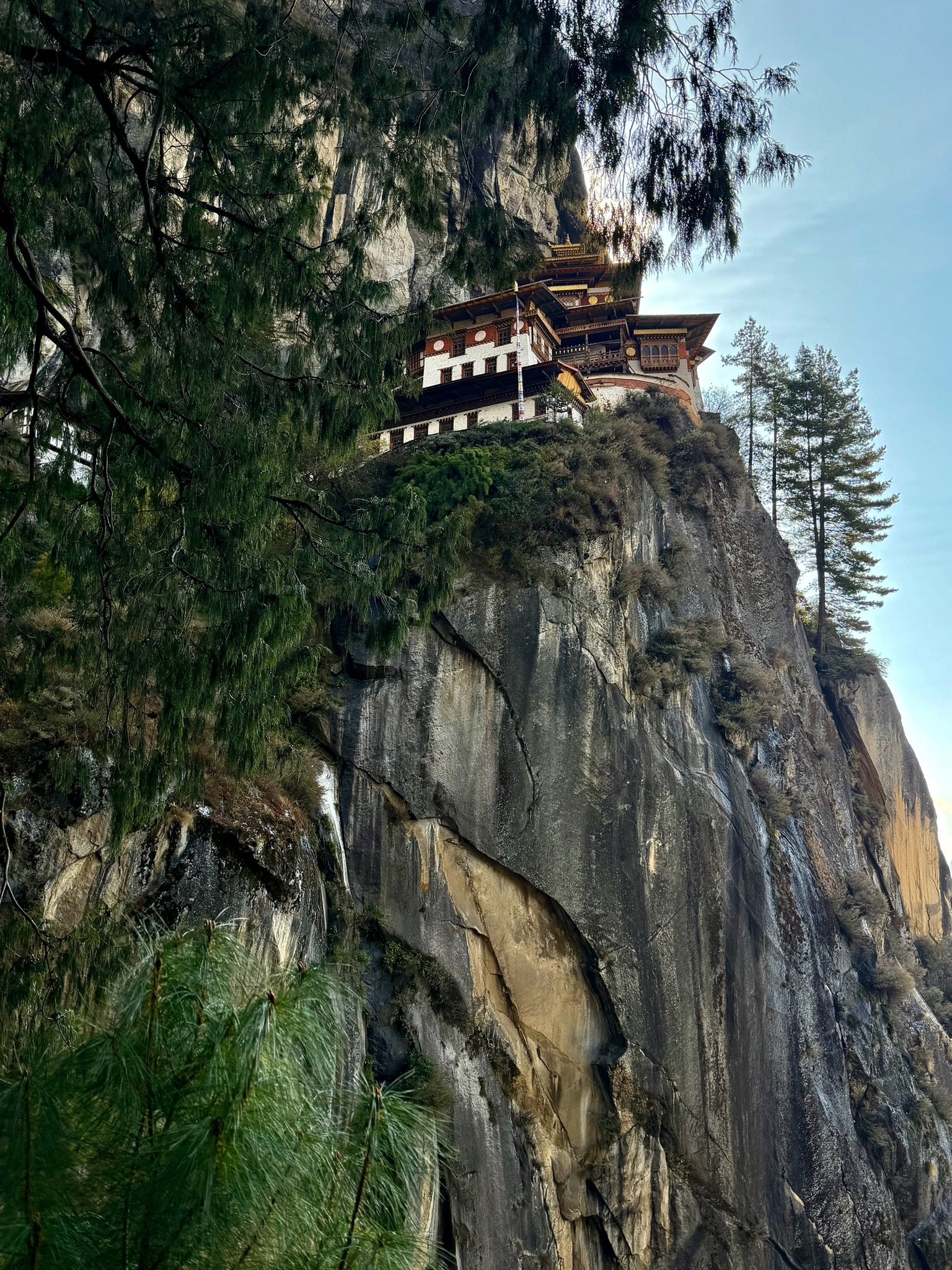
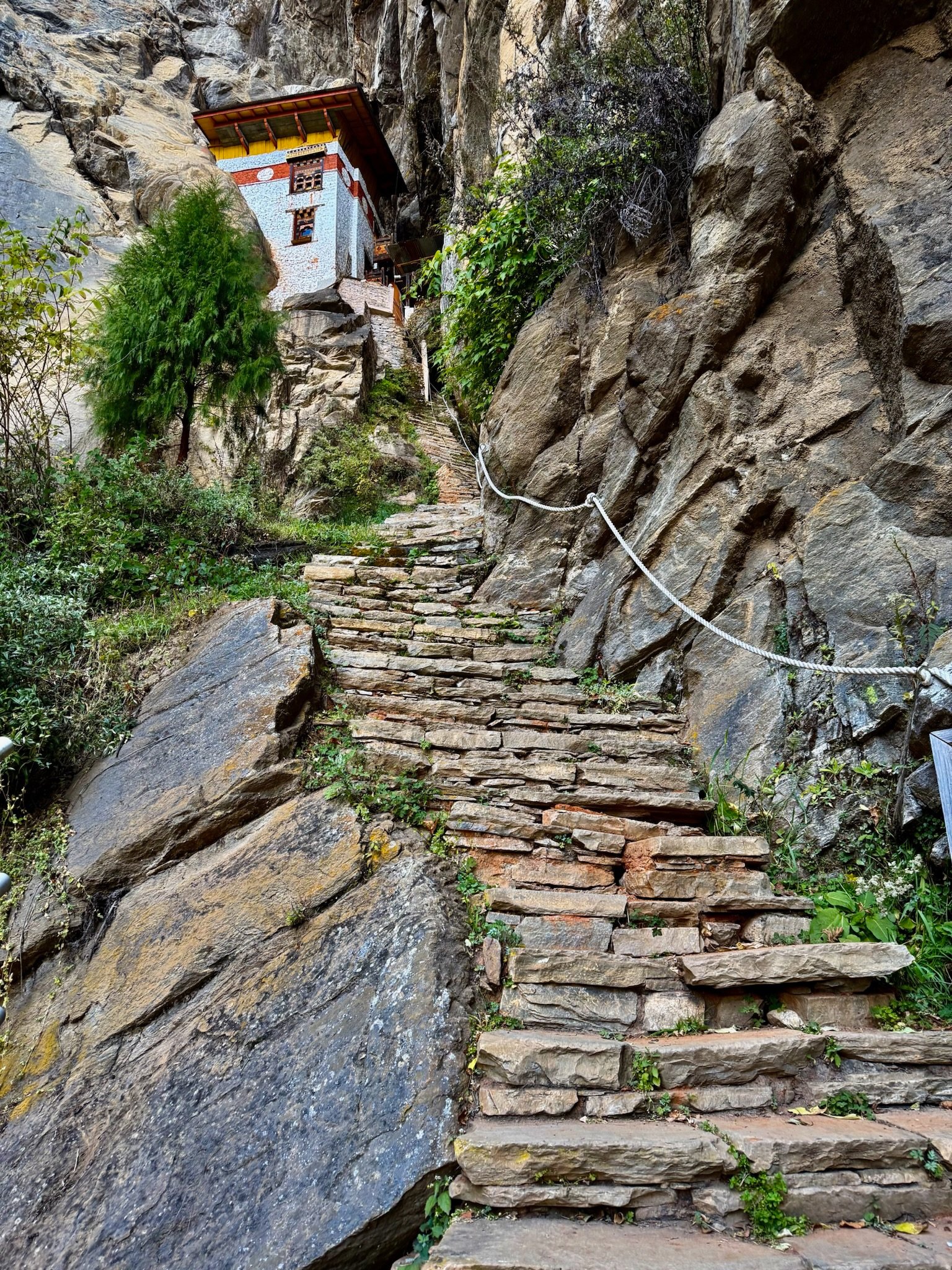
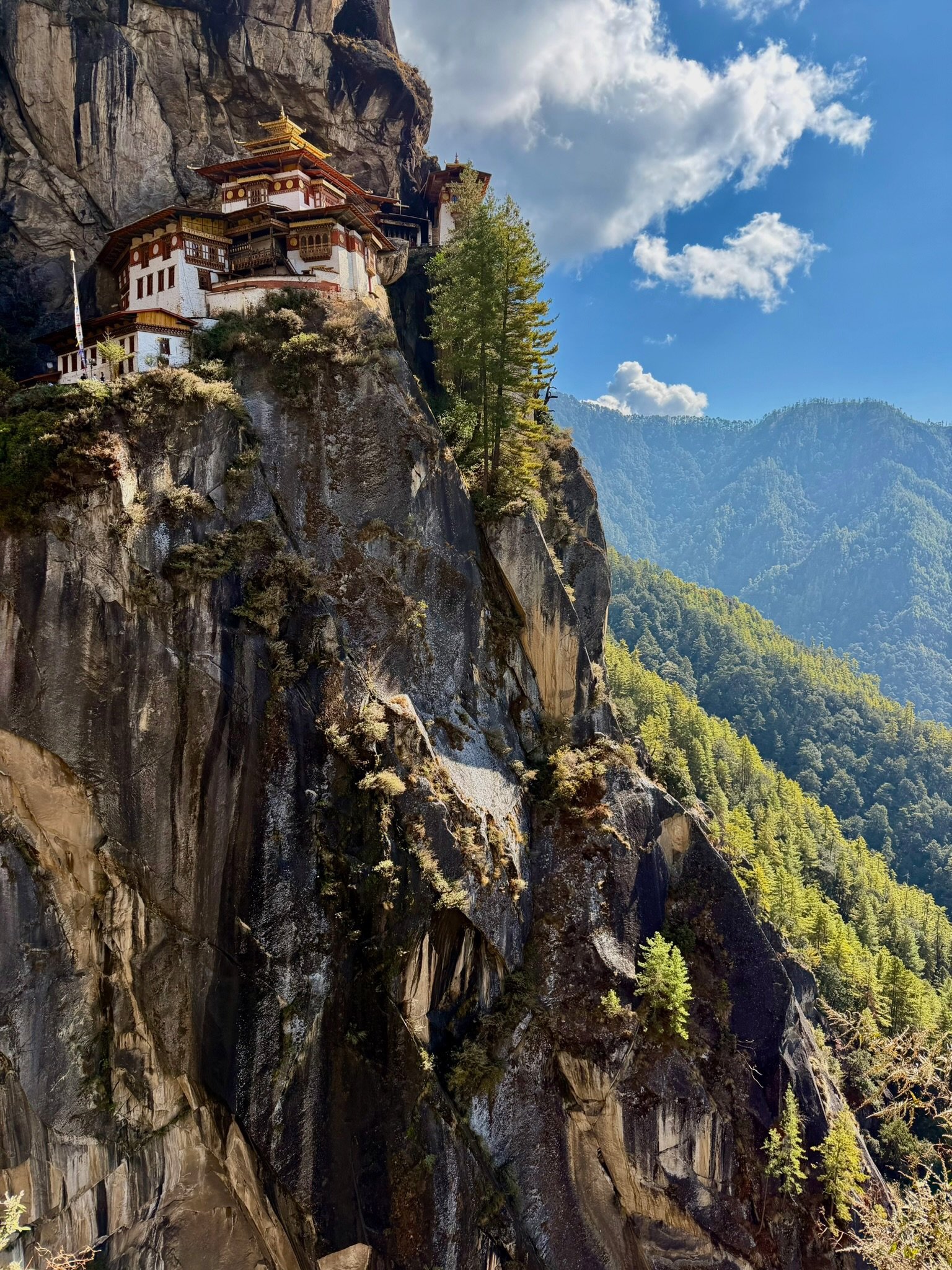
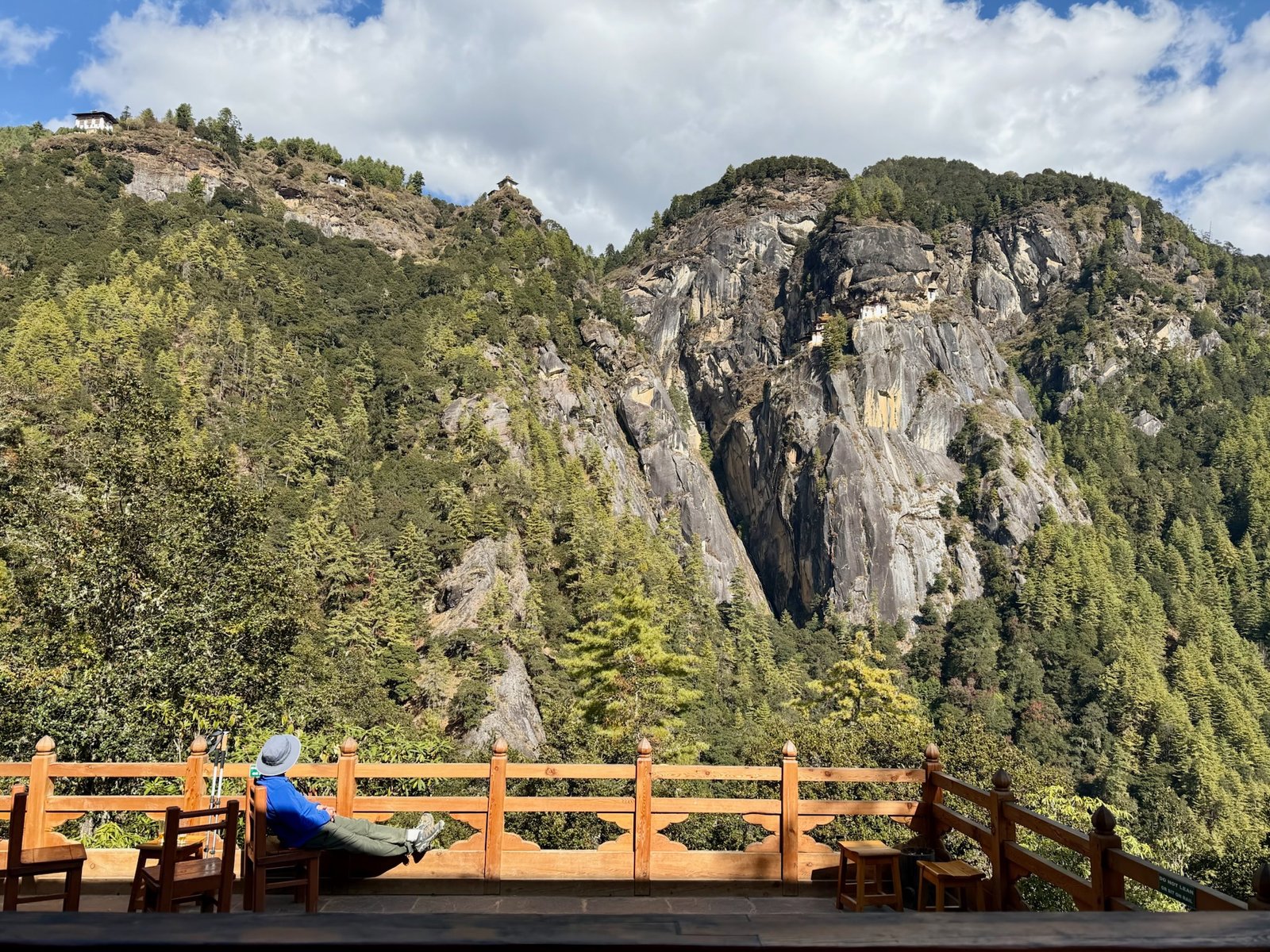
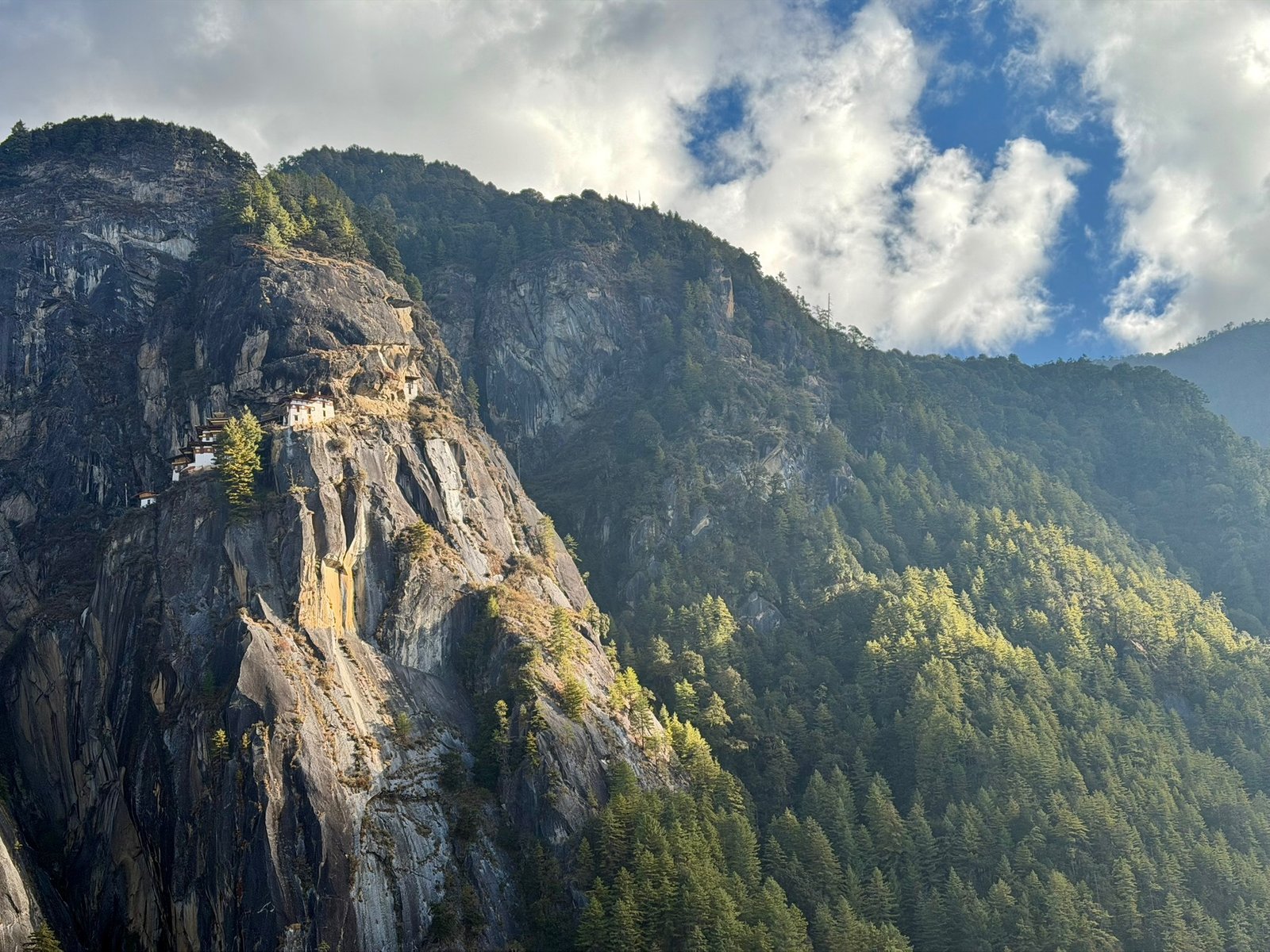
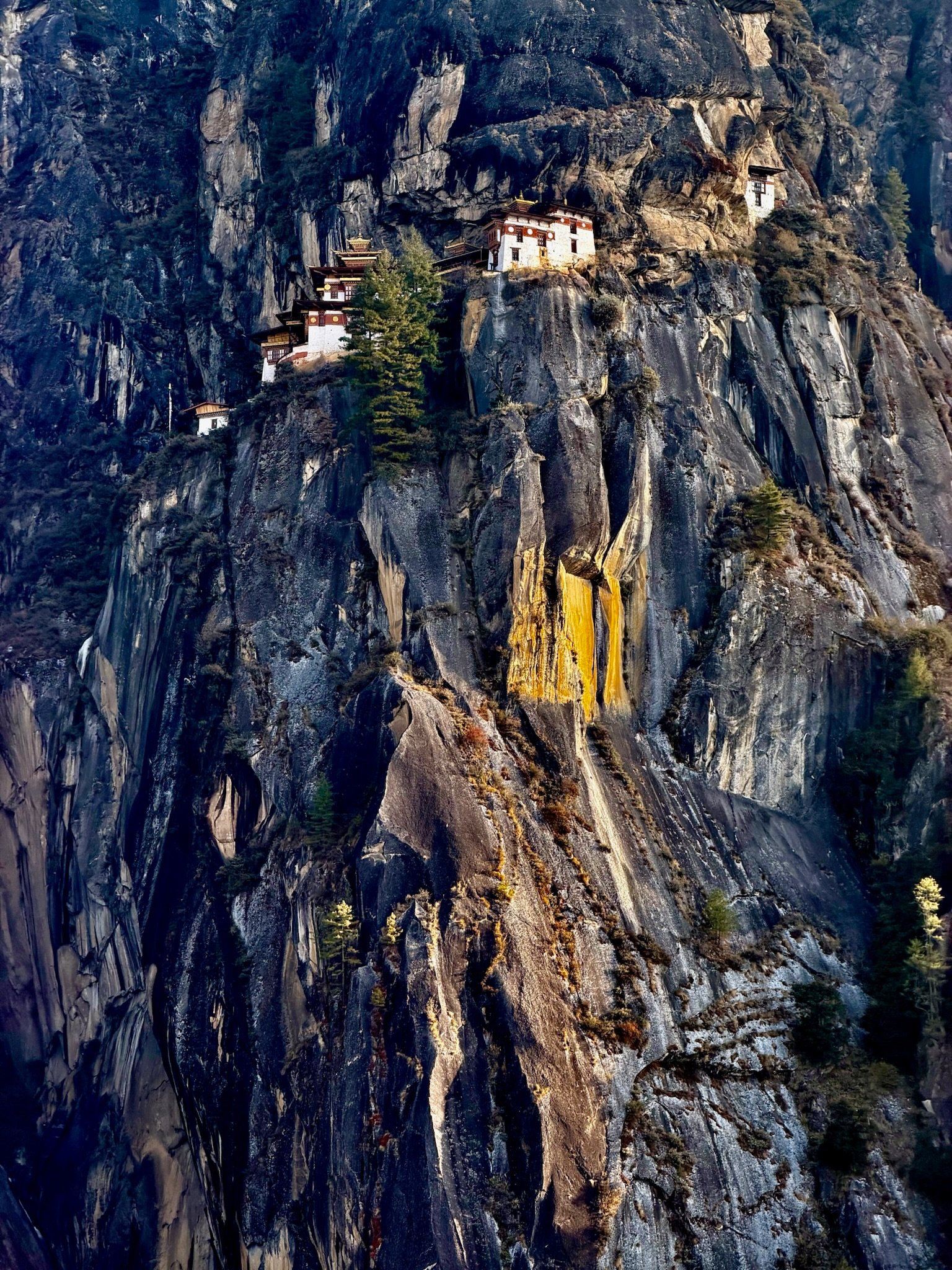
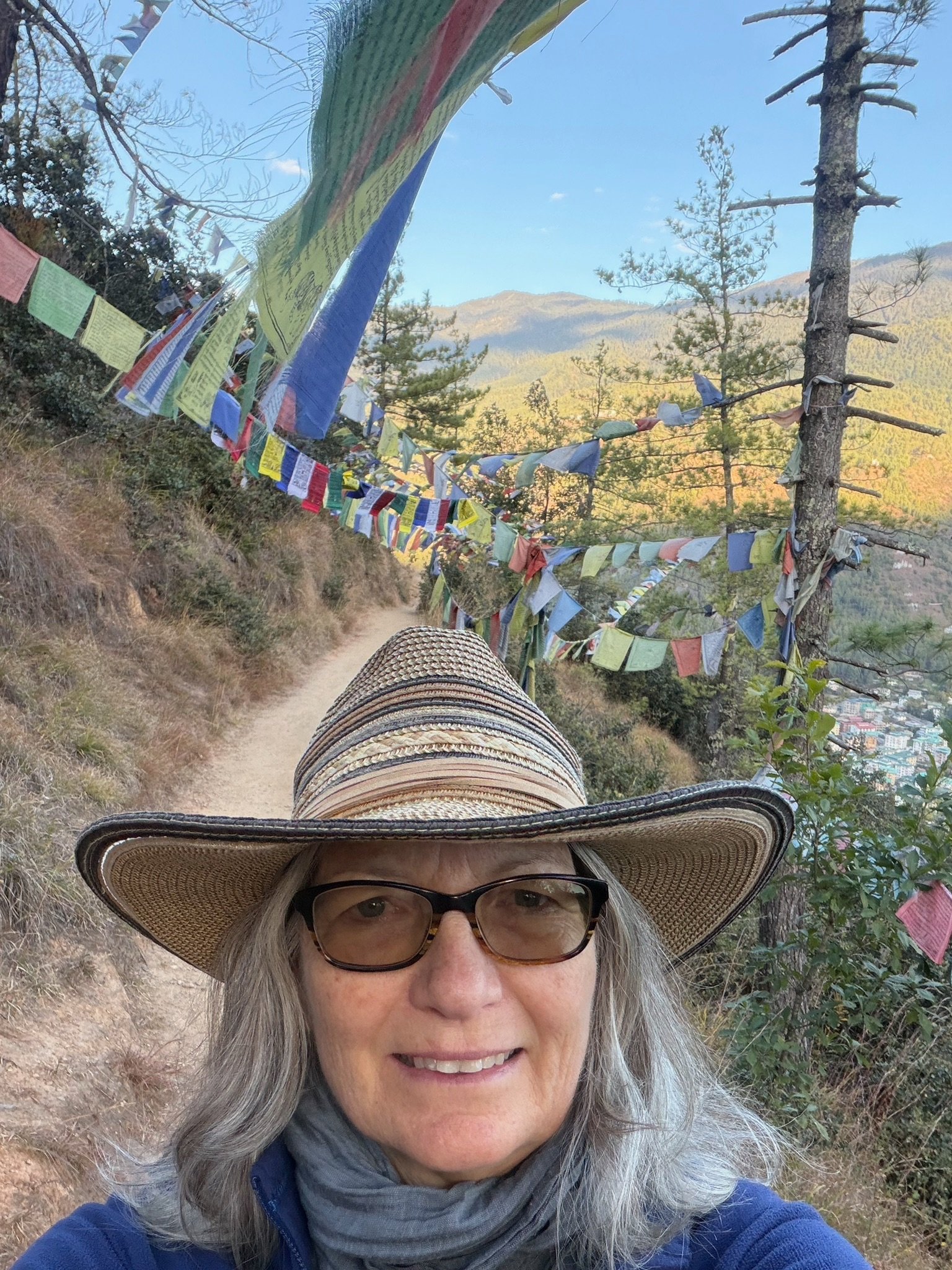
Today, we left before sunrise to ascend the mythical Tiger’s Nest (Paro Tanktsang), a magnificent cluster of monastery buildings precariously perched high over a 3k sheer drop. The views are expansive + breathtaking, perhaps even dizzying. See pics below. Each ceremonial structure is handmade without nails, architectural plans and cling to the rock at 10.5k elevation. To get there will mean a vertical hike on a pilgrimage path surrounded by flittering prayer flags. We will rise 2k vertical feet in just 2 linear miles.
A big thanks to our wonderful guides Sherub and driver Tsering who shared themselves and vivid stories of growing up with free education, healthcare and wood for building your first home. Thank you too to Tashi at Dhamma Adventures.
Kadrin Che and Tashi Dele to you!